Question
A parallel-plate capacitor having plate area $400cm^2$ and separation between the plates 1.0mm is connected to a power supply of 100V. A dielectric slab of thickness 1.0mm and dielectric constant 5.0 is inserted into the gap:
  1. Find the increase in electrostatic energy.
  2. If the power supply is now disconnected and the dielectric slab is taken out, find the further increase in energy.
  3. Why does the energy increase in inserting the slab as well as in taking it out?
Answer

$A = 400cm^2 = 4 \times 10^{-2}m^2$
$d = 1cm = 1 \times 10^{-3}m$
$V = 160V$
$t = 0.5 = 5 \times 10^{-4}m$
$k = 5$
$\text{C}=\frac{\in_0\text{A}}{\text{d}-\text{t}+\frac{\text{t}}{\text{k}}}$
$=\frac{8.85\times10^{-12}\times4\times10^{-2}}{10^{-3}-5\times10^{-4}+\frac{5\times10^{-4}}{5}}$
$=\frac{35.4\times10^{-4}}{10^{-3}-0.5}$

Need a full question paper?

Generate a complete, print-ready paper with questions like this in minutes — across 16+ boards, with answer keys.

Start Generating Free

Similar questions

A horizontal cesium plate ($\phi$ = l.9 eV) is moved vertically downward at a constant speed u in a room full of radiation of wavelength 250 run and above. What should be the minimum value of u so that the vertically upward component of velocity is nonpositive for each photoelectron?
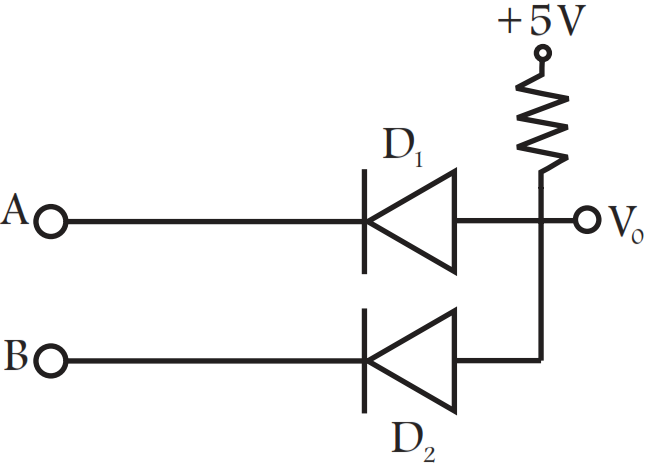
Write the truth table for the circuit shown in Fig. Name the gate that the circuit resembles.


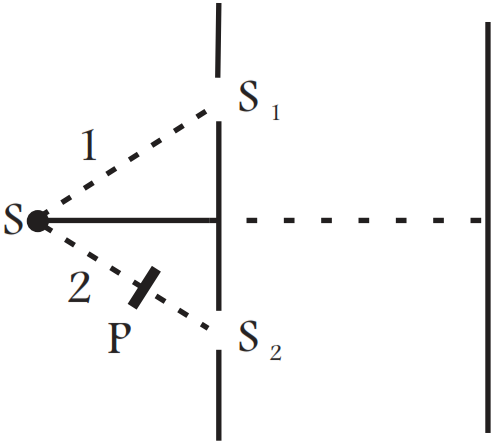
Figure shown a two slit arrangement with a source which emits unpolarised light. P is a polariser with axis whose direction is not given. If $I_0$ is the intensity of the principal maxima when no polariser is present, calculate in the present case, the intensity of the principal maxima as well as of the first minima.
A particle is moving at a constant speed V from a large distance towards a concave mirror of radius R along its principal axis. Find the speed of the image formed by the mirror as a function of the distance x of the particle from the mirror.
  1. Draw a labelled diagram of a moving coil galvanometer. Describe briefly its principle and working.
  2. Answer the following:
  1. Why is it necessary to introduce a cylindrical soft iron core inside the coil of a galvanometer?
  2. Increasing the current sensitivity of a galvanometer may not necessarily increase its voltage sensitivity. Explain, giving reason.
  1. With the help of a suitable ray diagram, derive the mirror formula for a concave mirror.
  2. The near point of a hypermetropic person is 50 cm from the eye. What is the power of the lens required to enable the person to read clearly a book held at 25 cm from the eye?
A circular coil of radius 2.00cm has 50 turns. A uniform magnetic field B - 0.200T exists in the space in a direction parallel to the axis of the loop. The coil is now rotated about a diameter through an angle of 60.0°. The operation takes 0.100s.
  1. Find the average emf induced in the coil.
  2. If the coil is a closed one (with the two ends joined together) and has a resistance of $4.00\Omega.$ calculate the net charge crossing a cross-section of the wire of the coil.
Consider the situation of the previous problem. Suppose each of the blocks is pulled by a constant force F instead of any impulse. Find the maximum elongation that the spring will suffer and the distances moved by the two blocks in the process.
Consider the D–T reaction (deuterium–tritium fusion)
$^2_1\text{H}+^3_1\text{H}\rightarrow^4_2\text{He}+\text{n} $
  1. Calculate the energy released in MeV in this reaction from the data:
$\text{m}(^2_1\text{H})=2.014102\text{ u}$
$\text{m}(^3_1\text{H})=3.016049\text{ u}$
  1. Consider the radius of both deuterium and tritium to be approximately 2.0 fm. What is the kinetic energy needed to overcome the coulomb repulsion between the two nuclei? To what temperature must the gas be heated to initiate the reaction? (Hint: Kinetic energy required for one fusion event =average thermal kinetic energy available with the interacting particles = 2(3kT/2); k = Boltzman’s constant, T = absolute temperature.)
A convex lens has a focal length of 10cm. Find the location and nature of the image if a point object is placed on the principal axis at a distance of:
  1. 9.8cm
  2. 10.2cm from the lens.