Question
A patient is suffering from ADA deficiency. Can he be cured? How?
Generate a complete, print-ready paper with questions like this in minutes — across 16+ boards, with answer keys.
| Column A (Scientist) | Column B (Theory) |
| (1) Munch | (a) Proton transport theory |
| (2) Bohem | (b) Pressure flow theory |
| (3) J. Pristley | (c) Capillary theory |
| (4) Levitt | (d) Root Pressure theory |
| Column A | Column B |
| (1) Frederick Griffith | (a) Test tube assay |
| (2) Avery, McCarty and MacLeod | (b) Streptococcus pneumoniae |
| (3) Alfred Hershey and Martha Chase | (c) E. coli |
| (4) Meselson and Stahl | (d) Bacteriophages |
|
|
W
|
X
|
Y
|
Z
|
|
(a)
|
Coronary artery disease
|
Cholera
|
Chikungunya
|
Chikungunya
|
|
(b)
|
Diabetes
|
Malaria
|
Rhinitis
|
Alzheimer's disease
|
|
(c)
|
Alzheimer's disease
|
AIDS
|
Shigella
|
Plague
|
|
(d)
|
Gonorrhea
|
Diphtheria
|
Pertussis
|
Anthrax
|
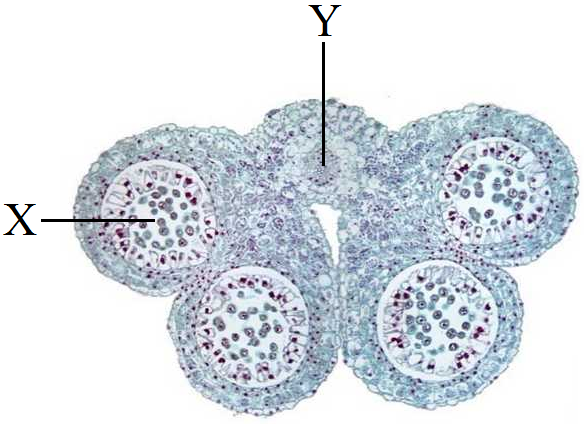
|
S. No
|
Structure of X
|
Stamens
|
|
(a)
|
Abundant and light
|
Pendulous
|
|
(b)
|
Rough surfaces
|
Non-pendulous
|
|
(c)
|
Light and sticky
|
Pendulous
|
|
(d)
|
Coarse and sticky
|
Protrude outside the flower
|
| Column A (Adaptation) | Column B (Type of pollination) |
| (1) Sticky, spiny pollen grains non-fragrant flowers | (a) Anemophily |
| (2) Feathery stigma and versatile anther | (b) Chiropterophily |
| (3) Presence of nectar glands and sweet smell | (c) Ornithophily |
| (4) Dull coloured flowers with strong fragrance | (d) Entomophily |