MCQ
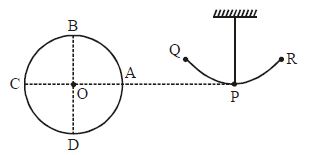
A sound source is moving on a circular path of radius $R$ with constant angular speed $\omega $ in anticlockwise direction and emits a frequency $n$ . An observer performs simple harmonic along the path $QPR$ with time period $T = \frac {2\pi }{\omega }$ as shown in the figure. If at $t = 0$ source is at $A$ and observer is at $Q$ and assume $OP$ is very large as compare to radius $R$ and $QP$ , then 
  • A
    Observer will hear maximum frequency at $P$ if source is at $B$
  • Observer will hear maximum frequency at $P$ if source is at $D$
  • C
    Observer will hear maximum frequencyat $Q$ if source is at $B$
  • D
    Observer will hear maximum frequency at $Q$ if source is at $D$
Answer

Correct option: B.
Observer will hear maximum frequency at $P$ if source is at $D$
b

Need a full question paper?

Generate a complete, print-ready paper with questions like this in minutes — across 16+ boards, with answer keys.

Start Generating Free

Similar questions

There is a uniform electrostatic field in a region. The potential at various points on a small sphere centred at $P$, in the region, is found to vary between in the limits $589.0\,V$ to $589.8\, V$. What is the potential at a point on the sphere whose radius vector makes an angle of $60^o$ with the direction of the field ?........$V$
The unit vector along $\hat i + \hat j$ is
In a communication system operating at wavelength $800\,nm,$ only one percent of source frequency is available as signal bandwidth. The number of channels accommodated for transmitting $TV$ signals of band width $6\,MHz$ are (Take velocity  of light $c = 3 \times 10^8\,m/s,\,\,h = 6.6 \times 10^{-34}\,J-s$ )
The $I-V$ characteristics of an electronic device shown in the figure. The device is:
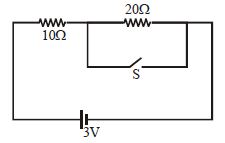
Consider the circuit shown in fig. The current through the $10\,\Omega $ resistor when switch $'s'$ is $(a)$ open $(b)$ closed.
An object is placed $40\;cm$ from a concave mirror of focal length $20\;cm.$ The image formed is
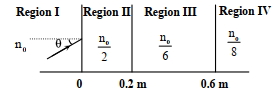
A light beam is travelling from Region $I$ to Region $IV$ (Refer Figure). The refractive index in Regions $I$, $II$, $III$ and $IV$ are $n_0, \frac{n_0}{2}, \frac{n_0}{6}$ and $\frac{n_0}{8}$, respectively. The angle of incidence $\theta$ for which the beam just misses entering Region $IV$ is Figure: $Image$
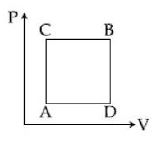
A gas can be taken from $A$ to $B$ via two different processes $ACB$ and $ADB$. When path $ACB$ is used $60\, J$ of heat flows into the system and $30\, J$ of work is done by the system. If path $ADB$ is used work down by the system is $10\, J$. the heat flow into the system in path $ADB$ is ..... $J$
$2\,\mu F$ capacitance has potential difference across its two terminals $200\;volts$. It is disconnected with battery and then another uncharged capacitance is connected in parallel to it, then $P.D.$ becomes $20\;volts$. Then the capacity of another capacitance will be.......$\mu F$
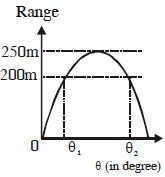
From the ground level, a ball is to be shot with a certain speed. Graph shows the range $(R)$ of the particle versus the angle of projection from horizontal ( $\theta $ ). Values of $\theta _1$ and $\theta _2$ are