MCQ
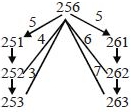
A tuning fork of known frequency $256\,Hz$ makes $5$ beats per second with the vibrating string of a guitar. The beat frequency decreases to $2$ beats per second when the tension in the guitar string slightly increased. The frequency of the guitar string before increasing the tension was ..... $Hz$
  • A
    $257$
  • B
    $261$
  • C
    $254$
  • $251$

Answer

Correct option: D.
$251$
d
On increasing tension frequency of wire increases

So,

So beat frequency is decreases in case of $251$ $\mathrm{\,Hz}$

Need a full question paper?

Generate a complete, print-ready paper with questions like this in minutes — across 16+ boards, with answer keys.

Start Generating Free

Similar questions

A man measures time period of a pendulum $(T)$ in stationary lift. If the lift moves upward with acceleration $\frac{g}{4},$ then new time period will be
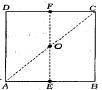
For the given uniform square lamina $ABCD$ , whose centre is $O$,
Heat is flowing through two cylindrical rods of the same material. The diameters of the rods are in the ratio $1 : 2$ and their lengths are in the ratio $2 : 1$. If the temperature difference between their ends is the same, then the ratio of the amounts of heat conducted through per unit time will be
A steel wire $1.5\,m$ long and of radius $1\,mm$ is attached with a load $3\,kg$ at one end the other end of the wire is fixed it is whirled in a vertical circle with a frequency $2\,Hz$ . Find the elongation of the wire when the weight is at the lowest position $(Y = 2 \times 10^{11}\,N/m^2$ and $g = 10\,m/s^2)$
Diatomic gas is used in carnot heat engine. If efficiency of given carnot heat engine is $80\%$ , then find the ratio of initial volume to final volume of gas during adiabatic expansion
One end of a light spring of spring constant $k$ is fixed to a wall and the other end is tied to a block placed on a smooth horizontal surface. In a displacement, the work done by the spring is $\frac{1}{2}\text{kx}^2.$ The possible cases are:
  1. At spring was initially compressed by a distance $x$ and was finally in its natural length.
  2. It was initially stretched by a distance $x$ and and finally was in its natural length.
  3. It was initially in its natural length and finally in a compressed position.
  4. It was initially in its natural length and finally in a stretched position.
Sometimes it is convenient to construct a system of units so that all quantities can be expressed in terms of only one physical quantity. In one such system, dimensions of different quantities are given in terms of a quantity $X$ as follows: [position $]=\left[X^\alpha\right] ;[$ speed $]=\left[X^\beta\right]$; [acceleration $]=\left[X^{ p }\right]$; [linear momentum $]=\left[X^{ q }\right]$; [force $]=\left[X^{ I }\right]$. Then -

$(A)$ $\alpha+p=2 \beta$

$(B)$ $p+q-r=\beta$

$(C)$ $p-q+r=\alpha$

$(D)$ $p+q+r=\beta$

The bob of a simple pendulum executes simple harmonic motion in water with a period $t$, while the period of oscillation of the bob is ${t_0}$ in air. Neglecting frictional force of water and given that the density of the bob is $(4/3) ×1000 kg/m^3$. What relationship between $t$ and ${t_0}$ is true
The upper end of a wire of radius $4\ mm$ and length $100\ cm$ is clamped and its other end is twisted through an angle of $30^\circ .$ Then, angle of shear is:
A cricketer catches a ball of mass $150\; gm$ in $0.1$ second moving with speed $20\, m/s$. Then he experiences force of ..... $N$