Question
A vertical straight conductor carries a current vertically upwards. A point P lies to the east of it at a small distance and another point Q lies to the west in the same direction. The magnetic field at P is:

Answer

(d) same as at Q
Explanation: As per Biot Savart Law, Magnetic field at a point is inversely proportional to square of distance from the current carrying conductor. Therefore magnitude of magnetic field is same at both points P and Q, irrespective of their position from the conductor.

Need a full question paper?

Generate a complete, print-ready paper with questions like this in minutes — across 16+ boards, with answer keys.
Start Generating Free

Similar questions

A magnetic field can be produced by:
The $21 \ cm$ radio wave emitted by hydrogen in interstellar space is due to the interaction called the hyperfine interaction is atomic hydrogen. the energy of the emitted wave is nearly
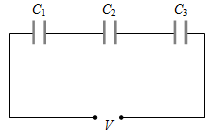
In the figure, three capacitors each of capacitance $6\ pF$ are connected in series. The total capacitance of the combination will be
Energy of electron in excited hydrogen atom is -3.4 eV . According to Bohr's theory, its angular momentum will be :
Peltier co$-$efficient of a thermo couple is $2$ nano volts. How much heat is developed at a junction if $2.5 \ \text{amp}$ current flows for $2$ minute
Quantisation of charge was experimentally demonstrated by:
A thin lens made of glass of refractive index $m = 1.5$ has a focal length equal to $12 \ cm$ in air.  It is now immersed in water $(\mu=\frac{4}{3}).$ Its new focal length is

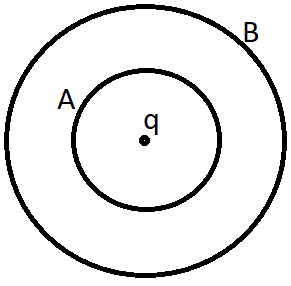
If A and B are two equipotential surfaces around a positive point charge q, what will happen if we place another point charge +Q between A and B?
Image
A screen is placed a distance 40cm away from an illuminated object. A converging lens is placed between the source and the screen and it is attempted to form the image of the source on the screen. If no position could be found, the focal length of the lens:
  1. Must be less than 10cm.
  2. Must be greater than 20cm.
  3. Must not be greater than 20cm.
  4. Must not be less than 10cm.
125 identical drops each charged to the same potential of 50 volts are combined to form a single drop. The potential of the new drop will be (a) 50 V   (b) 250 V (c) 500 V (d) 1250 V