MCQ
According to Bohr’s principle, the relation between principle quantum number $(n)$ and radius of orbit is
- A$r \propto n$
- ✓$r \propto {n^2}$
- C$r \propto \frac{1}{n}$
- D$r \propto \frac{1}{{{n^2}}}$
${r_n} = \frac{{{n^2}{h^2}}}{{4{\pi ^2}km{e^4}Z}}$
Where except ${n^2}$, all other unit are constant so ${r_n} \propto {n^2}$.
Generate a complete, print-ready paper with questions like this in minutes — across 16+ boards, with answer keys.
| list $I$ | list $II$ | ||
| $A.$ | Butane $\to $ Isobutane | $(a)$ | Cracking |
| $B.$ | Butane $\to $ Lower hydrocarbons | $(b)$ | Isomerisation |
| $C.$ | $n-$ Heptane $\to $ Toluene | $(c)$ | Reed reaction |
| $D.$ | Propane $\to CH_3CH_2CH_2SO_2Cl$ | $(d)$ | Aromatization |
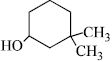
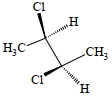
$(A)$ The compound is optically active
$(B)$ The compound possesses centre of symmetry
$(C)$ The compound possesses plane of symmetry
$(D)$ The compound possesses axis of symmetry