MCQ
After effects of elasticity are maximum for
  • Glass
  • B
    Quartz
  • C
    Rubber
  • D
    Metal

Answer

Correct option: A.
Glass
a
(a)

Need a full question paper?

Generate a complete, print-ready paper with questions like this in minutes — across 16+ boards, with answer keys.
Start Generating Free

Similar questions

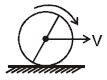
$A$ ring of mass $m$ is rolling without slipping with linear velocity $v$ as shown is figure. $A$ rod of identical mass is fixed along one of its diameter. The total kinetic energy of the system is :-
A ring has a total mass M but non-uniformly distributed over its circumference. The radius of the ring is R. A point mass m is placed at the centre of the ring. Work done in taking away this point mass from centre to infinity is:
Young’s modulus of steel is 1.9 × 10¹¹ N/m2. When expressed in CGS units of dynes/cm2, it will be equal to (1N = 105 dyne, 1m2 = 104cm2).
  1. 1.9 × 10¹⁰.
  2. 1.9 × 10¹¹.
  3. 1.9 × 10¹².
  4. 1.9 × 10¹³.
A particle moves with constant speed $v$ along a regular hexagon $ABCDEF$ in the same order. Then the magnitude of the average velocity for its motion from $A$ to
 In a hydro power plant:
A sphere strikes a wall and rebounds with coefficient of restitution $1/3$. If it rebounds with a velocity of $0.1\, m/sec$ at an angle of $60^o$ to the normal to the wall, the loss of kinetic energy is
The resultant of two vectors $A$ and $B$ is perpendicular to the vector $A$ and its magnitude is equal to half the magnitude of vector $B$. The angle between $A$ and $B$ is ....... $^o$
An experiment is performed to obtain the value of acceleration due to gravity $g$ by using a simple pendulum of length $L$. In this experiment time for $100\, oscillations$ is measured by using a watch of $1\, second$ least count and the value is $90.0\, seconds$. The length $L$ is measured by using a meter scale of least count $1\, mm$ and the value is $20.0\, cm$. The  error in the determination of $g$ would be  ........... $\%$
If the kinetic energy of a body is directly proportional to time $t,$ the magnitude of force acting on the body is

$(i)$ directly proportional to $\sqrt t$
$(ii)$  inversely proportional to  $\sqrt t$
$(iii)$ directly proportional to the speed of the body
$(iv)$ inversely proportional to the speed of body

Two water pipes $P$ and $Q$ having diameters $2$$ \times 10^{-2} $ $m$ and $4$ $\times 10^{-2}$ $m$, respectively, are joined in series with the main supply line of water. The velocity of water flowing in pipe $P$ is