Question
An $\alpha-$particle captures an electron. What does it change to?

Answer

An $\alpha$ particle has two protons and two neutrons and zero electrons.It is written as $^4_2\text{​He}^{2+}.$
So if it captures an electron, the reaction is: $^4_2\text{​He}^{2+} +  +e^{− }\rightarrow ^4_2\text{​He}^{+}$

Need a full question paper?

Generate a complete, print-ready paper with questions like this in minutes — across 16+ boards, with answer keys.
Start Generating Free

Similar questions

If $f_a$ and $f_f$ represent the carrier wave frequencies for amplitude and frequency modulations respectively, then
A wave moving in a gas,
  1. Must be longitudinal
  2. May be longitudinal
  3. Must be transverse
  4. May be transverse
 Pick out the correct increasing order of energy of electromagnetic waves from the following:
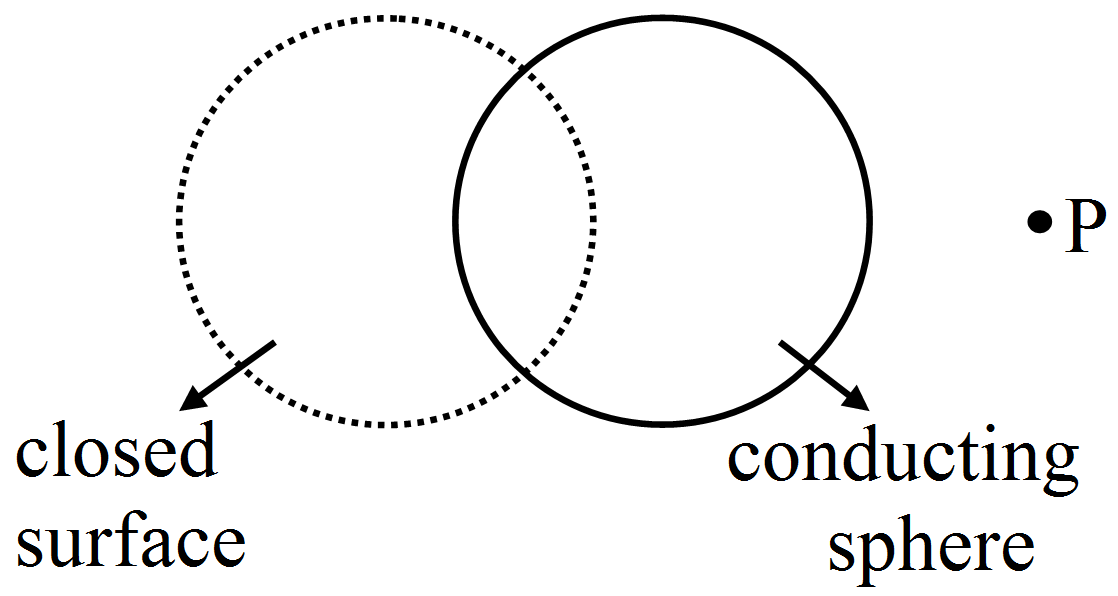
Figure shows a closed surface which intersects a conducting sphere. If a positive charged is placed at the point P, the flux of the electic field through the closed surface:
  1. Will remain zero.
  2. Will become positive.
  3. Will become neagative.
  4. Will become undefined.
For goldplating on a copper chain, the substance required in the form of solution is(a) Copper sulphate(b) Copper chloride(c) Potassium cyanide(d) Potassium aurocyanide
   
   
The displacement of a particle in simple harmonic motion in one time period is:
  1. A
  2. 2A
  3. 4A
  4. zero.
A sphere cannot roll on:
  1. A smooth horizontal surface.
  2. A smooth inclined surface.
  3. A rough horizontal surface.
  4. A rough inclined surface.
The graph between wave number $(\overline{\mathrm{v}})$ and angular frequency $(\omega)$ is
A current I flows along the length of an infinitely long, straight and thin-walled pipe. Then(a) The magnetic field at all points inside the pipe is the same but not zero(b) The magnetic field at any point inside the pipe is zero(c) The magnetic field is zero only on the axis of the pipe(d) The magnetic field is different at different points inside the pipe


Let $n_p$ and $n_e$ be the number of holes and conduction electrons in an intrinsic semiconductor.