MCQ
An electrolyte
- AGives complex ions in solution
- ✓Dissolves in water to give ions
- CIs ionized in the solid state
- DGenerates ions on passing electric current
Generate a complete, print-ready paper with questions like this in minutes — across 16+ boards, with answer keys.
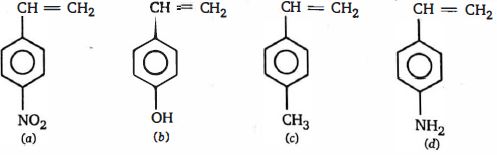
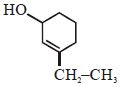
|
List $-I$ (Element) |
List $-II$ (Electronic Configuration) | ||
| $A.$ | $N$ | $I.$ | $[\mathrm{Ar}] 3 \mathrm{~d}^{10} 4 \mathrm{~s}^2 4 \mathrm{p}^5$ |
| $B.$ | $S$ | $II.$ | $[\mathrm{Ne}] 3 \mathrm{~s}^2 3 \mathrm{p}^4$ |
| $C.$ | $Br$ | $III.$ | $[\mathrm{He}] 2 \mathrm{~s}^2 2 \mathrm{p}^3$ |
| $D.$ | $Kr$ | $IV.$ | $[\mathrm{Ar}] 3 \mathrm{~d}^{10} 4 \mathrm{~s}^2 4 \mathrm{p}^6$ |
Choose the correct answer from the options given below:
| Element | $IE_1$ | $IE_2$ | $IE_3$ | $IE_4$ |
| $W$ | $10.5$ | $15.5$ | $24.9$ | $79.8$ |
| $X$ | $8$ | $14.8$ | $78.9$ | $105.8$ |
Other two elements $Y$ and $Z$ have outer electronic configuration $ns^2$ $np^4$ and $ns^2$ $np^5$ respectively. According to given information which of the following compound $(s)$ is/are not possible
$(a)\, W_2Y_3\, (b)\, X_2Y_3\, (c)\, WZ_2\, (d)\, XZ_2$