Question
An object falling freely from above is in the last second its total height crosses the division of 16 / 25 then find :
(i) Total height, (ii) Time of fall.

Answer

 Suppose total height $= h$ meters and time taken to cover $= t sec$.
Distance in last second $=\frac{16}{25} h$
$(t-1) sec$. distance from
$=h-\frac{16}{25} h=\frac{9}{25} h $
From $h = ut +\frac{1}{2} gt ^2$
$u =0 \quad \because$ The object is falling freely.
$\begin{array}{l}
h=0+\frac{1}{2} \times 10 \times t^2 \\
h=5 t^2.....(1)
\end{array}$
Similarly
$\frac{9}{25} h=5(t-1)^2$..........(2)
Dividing equation (1) by equation (2) gives
$\frac{9}{25}=\frac{(t-1)^2}{t^2}$
or $ \frac{3}{5}=\frac{ t -1}{ t }$
$\begin{array}{ll}
\Rightarrow & 3 t=5 t-5 \\
\Rightarrow & 2 t=5 \Rightarrow t=2.5 sec .
\end{array}$
Putting the value of $t$ in equation (1)
$\begin{aligned}
h & =5 \times(2.5)^2 \\
& =5 \times 6.25=31.25 m
\end{aligned}$

Need a full question paper?

Generate a complete, print-ready paper with questions like this in minutes — across 16+ boards, with answer keys.
Start Generating Free

Similar questions

The ratio of radius of two wires of the same metal is 2 : 1. If they are pulled by applying equal force, what will be the ratio of stresses?
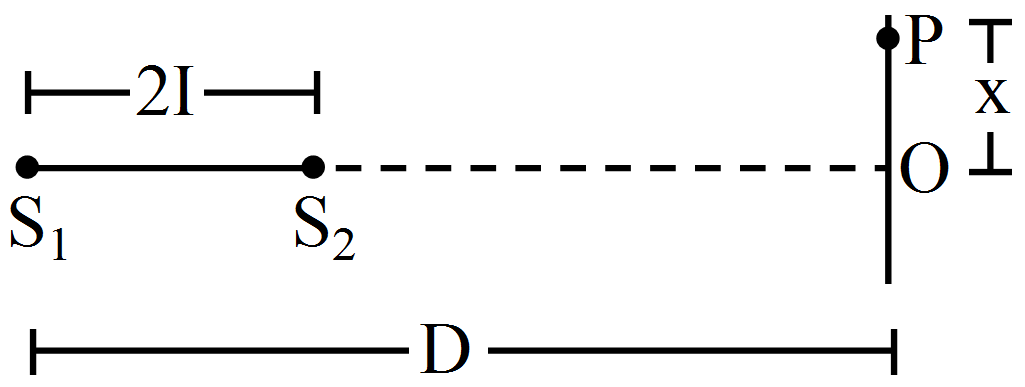
Two coherent narrow slits emitting sound of wavelength $\lambda$ in the same phase are placed parallel to each other at a small separation of $2\lambda.$ The sound is detected by moving a detector on the screen $\sum$ at a distance $\text{D}(>>\lambda)$ from the slit S1 as shown in figure. Find the distance x such that the intensity at P is equal to the intensity at 0.

A bob of mass 0.1kg hung from the ceiling of a room by a string 2m long is set into oscillation. The speed of the bob at its mean position is 1ms-1 . What is the trajectory of the bob if the string is cut when the bob is (a) at one of its extreme positions, (b) at its mean position.
A car moving with a speed of 50km/ h-1 can be stopped by brakes after at least 6m. What will be the minimum stopping distance, if the same car is moving at a speed of 100km/ h-1?
Given that the time period T of oscillation of a gas bubble from an explosion under water depends upon P, d and E where P is the static pressure, d the density of water and E is the total energy of explosion, find dimensionally a relation for T.
A stone tied to the end of a string 80 cm long is whirled in a horizontal circle with a constant speed. If the stone makes 14 revolutions in 25 s. what is the magnitude and direction of acceleration of the stone?
Mercury has an angle of contact equal to $140^{\circ}$ with soda-lime glass. A narrow tube of radius 1.00 mm made of this glass is dipped in a trough containing mercury. By what amount does the mercury dip down in the tube relative to the liquid surface outside? Surface tension of mercury at the temperature of the experiment is 0.465 N $m ^{-1}$. Density of mercury $=13.6 \times 10^3 kgm ^{-3}$. .
On what factors does the magnitude of heat flow from hot surface to cold surface depends? How?
The efficiency of heat engine cannot be 100%. Explain?
Which of the following relationships between the acceleration $a$ and the displacement $x$ of a particle involve simple harmonic motion?
(a) $a=0.7 x$
(b) $a=-200 x^2$
(c) $a=-10 x$
(d) $a=100 x^3$