Question
'Analysis of age pyramids for human population can provide important inputs for long-term planning strategies'. Explain.

Answer

Age pyramid displays the age distribution (% individuals of a given age or age group) for the population. Population at any given time is composed of individuals of different ages. For human population, the age pyramids generally show age distribution of males and females in a cornbined diagram.

The shape of the pyramids reflects the growth status of the population that whether it is growing, stable or declining.

It tells us about an area's population, birth and death rates, dependants, young people and elderly people, etc. These are important inputs that can be used for long term planning strategies, e.g. to create job opportunities (if there are more young people), to focus on control of population (in case of high birth rate), to improve and invest more on medical facilities (in case of low elderly people), etc. Hence, through the in-depth analysis of the age pyramids, better planning strategies, resource allocation and other planning benefits can be obtained.
Need a full question paper?

Generate a complete, print-ready paper with questions like this in minutes — across 16+ boards, with answer keys.

Start Generating Free

Similar questions

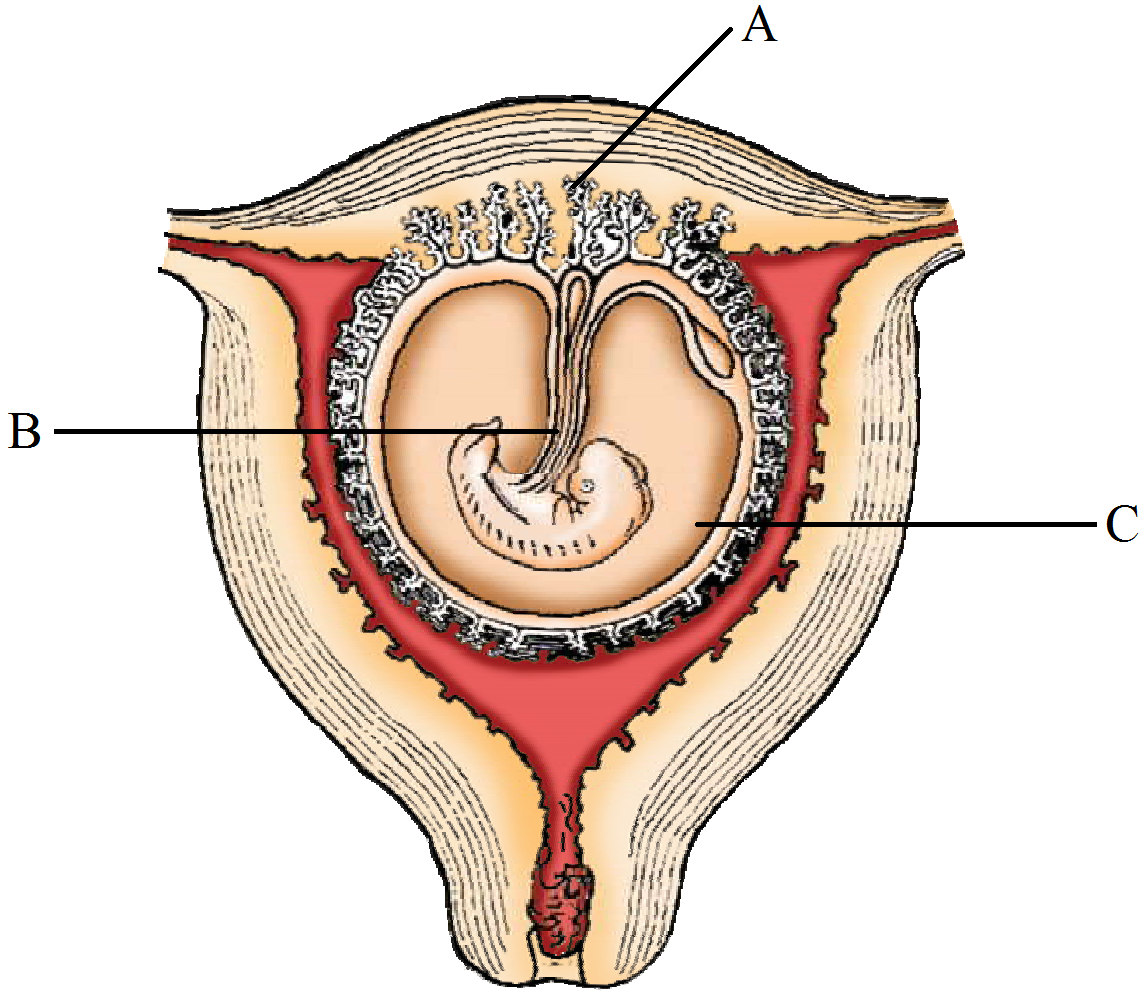
  1. Identify the parts labelled A, B and C in the diagram given.

  1. Draw a labelled diagram of a human blastocyst.
  2. What is parturition and is it induced at the end of pregnancy in a human female?
Describe the roles of pituitary and ovarian hormones during the menstrual cycle in a human female.
Read the following and answer any four questions from (i) to (v) given below:

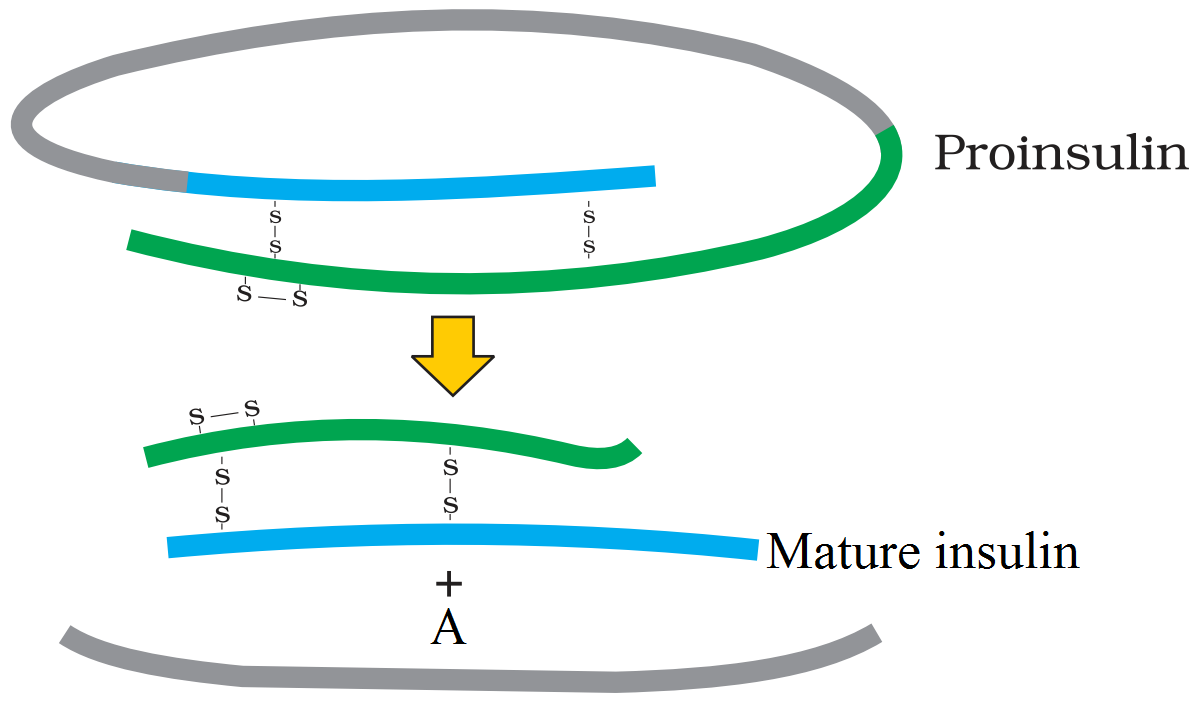
Insulin used to cure diabetes was earlier extracted from pancreas of slaughtered cattle and pigs. Insulin extracted from an animal source, though caused some patients to develop allergy or other types of reactions to the foreign protein. Human insulin consists of two short polypeptide chains : chain A and chain B, that are linked together by disulphide bridges. In mammals including humans, insulin is synthesised as a pro-hormone which contains an extra stretch called the C-peptide. This C peptide is not present in mature insulin and is removed during maturation into insulin.

  1. Identify A in the given figure.

  1. Polypeptide chain A.
  2. Polypeptide chain B.
  3. Polypeptide chain C.
  4. None of these.
  1. The following is a list of some stages involved in producing human insulin from genetically engineered bacteria.
  1. The bacteria are cultured in a fermenter for large scale production.
  2. Recombinant insulin is extracted from the bacterial cells that expresses insulin gene.
  3. The same restriction enzyme is used again to cut the bacterial plasmid for insertion of the human insulin gene.
  4. Bacteria take up the plasmid carrying the insulin gene.
  5. A restriction enzyme is used to cut human DNA to extract the insulin gene.

Select the correct order of these stages.

  1.  1, 5, 3, 4, 2
  2. 2, 4, 3, 5, 1
  3. 4, 5, 3, 2, 1
  4. 5, 3, 4, 1, 2
  1. To insert the insulin gene into bacterial DNA, both the bacterial plasmid and the human chromosome containing the insulin gene are treated with the same restriction enzyme. Using the same restriction enzyme ensures that
  1. DNA ligase is able to join the segments of human and bacterial DNA.
  2. The exact length of nucleotides matching the insulin gene is removed from the plasmid.
  3. Both the bacterial and human DNA will contain sticky ends.
  4. Sticky ends in the cut plasmid and insulin gene are complementary.
  1. Why is the fermentor important for the production of human insulin by transgenic bacteria?
  1. It provides optimal conditions for the transgenic to multiply rapidly.
  2. It facilitates the extraction and purification of insulin from the transgenic bacteria.
  3. It maximise the rate of fermentation of the transgenic bacteria.
  4. It provides the low-oxygen conditions that are important for insulin production.
  1. A bacteriologist carries out his first attempt at engineering E.coli with the gene for human insulin. During the process, he realises that his stock of DNA ligase has depleted but decides to continue anyway. What is a likely consequence of his decision?
  1. Bacteria with the rDNA will not be able to form colonies in a fermenter.
  2. The resulting plasmids are not able to enter the E.coli bacteria even after applying heat shock.
  3. The resulting E.coli bacteria do not contain the human insulin gene.
  4. The bacterial plasmids do not have sticky ends and are unable to accommodate the human gene.
Give reasons why:
Groundnut seeds are exalbuminous and castor seeds are albuminous.
Recombinant DNA (rDNA) is a technology that uses enzymes to cut and paste together DNA sequences of interest. The recombined DNA sequences can be placed into vehicles called vectors that ferry the DNA into a suitable host cell where it can be copied or expressed.
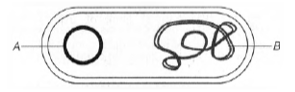
i. A bacterial cell is shown in the figure given below. Label the part 'A' and 'B'. Also, mention the use of part A in rDNA technology.
Image
ii. Suppose a linear DNA fragment and a plasmid has three restriction sites for EcoRI. How many fragments will be produced from linear DNA and plasmid, respectively?
Describe the ill-effects of alcohol on different parts of a body of an individual.
(i) Define standing crop.
(ii) Explain important steps in the process of decomposition in a terrestrial ecosystem.
  1. What is an ecological pyramid? Compare the pyramids of energy, biomass and numbers.
  2. Write any two limitations of ecological pyramids.
State the modifications of forelimb in animals as an example of homology.
What are ecological pyramids? Mention its limitations.