Question
Answer the following questions:
Describe the endosperm development in coconut.

Answer

The primary endosperm nucleus (PEN) undergoes successive nuclear divisions to give rise to free nuclei. Subsequently, cell wall is formed towards the periphery and endosperm becomes cellular, leaving free nuclear endosperm in the central part. This division is followed by cytokinesis and thus endosperm becomes cellular and is called cellular endosperm.

Need a full question paper?

Generate a complete, print-ready paper with questions like this in minutes — across 16+ boards, with answer keys.
Start Generating Free

Similar questions

On a visit to a Hill station, one of your friends suddenly became unwell and felt uneasy.
  1. List two symptoms, you would look for, to term it to be due to allergy.
  2. Explain the response of the body to an allergen.
  3. Name two drugs that can be recommended for immediate relief.
What is pregnancy? Write the name of pregnancy maintaining hormone.
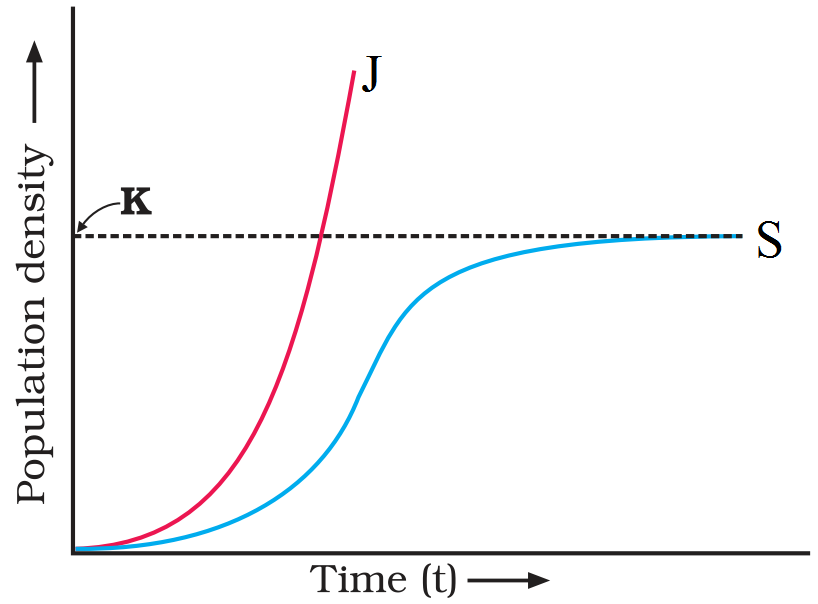
A forest hardly has any carnivores. Census of herbivorous mammals was taken and plotted as a graph shown below:

Identify the curve that will explain the population growth of herbivores. Give reasons for your answer.
The study of:
  1. Fossils of dinosaurs.
  2. Forelimbs of Cheeta, bat and human.
  3. Thorns of Bougainvillea and tendril of Cucurbita shows that evolution of life forms has indeed taken place on earth. Explain.
Write any four ways used to introduce a desired DNA segment into a bacterial cell in recombinant DNA technology experiments.
What is the association between the bumblebee and its favourite orchid Ophrys? How would extinction or change of one affect the other?
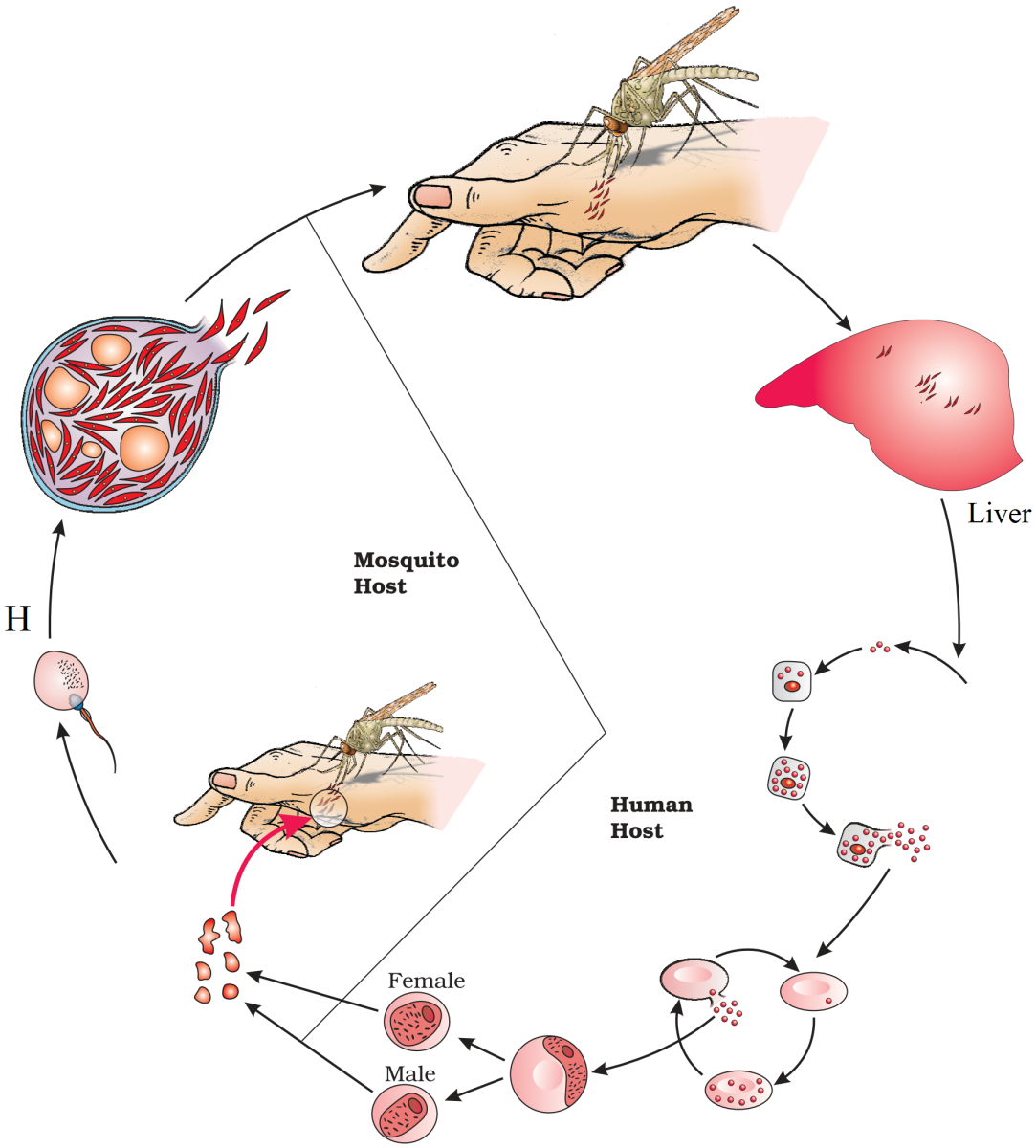
Refer to the diagram given below and answer the questions that follow.

  1. The parasite reproduces in human host by which method?
  2. The sexual stages of parasite are referred to as?
  3. Where does the fertilisation and development of parasite takes place in mosquito body?
  4. What are sporozoites?
  5. What is the cause of cycles of fever during malaria?
When a cross is made between tall plant with yellow seeds (TtYy) and tall plant with green seeds (Ttyy), what proportions of phenotypes in the offsprings could be expected to be:
(i) tall and green
(ii) dwarf and green
The base sequence in one of the strands of DNA is TAGCATGAT
  1. Give the base sequence of its complementary strand.
  2. How are these base pairs held together in a DNA molecule?
  3. Explain the base complementarity rules. Name the scientist who framed this rule.
Give an interesting observation of melanic Moth supporting development by natural selection in England.