Question
Answer the following questions:
How do flowers reward their insect pollinators? Explain.

Answer

Insect pollinators are rewarded in following ways:
  1. The flowers offer floral reward like nectar and pollen grain.
  2. In some species floral reward provides safe place to lay eggs.

Need a full question paper?

Generate a complete, print-ready paper with questions like this in minutes — across 16+ boards, with answer keys.
Start Generating Free

Similar questions

Name the genes responsible for making Bt cotton plants resistant to bollworm attack. How do such plants attain resistance against bollworm attacks? Explain.
Describe how biogas is generated from activated sludge. List the components of biogas.
Name the host plant and its part that Meloidegyne incognita infects. Explain the role of Agrobacterium in the production of dsRNA in the host plant.
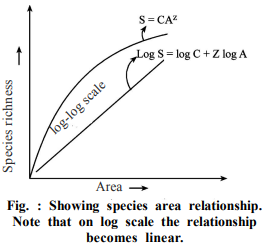
(a) Write the conclusions drawn by Alexander von Humbolt based on his extensive exploration of South America.
(b) Study the graph given below :
Image
According to Alexander von Humbolt, what do the symbols S, A, C, and Z used in graphs indicate in the context of a species and region relationship?
On a visit to a Hill station, one of your friends suddenly became unwell and felt uneasy.
  1. List two symptoms, you would look for, to term it to be due to allergy.
  2. Explain the response of the body to an allergen.
  3. Name two drugs that can be recommended for immediate relief.
What is a bioreactor used for? Name a commonly used bioreactor and any two of its components.
  1. List the two methodologies which were involved in human genome project. Mention how they were used.
  2. Expand ‘YAC’ and mention what was it used for.
Write a short note on
Adaptations of desert plants and animals
Explain- Biochemical Characterisation of Transforming Principle
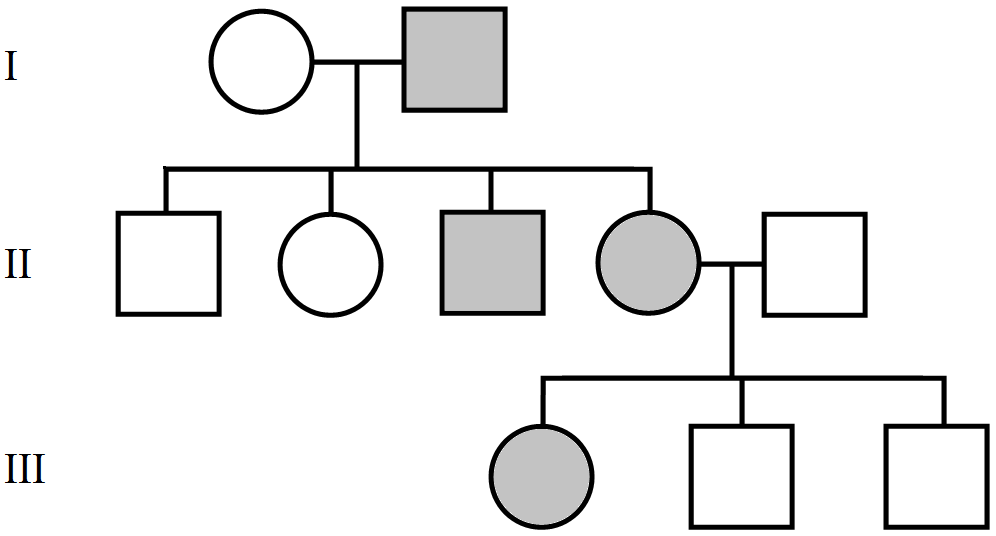
Study the given pedigree chart and answer the questions that follow.

  1. Is the trait recessive or dominant?
  2. Is the trait sex linked or autosomal?
  3. Give the genotypes of the parents shown in generation I and their III child shown in generation II and the first grandchild shown in generation III.