Question
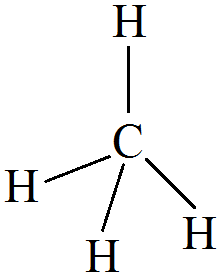
Apart from tetrahedral geometry, another possible geometry for CH4 is square planar with the four H atoms at the corners of the square and the C atom at its centre. Explain why CH4 is not square planar?

Need a full question paper?

Generate a complete, print-ready paper with questions like this in minutes — across 16+ boards, with answer keys.

Start Generating Free

Similar questions

What is the type of hybridisation of carbon atoms marked with star.

  1. $\text{CH}_{3}=\text{CH}-\text{C}-\text{O}-\text{H}$ 

  2. $\text{CH}_{3}-\text{CH}_{2}-\text{OH}$

  3. $\text{CH}_{3}-\text{CH}_{2}-\text{C}-\text{H}$

  4. $\text{CH}_{3}-\text{CH}=\text{CH}-\text{CH}_{3}$

  5. $\text{CH}_{3}-\text{C}\equiv\text{CH}$

Comprehension given below is followed by some multiple choice questions. Each question has one correct option. Choose the correct option.

Molecular orbitals are formed by the overlap of atomic orbitals. Two atomic orbitals combine to form two molecular orbitals called bonding molecular orbital (BMO) and anti bonding molecular orbital (ABMO). Energy of anti bonding orbital is raised above the parent atomic orbitals that have combined and the energy of the bonding orbital is lowered than the parent atomic orbitals. Energies of various molecular orbitals for elements hydrogen to nitrogen increase in the order.

Different atomic orbitals of one atom combine with those atomic orbitals of the second atom which have comparable energies and proper orientation. Further, if the overlapping is head on, the molecular orbital is called ‘Sigma’, and if the overlap is lateral, the molecular orbital is called ‘pi’. The molecular orbitals are filled with electrons according to the same rules as followed for filling of atomic orbitals. However, the order for filling is not the same for all molecules or their ions. Bond order is one of the most important parameters to compare the strength of bonds.

Prove that product of $K _{ a }$ of acid and $K _{ b }$ of base is equal to $K_w$.
1. Suggest a method to purify
i. a liquid which decomposes at its boiling point.
ii. kerosene oil containing water.
iii. camphor containing traces of common salt.
2. Giving justification, categorise the following molecules/ions as nucleophile or electrophile:
$
\begin{aligned}
& HS^{-}, BF_3, C_2 H_5 O^{-},\left(CH_3\right)_3 N:, \\
& C \stackrel{+}{l}, C H_3-\stackrel{+}{C}=O, H_2 N \stackrel{+}{:}, \stackrel{+}{N} O_2
\end{aligned}
$
  1. In qualitative analysis, on what basis cations are grouped?
  2. The value of Kc in the reaction:

$2\text{A}\rightleftharpoons\text{B}+\text{C}$ is 2 × 10-3. At a given time, the composition of reaction mixture is [A] = [B] = [C] = 3 × 10-4M. In which direction the reaction will proceed?
  1. The solubility of Sr(OH)2 at 298K is 19.23g/L of solution. Calculate the concentration of strontium and hydroxyl ions and the pH of the solution.
The ionization constant of benzoic acid is $6.46 \times 10^{-5}$ and $K_{s p}$ for silver benzoate is $2.5 \times$ $10^{-13}$. How many times is silver benzoate more soluble in a buffer of pH 3.19 compared to its solubility in pure water?
Give reasons for the following:
  1. Covalent bonds are directional bonds while ionic bonds are non- directional.
  2. Water molecule has bent structure whereas carbon dioxide molecule is linear.
  3. Ethyne molecule is linear.
$2\text{NO}(\text{g})+\text{O}_2(\text{g})\rightleftharpoons2\text{NO}_2(\text{g});\Delta\text{H}=-17\text{KJ}$
  1. Predict the effect of an increase in concentration of NO on the equilibrium concentration of NO2.
  2. Predict the effect of pressure decrease as a result of increased volume on the equilibrium concentration of NO2.
Write Lewis structure of the following compounds and show formal charge on each atom.
HNO3, NO2, H2SO4.
Define the octet rule and explain its limitations with examples.
  1. Predict the sign of the entropy change for each of the following changes:
  1. Hg(l) → Hg(g)
  2. Steam → Water
  1.  
  1. Define Gibb's Energy. Give its mathematical expression. What is Gibb's energy criteria for spontaneity.
  2. Give a brief note on the following thermodynamic terms:
  • Standard enthalpy of combustion.
  • Standard enthalpy of formation.