Question
Assertion  :   A domestic electrical appliance, working on a three pin will continue working even if the top pin is removed.
Reason     : The third pin is used only as a safety device.(a) If both assertion and reason are true and the reason is the correct explanation of the assertion.(b) If both assertion and reason are true but reason is not the correct explanation of the assertion.(c) If assertion is true but reason is false.(d) If the assertion and reason both are false.


Answer

(a) If both assertion and reason are true and the reason is the correct explanation of the assertion.

Need a full question paper?

Generate a complete, print-ready paper with questions like this in minutes — across 16+ boards, with answer keys.

Start Generating Free

Similar questions

In a Young's double slit experiment, the central point on the screen is(a) Bright  (b) Dark(c) First bright and then dark    (d) First dark and then bright
   
   
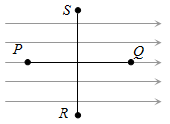
The points resembling equal potentials are
The mass number of a nucleus is equal to:
  1. The number of neutrons in the nucleus.
  2. The number of protons in the nucleus.
  3. The number of nucleons in the nucleus.
  4. None of them.
A current loop placed in a magnetic field behaves like a(a) Magnetic dipole(b) Magnetic substance(c) Magnetic pole(d) All are true
       
Nickel is :
The state of the energy gained by valance electrons when the temperature is raised or when electric field is applied is called as(a) Valance band(b) Conduction band(c) Forbidden band(d) None of these
       
Electromagnetic waves travel in a medium which has relative permeability $1.3$ and relative permittivity $2.14.$ Then the speed of the electromagnetic wave in the medium will be
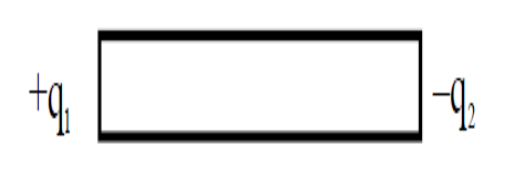
A thin insulator rod is placed between two unlike point charges $+q_1$​ and $q_2​$. For this situation tick the correct alternative $(s):$​​​​​​​
A uniform sphere is placed on a smooth horizontal surface and a horizontal force F is applied on it at a distance h above the surface. The acceleration of the centre:
  1. Is maximum when h = 0.
  2. Is maximum when h = R.
  3. Is maximum when h = 2R.
  4. Is independent of h.
The typical ionisation energy of a donor in silicon is(a) 10.0 eV(b) 1.0eV(c) 0.1 eV(d) 0.001 eV