Question

Assertion  :  Two P-N junction diodes placed back to back, will work as a NPN transistor.

Reason     : The P-region of two PN junction diodes back to back will form the base of NPN transistor.

(a) If both assertion and reason are true and the reason is the correct explanation of the assertion.

(b) If both assertion and reason are true but reason is not the correct explanation of the assertion.

(c) If assertion is true but reason is false.

(d) If the assertion and reason both are false.

Answer

(d) If the assertion and reason both are false.

Need a full question paper?

Generate a complete, print-ready paper with questions like this in minutes — across 16+ boards, with answer keys.

Start Generating Free

Similar questions

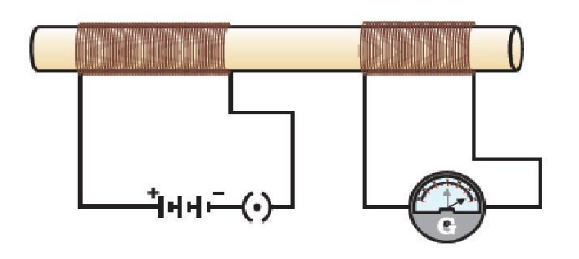
In the arrangement shown in given Figure, there are two coils wound on a non-conducting cylindrical rod. Initially the key is not inserted. Then the key is inserted and later removed. Then,

Two electric bulbs rated  watt V volts and   watt V volts are connected in parallel and V volts are applied to it. The total power will be    

(a)  watt

(b)  watt

(c)  

(d)

Which of the following is non-ohmic resistance?

The time period of oscillation of a magnet in a vibration magnetometer is 1.5 seconds. The time period of oscillation of another magnet similar in size, shape and mass but having one-fourth magnetic moment than that of first magnet, oscillating at same place will be

(a) 0.75 sec

(b) 1.5 sec

(c) 3 sec  

(d) 6 sec

The magnetic moment of a current (i) carrying circular coil of radius (r) and number of turns (n) varies as

(a) 1/ r2   

(b) 1/ r

(c) r  

(d) r2

A spring-mass system oscillates with a frequency v. If it is taken in an elevator slowly accelerating upward, the frequency will:
  1. Increase.
  2. Decrease.
  3. Remain same.
  4. Become zero.

A deutron is bombarded on   nucleus and a-particle is emitted. The product nucleus is

(a)  

(b)  

(c)  

(d)  

The energy of a hydrogen atom in its ground state is -13.6eV. The energy of the level corresponding to the quantum number n = 2 (first excited state) in the hydrogen atom is

(a) – 2.72 eV

(b) – 0.85 eV

(c) – 0.54 eV

(d) – 3.4 eV

If q is the charge per unit area on the surface of a conductor, then the electric field intensity at a point on the surface is

(a)  normal to surface

(b)  normal to surface

(c)   tangential to surface

(d)   tangential to surface

An electric dipole of moment p is placed at the origin along the x-axis. The electric field at a point P, whose position vector makes an angle θ with the x -axis, will make an angle ..... with the x -axis, where  tanα =  

(a) α

(b) θ

(c) θ + α

(d) θ  +2 α