MCQ
By photoelectric effect, Einstein, proved
  • $E=h v$
  • B
    K.E. $=\frac{1}{2} m v^2$
  • C
    $E=m c^2$
  • D
    $E=\frac{R h c^2}{n^2}$

Answer

Correct option: A.
$E=h v$

Need a full question paper?

Generate a complete, print-ready paper with questions like this in minutes — across 16+ boards, with answer keys.

Start Generating Free

Similar questions

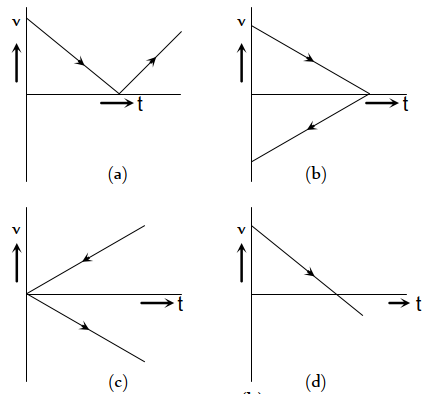
A ball is thrown vertically upwards. Which of the following graph/graphs represent velocity-time graph of the ball during its flight (air resistance is neglected)
Image
If a long spring is stretched by $0.02 \mathrm{~m}$, its potential energy is $U$. If the spring is stretched by $0.1 \mathrm{~m}$, then its potential energy will be
The frequency of a rod is $200 \mathrm{~Hz}$. If the velocity of sound in air is $340 \mathrm{~ms}^{-1}$, the wavelength of the sound produced is
The frequencies of two sound sources are $256 \mathrm{~Hz}$ and $260 \mathrm{~Hz}$. At $t$ $=0$, the intensity of sound is maximum. Then the phase difference at the time $t=1 / 16\  \mathrm{sec}$ will be
The resultant of $\vec{P}$ and $\vec{Q}$ is perpendicular to $\vec{P}$. What is the angle between $\vec{P}$ and $\vec{Q}$
Which is the correct statement
Two identical cylindrical vessels with their bases at same level each contains a liquid of density $\rho$. The height of the liquid in one vessel is $h_1$ and that in the other vessel is $h_2$. The area of either base is$A$. The work done by gravity in equalizing the levels when the two vessels are connected, is
On a stationary sail-boat, air is blown at the sails from a fan attached to the boat. The boat will
An object of height $1.5 \mathrm{~cm}$ is placed on the axis of a convex lens of focal length $25 \mathrm{~cm}$. A real image is formed at a distance of $75 \mathrm{~cm}$ from the lens. The size of the image will be
Hailstone at $0^{\circ} \mathrm{C}$ falls from a height of $1 \mathrm{~km}$ on an insulating surface converting whole of its kinetic energy into heat. What part of it will melt $\left(g=10 \mathrm{~m} / \mathrm{s}^2\right)$