Question
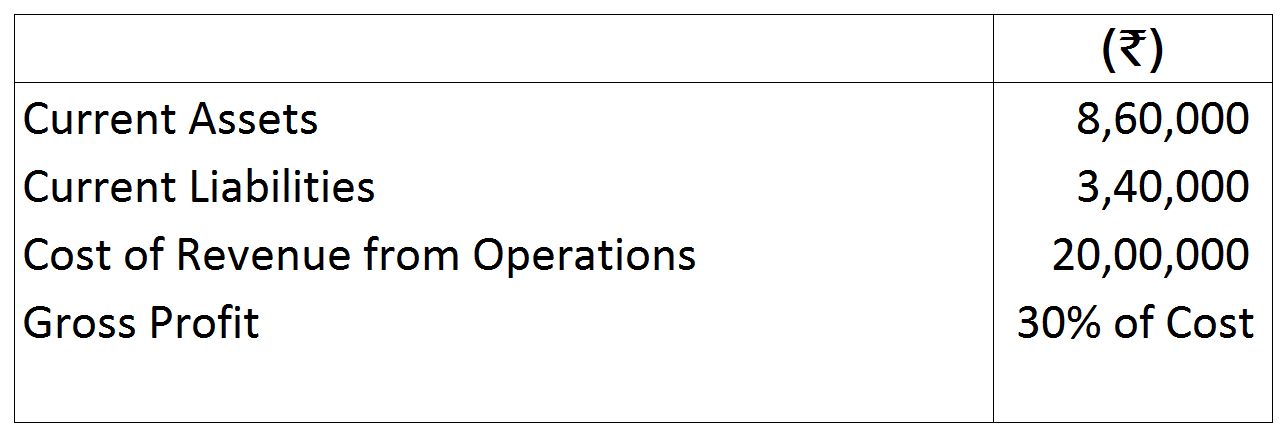
Calculate Working Capital Turnover Ratio from the following information:
Answer

Working Capital Turnover Ratio $=\frac{\text{Net Revenue from Operations}}{\text{Working Capital}}$
Net Revenue from Operations = Cost of Revenue from Operations + Gross Profit
= ₹ 20,00,000 + 30% of 20,00,000
= ₹ 20,00,000 + ₹ 6,00,000 = ₹ 26,00,000
Working Capital Current Assets - Current Liabilities
= ₹ 8,60,000- ₹ 3,40,000 = ₹ 5,20,000
Working Capital Turnover Ratio $=\frac{₹\ 26,00,000}{₹\ 5,20,000}=5\text{ Times}$

Need a full question paper?

Generate a complete, print-ready paper with questions like this in minutes — across 16+ boards, with answer keys.

Start Generating Free

Similar questions

Why is Analysis of Financial Statements important to creditors?
Calculate Current Ratio from the following information:
Particulars
Particulars
Total Assets.
5,00,000
Non-Current Liabilities.
1,30,000
Fixed Tangible Assets.
2,50,000
Non-Current Investments
1,50,000
Shareholders' Funds.
3,20,000
 
 
Net Profit after Interest but before Tax ₹ 65,000; Shareholder's Funds ₹ 3,00,000; 15% Long-Term Debt ₹ 1,00,000. Calculate Return on Investment.
Calculate Total Assets to Debt Ratio from the following information:
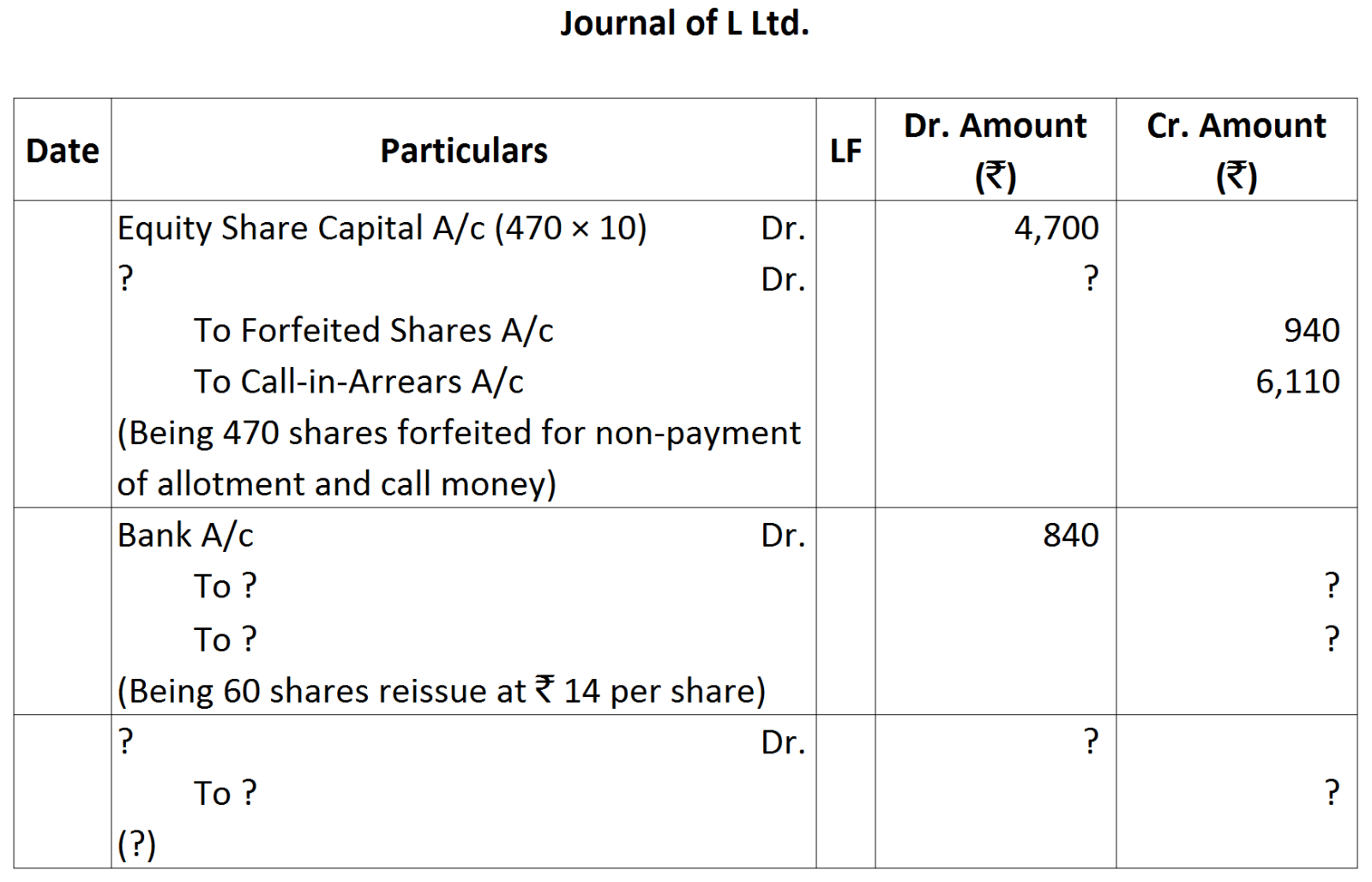
(Forfeiture and Reissue of shares). Complete the following Journal entries:
Wye Ltd. purchased an established business for ​₹ 2,00,000 payable as ​₹ 65,000 by cheque and the balance by issuing 9% Debentures of ​₹ 100 each at a discount of 10%.
Give journal entries in the books of Wye Ltd.
Pass the necessary journal entries for issue of 1,000, 7% Debentures of ₹ 100 each in the following cases:
  1. Issued at 5% premium redeemable at a premium of 10%.
  2. Issued at a discount of 5% redeemable at par.
State the major head under which the following items will be shown in the Statement of Profit and Loss of a Company:
  1. Loss on Issue of Debentures written off.
  2. Dividend received.
  3. Sale of Services.
  4. Contribution to Gratuity fund.
  5. Medical Expenses.
  6. Bank Charges.
  7. Carriage Outwards.
  8. Bad-Debts written off.
Y Ltd. purchased machinery for ₹ 90,000. Half the amount was paid in Cash and the remaining half by the issue of 12% Debentures of ₹ 100 each at a discount of 10%. Pass Journal entries.
Under which major head/sub-head will the following items be presented in the Balance Sheet of a company as per Schedule III Part I of the the Companies Act, 2013?
  1. Capital Advances
  2. Income received in advance
  3. Capital work-in-progress
  4. Motor vehicles
  5. Stores and spare parts
  6. 9% Debentures