Question
Can there be mitosis without DNA replication in ‘S’ phase?

Answer

No, there cannot be mitosis without DNA replication in S phase because additional DNAs are required for the formation of new cells. DNA duplication is important as it maintains the chromosome number in the daughter cells and hence Mitosis is an equational division. Therefore, the duplication of DNA is an essential step and without it, no mitosis can take place.

Need a full question paper?

Generate a complete, print-ready paper with questions like this in minutes — across 16+ boards, with answer keys.

Start Generating Free

Similar questions

Define oxygen dissociation curve. Can you suggest any reason for its sigmoidal pattern?
How many types of circulation exist? Write their names and list four functions of blood.
An Rh- woman is carrying an Rh+ foetus for the second time. Describe the consequences of Rh-incompatibility in this case

OR

Why is it necessary to check the Rh factor of the blood in a pregnant woman?

OR

What physiological circumstances lead to erythroblastosis foetalis?
Differentiate between obligate categories and intermediate categories. Demonstrate with the help of a flowchart.
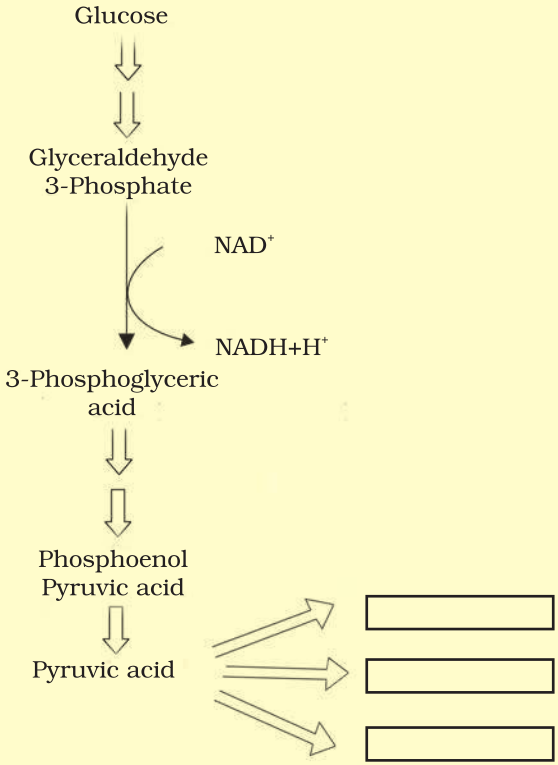
Pyruvic acid is the end product of glycolysis. What are the three metabolic products of pyruvic acid produced under aerobic and anaerobic conditions? Write their name in the space provided in the diagram.

Describe three reasons for the generation of a proton gradient between the lumen of thylakoids and the stroma of chloroplasts.
Give reason for each of the following:
  1. The vascular bundles of an isobilateral leaf are near similar in size, except that in the midrib.
  2. Heart wood is dark brown in colour.
  3. Cells of phellem/cork are impervious to water.
  4. Quantity of secondary xylem produced is more than the quantity of secondary phloem during secondary growth.
  5. Phellogen is a secondary meristem.
What is the basic body plan of animals?
Ankita prepared hard for the test at home. All text based question and one practical based question on lock and key hypothesis was given to check whether the students had understood the phenomenon or not. Ankita who was a topper of class was the only student who was able to solve the problem. All others were unable to attempt the same. Teacher felt happy and asked Ankita to explain the process in the class.
  1. Who proposed the lock and key hypothesis?
  2. What is the nature of enzyme action?
  3. Why are enzymes also called biocatalyst?
  4. What values are reflected from Ankita's character?
  5. The hypothesis was given by Emil Fischer in 1894.
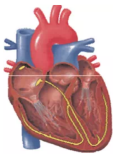
In the diagrammatic presentation of heart given below, mark and label, SAN, AVN, AV bundles, bundle of His and Purkinje fibres.

Image