MCQ
Characteristic X-ray radiations are produced when :
  • A
    electrons are accelerated to a definite energy
  • B
    source of electrons should produce mono-chromatic electron beam
  • the bombarding electrons should eject the electrons from the inner orbit and electrons from outer orbit should transit into the gap so formed
  • D
    the valency electrons should be removed due to collision of incident electrons

Answer

Correct option: C.
the bombarding electrons should eject the electrons from the inner orbit and electrons from outer orbit should transit into the gap so formed
C

Need a full question paper?

Generate a complete, print-ready paper with questions like this in minutes — across 16+ boards, with answer keys.

Start Generating Free

Similar questions

Boron rods in a nuclear reactor are used to:

The voltage gain of the following amplifier is

(a) 10

(b) 100

(c) 1000

(d) 9.9

Which of the following are non polar molecules:
When electromagnetic waves enter the ionised layer of ionosphere, then the relative permittivity i.e. dielectric constant of the ionised layer:
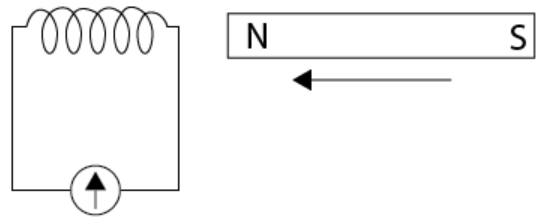
A magnet is moved into the coil of wire as shown, there is a small reading on the sensitive meter.
Which change would increase the size of the reading?
Image

When the number of turns in a coil is doubled without any change in the length of the coil, its self inductance becomes

(a) Four times

(b) Doubled

(c) Halved

(d) Unchanged

The half-life of radioactive Polonium (Po) is 138.6 days. For ten lakh Polonium atoms, the number of disintegrations in 24 hours is

(a) 2000  

(b) 3000

(c) 4000  

(d) 5000

Consider the two idealized systems: (i) a parallel plate capacitor with large plates and small separation and (ii) a long solenoid of length L > > R, radius of cross-section. In (i) E is ideally treated as a constant between plates and zero outside. In (ii) magnetic field is constant inside the solenoid and zero outside. These idealised assumptions, however, contradict fundamental laws as below:

According to Joule's law, if the potential difference across a conductor having a material of specific resistance remains constant, then the heat produced in the conductor is directly proportional to

(a) ρ

(b)  

(c)  

(d)  

At magnetic poles, the angle of dip is: