Question
Classify the under-mentioned errors into:
  1. Error of Omission
  2. Error of Commission
  3. Compensating Error
  4. Error of Principle
  1. Purchased goods from Bhardwaj on credit for ₹ 600, but were recorded in the purchase book as ₹ 6,000.
  2. Amount paid for the proprietor’s life insurance premium was debited to 'General Expenses Account'.
  3. Goods amounting to ₹ 2,000 have been returned to Chakravarti, but no entry has been made in the books.
  4. An excess debit of ₹ 4,500 has been made in the account of X, whereas Y's account has been credited by ₹ 5,000 instead of ₹ 500.
  5. Goods sold to Suresh for ₹ 650 were recorded as ₹ 560 in the Sales Book.
  6. Typewriter purchased for office use has been debited to Purchases Account.
  7. Wages paid for the construction of Building ₹ 15,000 were recorded in "Wages Account'.
  8. Goods for ₹ 500 have been taken by the proprietor for his personal use, for which no entry has been passed in the books.
Answer

Error of Omission:
  1. Goods amounting to ₹ 2,000 have been returned to Chakravarti, but no entry has been made in the books.
  1. Goods for ₹ 500 have been taken by the proprietor for his personal use, for which no entry has been passed in the books.
Error of Commission:
  1. Purchased goods from Bhardwaj on credit for ₹ 600, but were recorded in the purchase book as ₹ 6,000.
  1. Goods sold to Suresh for ₹ 650 were recorded as ₹ 560 in the Sales Book.
Compensating Error:
  1. An excess debit of ₹ 4,500 has been made in the account of X, whereas Y's account has been credited by ₹ 5,000 instead of ₹ 500.
Error of Principle:
  1. Amount paid for the proprietor’s life insurance premium was debited to 'General Expenses Account'.
  1. Typewriter purchased for office use has been debited to Purchases Account.
  1. Wages paid for the construction of Building ₹ 15,000 were recorded in "Wages Account'.

Need a full question paper?

Generate a complete, print-ready paper with questions like this in minutes — across 16+ boards, with answer keys.

Start Generating Free

Similar questions

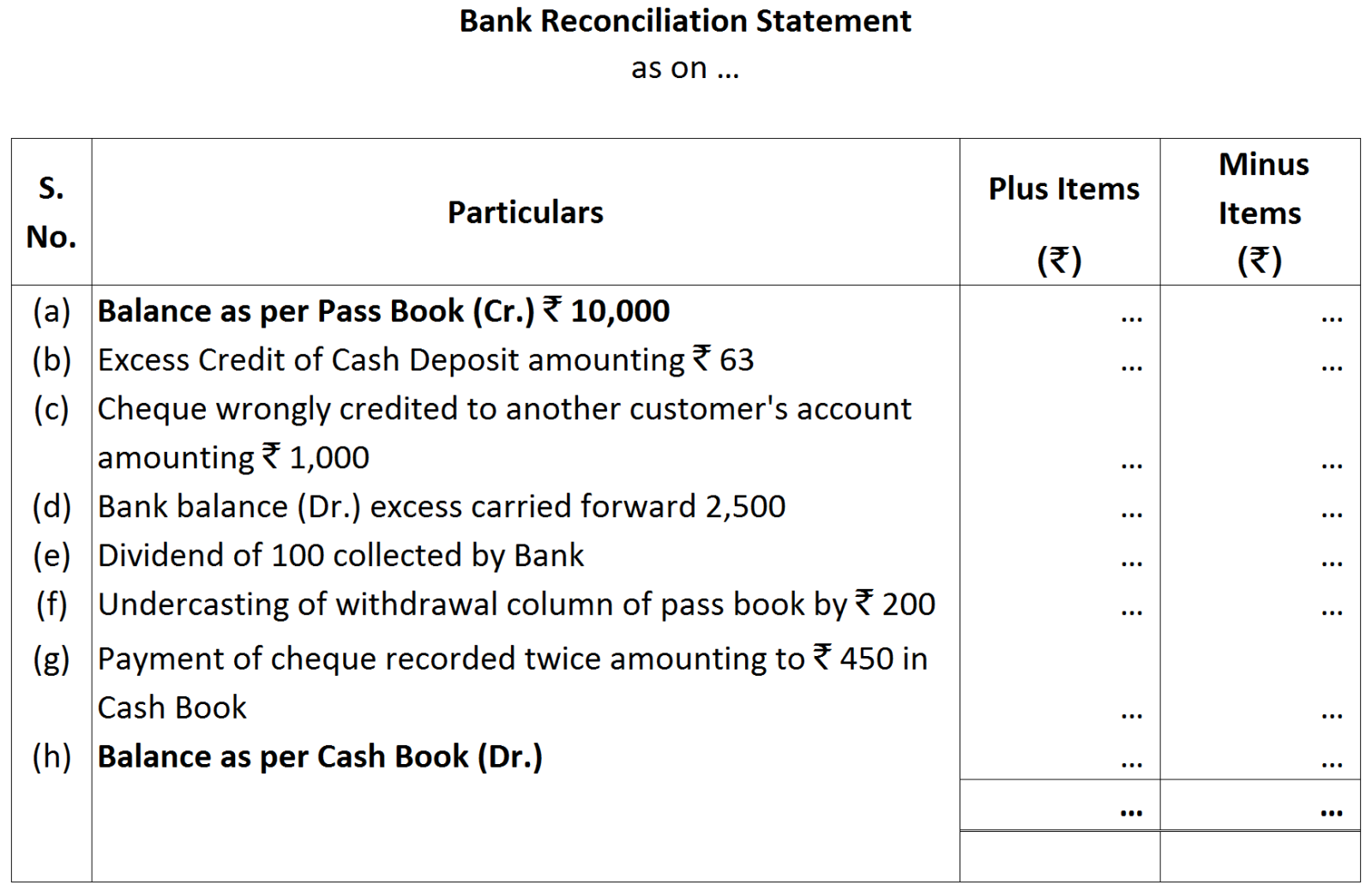
Complete the following Bank Reconciliation Statement:
On 1st January, 2019, X sold goods of ₹ 20,000 to Y and drew a bill on Y at three months for the amount. Y accepted the bill. The bill is met on maturity. Pass the necessary Journal entries in the books of X and Y, if X discounted the bill @ 12% p.a. from bank on 4th January.
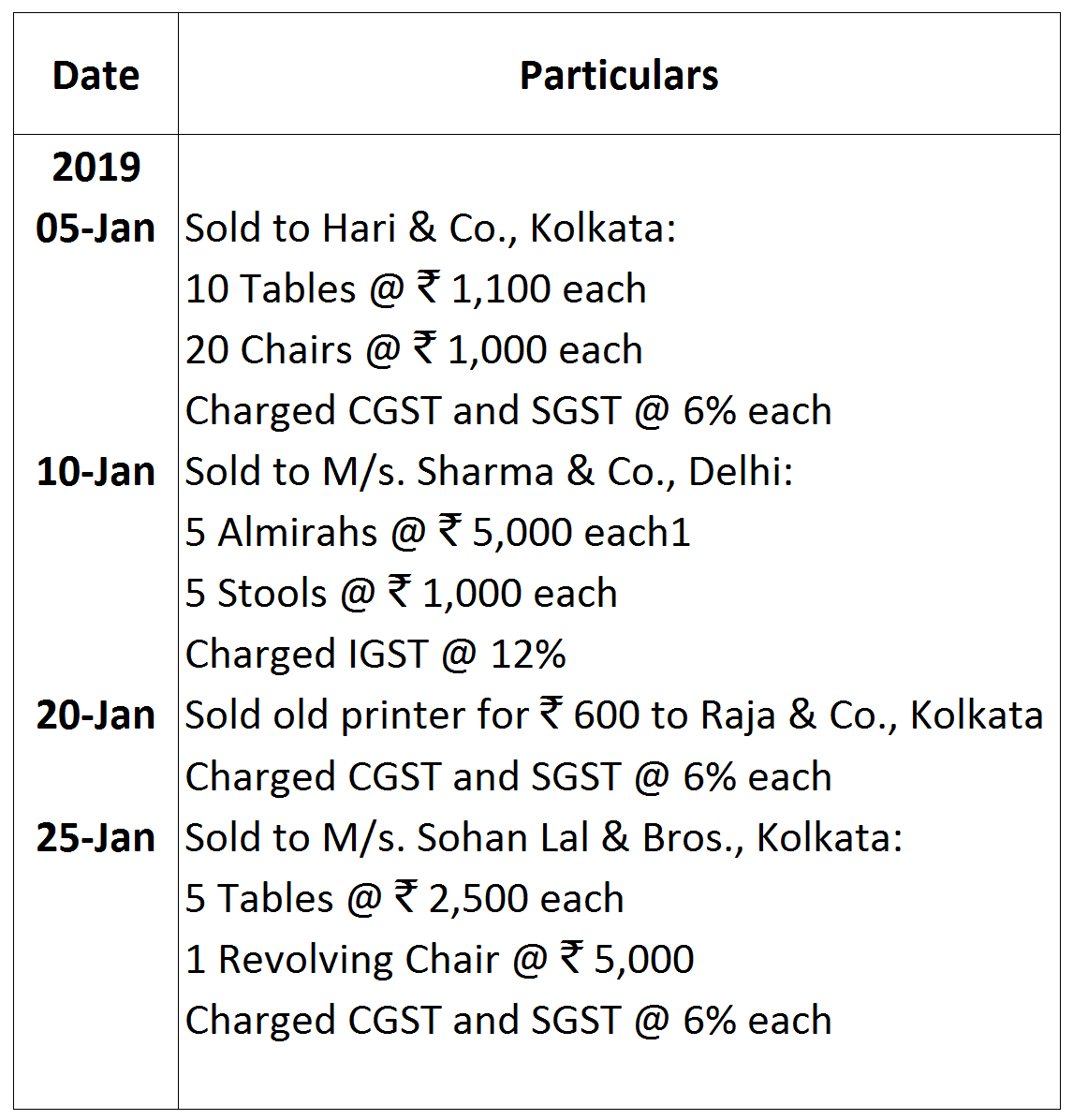
From the following particulars, prepare Sales Book of Gupta & Co., Kolkata who deals in furniture:
Show the Posting from Sales Book to Ledger Accounts.
Mr. Yadav, the petty cashier of M/s Triputi Traders received ₹ 10,000 on April 1, 2016 from the Head Cashier. Following were the petty expenses:
2016
 
(₹)
April 2
Taxi fare
750
April 3
Refreshments
450
April 5
Registered postal charges
200
April 5
Wages
700
April 8
Auto fare
200
April 9
Courier charges
150
April 12
Postal Stamps
600
April 14
Eraser/ Sharpeners/ Pencils
400
April 17
Speed Post charges
200
April 20
Cartage
600
April 20
Computer Stationery
500
April 22
Wages
300
April 24
Bus fare
600
April 25
Office Sanitation
800
April 26
Refreshments
750
April 28
Loading Charges
300
April 30
Photostatting Charges
200
April 30
Wages
800
You are required to prepare a Petty Cash Book.
On 1st January 2017, Hari drew on Gopal, who is his debtor for ₹ 60,000 three bills of exchange: First for ₹ 15,000 at one month, Second for ₹ 20,000 at two months and third for ₹ 25,000 at three months. Gopal accepted all the three bills.
On 5th January 2017, Hari endorsed the first bill to his creditor Satish in full settlement of his account of ₹ 15,200. This bill was duly met on maturity.
On 1st February 2017, the second bill was discounted from the bank @ 12% p.a. This bill was dishonoured on the due date and bank paid ₹ 120 as noting charges. On Gopal's request, Hari drew a fourth bill on Gopal for 2 months for the amount due plus interest @ 15% p.a.
Third bill was paid under a rebate of 12% p.a. one month before maturity. The fourth bill was sent to bank for collection on 4th May 2017 and was duly met on maturity.
Pass Journal entries in the books of Hari, Gopal and Satish.
Mr. Lal operates two bank accounts both of which are maintained in the columnar cash book itself. You are required to prepare a proforma of the cash book, record the following transactions therein and draw the closing balances as on 30th June, 2016:
2016
 
(₹)
June 20
Opening Balance of Cash
1,180
Progressive Bank
19,040
Goodwill Bank (Overdraft)
6,460
June 20
Received cheque for ₹ 1,800 from a debtor Mr. X and deposited in Goodwill Bank. The Bank credited the amount on 23rd June and debited ₹ 4 as its collection charges.
 
June 21
Purchased goods for ₹ 18,210 and a cheque issued on Progressive Bank.
 
June 22
Paid office expenses ₹ 410 and ₹ 80 for stationery in cash.
 
June 23
Deposited a cheque for ₹ 21,090 being sale proceeds of goods in Progressive Bank. The Bank credited the amount on the same day and debited ₹ 21 as cheque discounting charges.
 
June 23
A cheque for ₹ 8,000 drawn by Mr. Lal himself on Progressive Bank was deposited in his account with Goodwill Bank.
 
June 25
Cash drawn from the account with Progressive Bank ₹ 600 for office use.
 
June 25
A cheque for ₹ 1,100 received from Mr. A and earlier deposited in Goodwill Bank (on 14th June) was returned unpaid and Bank debited ₹ 10 towards its charges. Mr. Lal received the amount of returned cheque and Bank charges in cash from Mr. A.
 
June 28
Deposited cash ₹ 1,500 in the account with Goodwill Bank.
 
June 29
Purchased postal stamps for ₹ 200 and paid in cash.
 
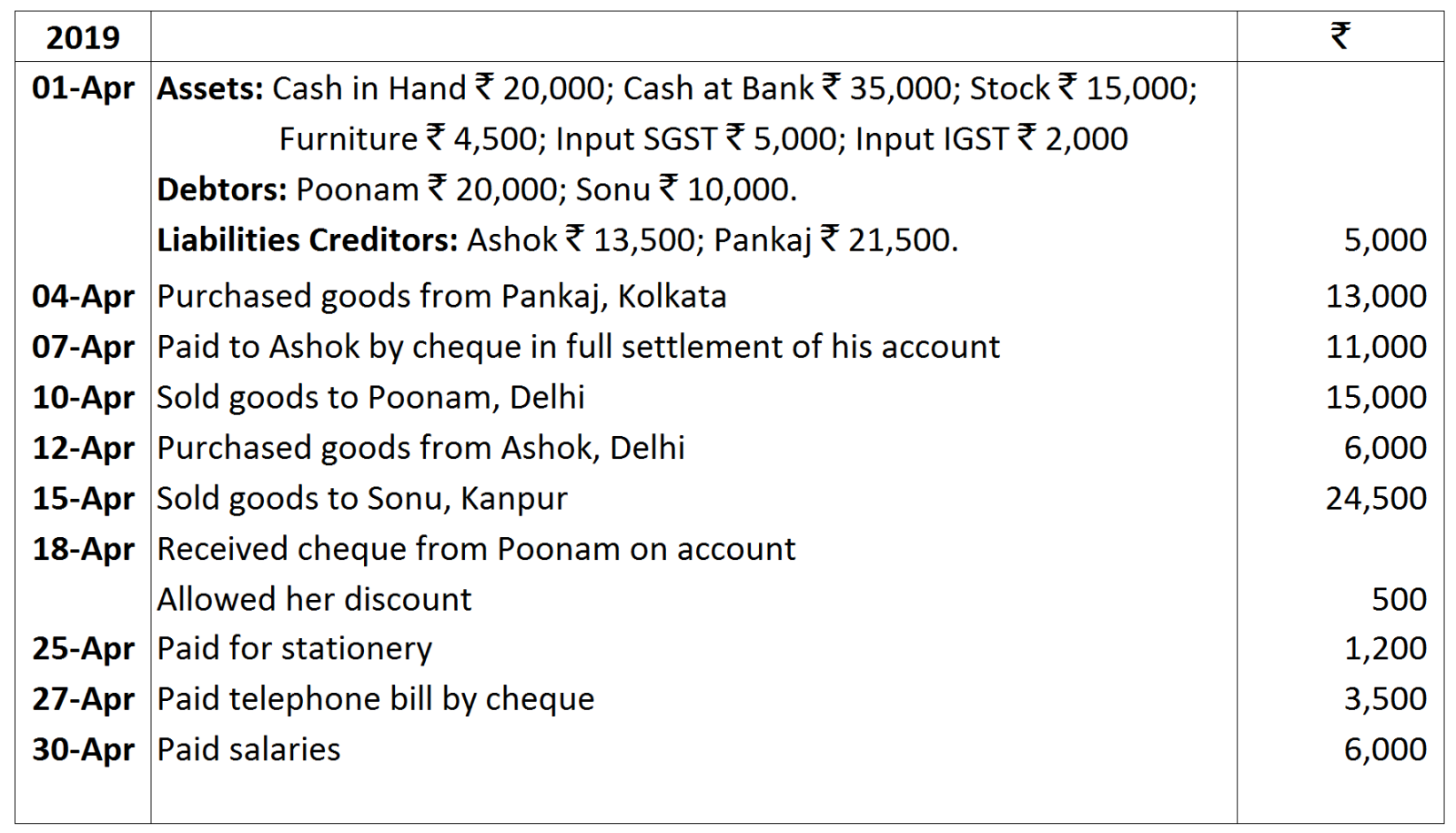
Enter the following transactions in the Journal of M/s. Karim Bros., Prop. Shri Karim Khan, Kolkata, post to the Ledger:
Inter-state transactions are subject to levy of IGST @ 12% and Intra-state transactions are subject to levy of CGST and SGST @ 6% each. GST is not levied on transactions marked with (*).
Discuss the concept-based on the premise ‘do not anticipate profits but provide for all losses’.
A drew a bill of ₹ 1,000 on B for 3 months which was duly accepted by the latter. A endorsed the bill to C in full payment of his own acceptance to C for a like amount. C endorsed the bill to B.
Pass the Journal entries in the books of A, B and C.
What is the objective behind preparing an Account? What is meant by recording on debit and credit sides of any Account? Explain with examples.