Question

Consider the points lying on a straight line joining two fixed opposite charges. Between the charges there is

(a) No point where electric field is zero

(b) Only one point where potential is zero

(c) Only one point where electric field is zero

(d) a, b

Answer

(d) a, b

Need a full question paper?

Generate a complete, print-ready paper with questions like this in minutes — across 16+ boards, with answer keys.

Start Generating Free

Similar questions

The cellular mobile radio frequency band is:
The magnetic field of Earth can be modelled by that of a point dipole placed at the centre of the Earth. The dipole axis makes an angle of 11.3º with the axis of Earth. At Mumbai, declination is nearly zero. Then:

We use flint glass prism to disperse polychromatic light because light of different colours

(a) Travel with same speed

(b) Travel with same speed but deviate differently due to the shape of the prism

(c) Have different anisotropic properties while travelling through the prism

(d) Travel with different speeds

In a parallel plate capacitor of capacitance C, a metal sheet is inserted between the plates, parallel to them. If the thickness of the sheet is half of the separation between the plates. The capacitance will be

(a)  

(b)  

(c) 4C       

(d) 2C

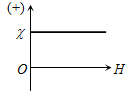
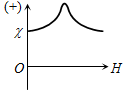
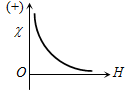
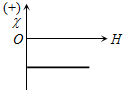
The variation of magnetic susceptibility (x) with magnetising field for a paramagnetic substance is

(a)

(b)

(c)

(d)


Work function of a metal is 2.51 eV. Its threshold frequency is

(a) 5.9  cycle/sec

(b) 6.5  cycle/sec

(c) 9.4  cycle/sec

(d) 6.08  cycle/sec

Each atom of an iron bar (5cm × 1 cm × 1 cm)  has a magnetic moment 1.8 .  Knowing that the density of iron is 7.78  atomic weight is 56 and Avogadro's  number is 6.02   the magnetic moment of bar in the state of magnetic saturation will be

(a) 4.75  

(b) 5.74  

(c) 7.54  

(d)  75.4

Assertion  :   For a perfectly diamagnetic substance permeability is always one.

Reason       : The ability of a material of permit the passage of magnetic lines of force through it is called magnetic permeability.

(a) If both assertion and reason are true and the reason is the correct explanation of the assertion.

(b) If both assertion and reason are true but reason is not the correct explanation of the assertion.

(c) If assertion is true but reason is false.

(d) If assertion is false but reason is true.

X-ray incident on a material:
When the number of nucleons in nuclei increases, the binding energy per nucleon?