Question
Current Ratio 5 : 2; Quick Ratio 2 : 1; Current Liabilities ₹ 5,60,000. Calculate the value of inventory.

Answer

Current Ratio = 5 : 2, therefore,
If Current Liabilities are 2,
Current Assets = 5
If Current Liabilities are 1,
Current Assets $=\frac{5}{2}$
If Current Liabilities are ₹ 5,60,000.
Current Assets $=\frac{5}{2}\times ₹\ 5,60,000$
= ₹ 14,00,000
Quick Ratio = 2 : 1, therefore
If Current Liabilities are 1,
Liquid Assets = 2
If Current Liabilities are ₹ 5,60,000
Liquid Assets $=\frac{2}{1}\times ₹\ 5,60,000$
= ₹ 11,20,000
Inventory = Current Assets - Liquid Assets
= ₹ 14,00,000 - ₹ 11,20,000
= ₹ 2,80,000

Need a full question paper?

Generate a complete, print-ready paper with questions like this in minutes — across 16+ boards, with answer keys.
Start Generating Free

Similar questions

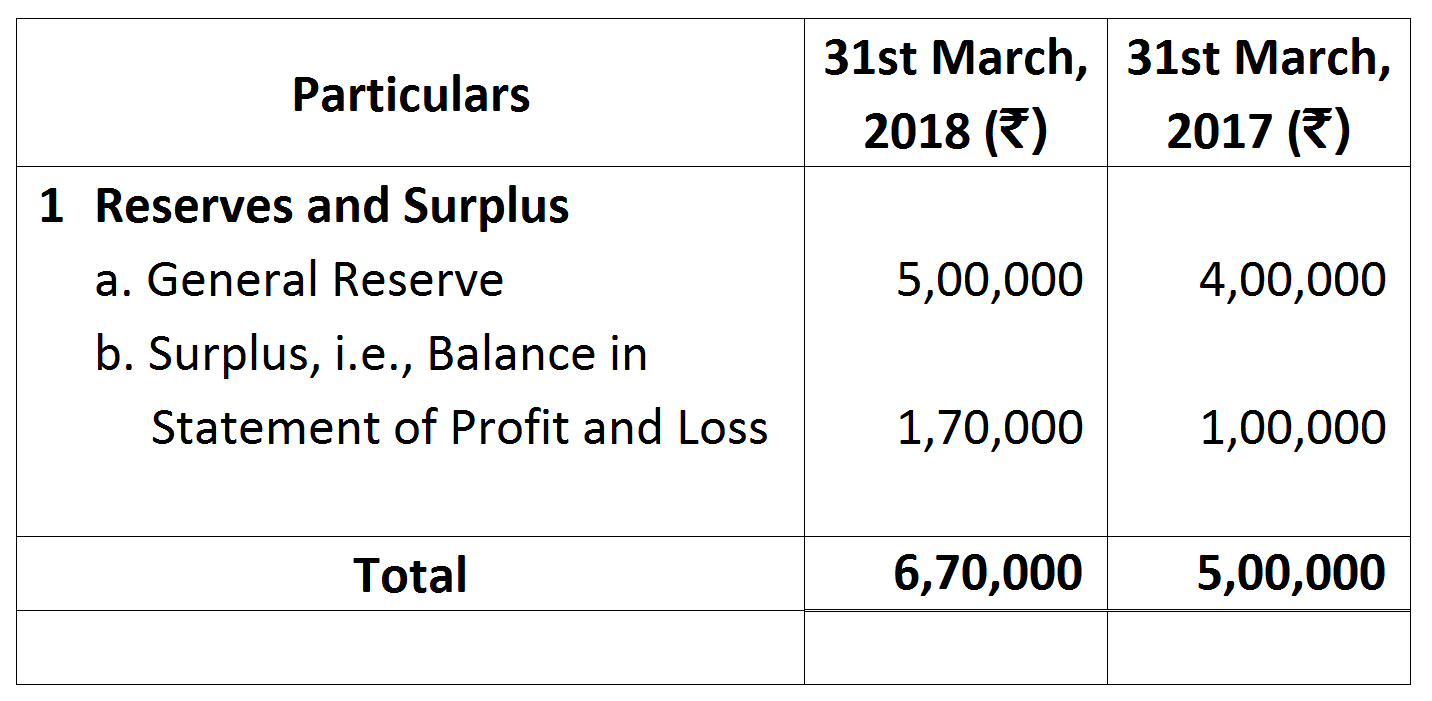
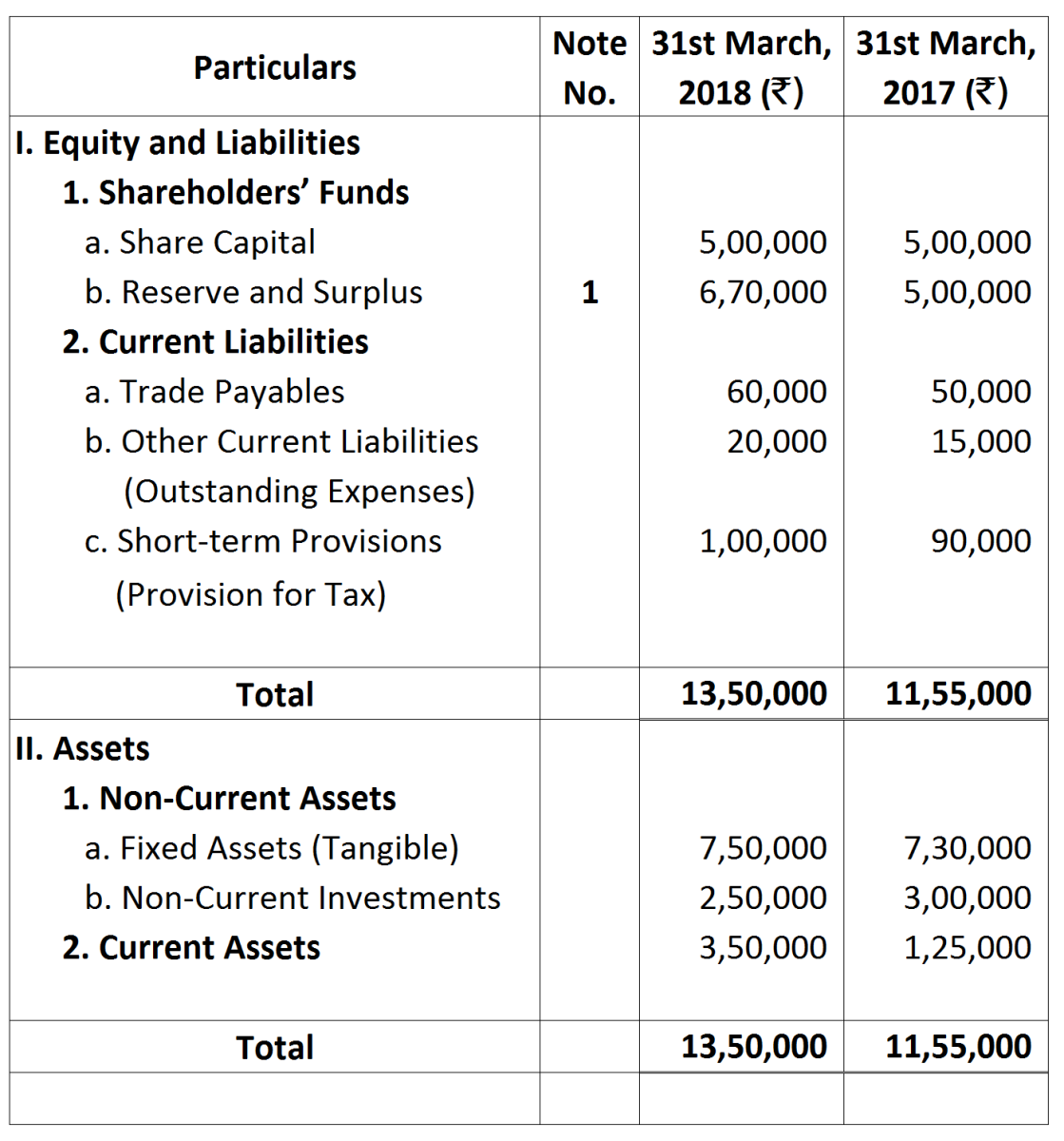
From the following information and Balance Sheet of Double Tree Ltd. as at 31st March, 2018, calculate Operating Profit before Working Capital Changes: Notes to Account:
Additional Information: Depreciation for the year was ₹ 75,000.
From the following information, calculate any two of the following ratios:
  1. Debt-Equity Ratio.
  2. Working Capital Turnover Ratio and.
  3. Return on Investment.
Information: Equity Share Capital ₹ 50,000, General Reserve ₹ 5,000; Profit and Loss Account after tax and interest ₹ 15,000; 9% Debentures ₹ 20,000; Creditors ₹ 15,000; Land and Building ₹ 65,000; Equipments ₹ 15,000; Debtors ₹ 14,500 and Cash ₹ 5,500. Discount on issue of shares ₹ 5,000.
Sales for the year ended 31-3-20 11 was ₹ 1,50,000. Tax rate 50%.
Sagar Ltd. was registered with an authorised capital of Rs. 1,00,00,000 divided into 1,00,000 equity shares of Rs. 100 each. The company offered for public subscription 60,000 equity shares. Applications for 56,000 shares were received and allotment was made to all the applicants. All the calls were made and were duly received except the second and final call of Rs. 20 per share on 700 shares. Prepare the Balance Sheet of the company showing the different types of share capital.
Current Ratio 3.6 : 1; Working Capital ₹ 84,500; Inventory ₹ 50,000 Calculate Current Assets, Current Liabilities, Quick Ratio.
Under which major headings and sub-headings will the following items be shown in the Balance Sheet of a company as per Schedule VI Part I of the Companies Act, 1956:
  1. Cheques in hand.
  2. Stock of work-in-progress.
  3. Copyrights.
  4. Loose tools.
  5. Provision for bad debts.
  6. Negative balance shown by the Statement of Profit and Loss.
  7. Bonds.
  8. Unpaid dividend.
Inventory Turnover Ratio 5 times; Cost of Revenue from Operations (Cost of Goods Sold) ₹ 18,90,000. Calculate Opening Inventory and Closing Inventory if Inventory at the end is 2.5 times more than that in the beginning.
Charles Ltd. earned a profit of ₹ 1,00,000 after charging depreciation of ₹ 20,000 on assets and a transfer to General Reserve of ₹ 30,000. Goodwill amortised was ₹ 7,000 and gain on sale of machinery was ₹ 3,000. Other information available is (changes in the value of Current Assets and Current Liabilities): trade receivables showed an increase of ₹ 3,000; trade payables an increase of ₹ 6,000; Prepaid expenses an increase of ₹ 200; and outstanding expenses a decrease of ₹ 2,000.
Ascertain Cash Flow from Operating Activities
  1. One of the objectives of ‘Financial Statements Analysis’ is to judge the ability of the firm to repay its debt and assessing the short-term as well as the long-term liquidity position of the firm. State two more objectives of this analysis.
  2. Name any two items that are shown under the head ‘Other Current Liabilities’ and any two items that are shown under the head ‘Other Current Assets’ in the Balance Sheet of a company as per Schedule III of the Companies Act, 2013.
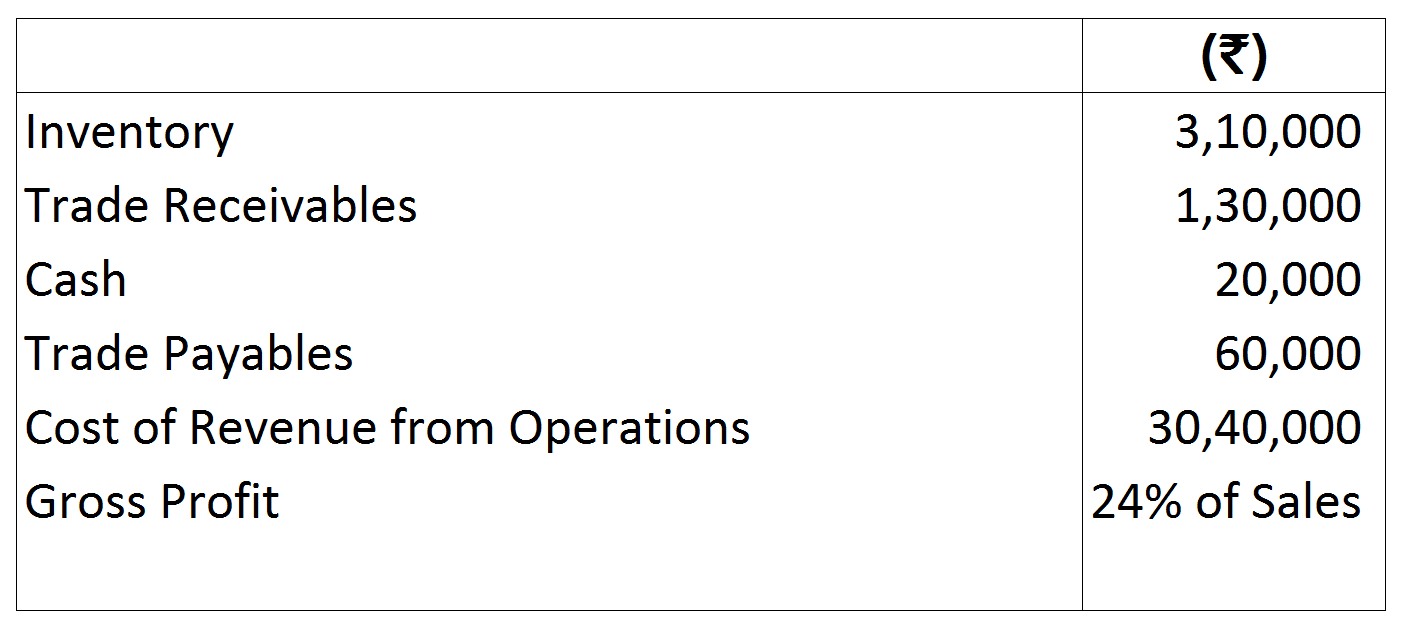
Calculate Working Capital Turnover Ratio from the following information:
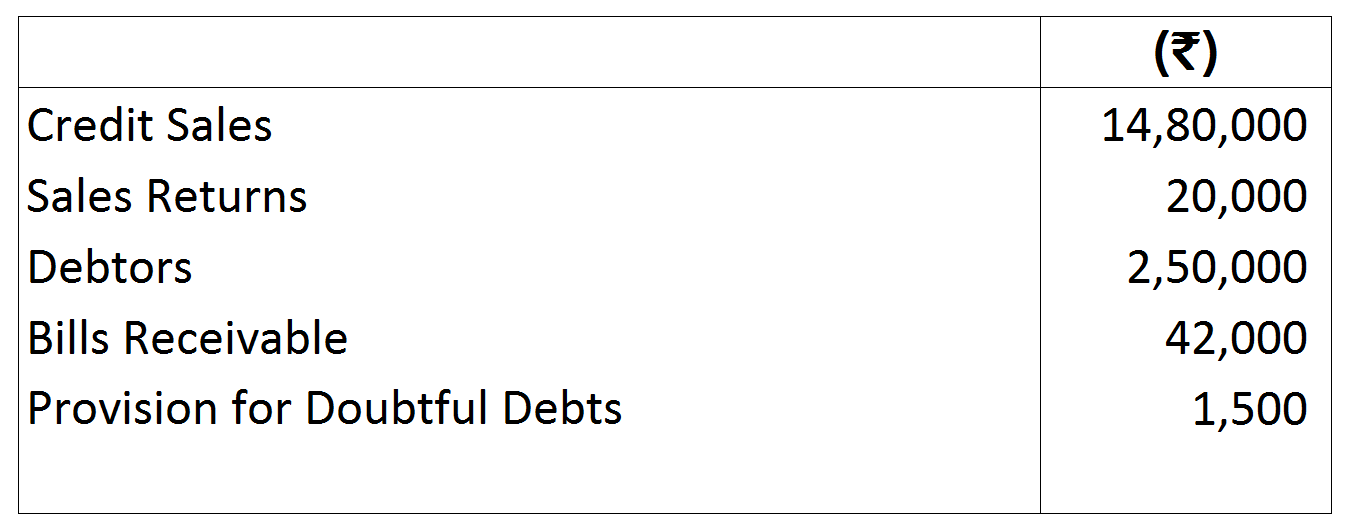
From the following information, calculate trade receivables turnover ratio and average collection period: