Question
Define following.
(i) Molarity
(ii) Molality
(iii) Normality
(iv) Formality

Answer

SELF

Need a full question paper?

Generate a complete, print-ready paper with questions like this in minutes — across 16+ boards, with answer keys.
Start Generating Free

Similar questions

i. A vessel of $1.00 dm ^3$ capacity contains $16.00$ g of oxygen and $8.00$ g of hydrogen at $17^{\circ} C$. Calculate the partial
ii. According to kinetic molecular theory, explain why gases exert pressure?
iii. How is isotherm at critical temperature of a gas different from those at lower temperatures?
  1. Name alkaline earth metal salt used in tooth paste.
  2. Alkaline earth metal imparts apple green flame, identify.
  3. Which colour is imparted to flame by Cesium?
  4. If egg shell is introduced in flame, which colour will be imparted to flame and why?
What is the effect of the following processes on the bond order in $N^-$, and $O_2$?
  1. $N_2 → N^+_2 + e^–$
  2. $O_2 → O^+_2 + e^–$
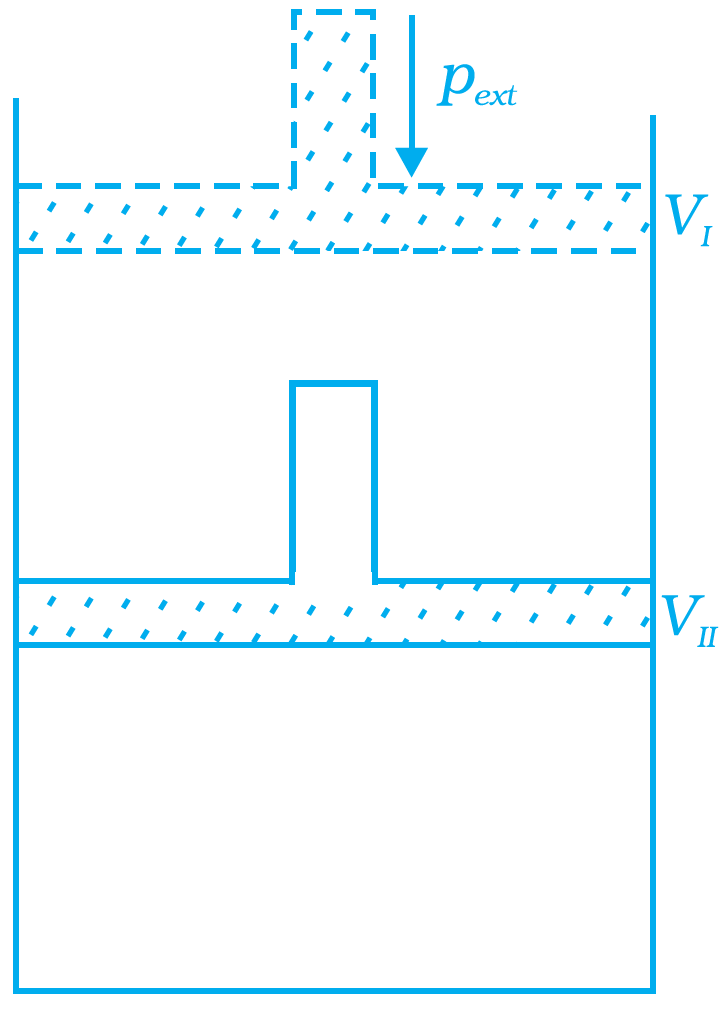
What will be the work done on an ideal gas enclosed in a cylinder, when it is compressed by a constant external pressure, $p_{ext}$​​​​​​​ in a single step as shown in Fig. Explain graphically.
The solubility of silver chloride (AgCl) in water at $25^\circ C is 1.06 \times 10^{-5}mol L^{-1}.$ Calculate the solubility product of AgCl at this temperature.
Explain with the help of suitable example polar covalent bond.
Product the sign $\Delta\text{S}$ for the following changes:
i. Freezing of water.
ii. C(graphite) $\rightarrow$ C(diamond).
iii. $\mathrm{H}_2(\mathrm{~g})$ at 298 K and $1 \mathrm{bar} \rightarrow \mathrm{H}_2(\mathrm{~g})$ at 298 K and 10 bar.
iv. $\mathrm{H}_2(\mathrm{~g})+\mathrm{I}_2(\mathrm{~g}) \rightarrow 2 \mathrm{HI}(\mathrm{g})$.
v. $2 \mathrm{NaHCO}_3(\mathrm{~s}) \rightarrow \mathrm{Na}_2 \mathrm{CO}_3(\mathrm{~s})+\mathrm{CO}_2(\mathrm{~g})+\mathrm{H}_2 \mathrm{O}(\mathrm{g})$.
The pH of 0.1M solution of cyanic acid (HCNO) is 2.34. Calculate the ionization constant of the acid and its degree of ionization in the solution.
Enthalpies of formation of $CO ( g ), CO _2(g), N _2 O ( g )$ and $N _2 O _4(g)$ are $-110,-393,81$ and $9.7 kJ mol ^{-1}$ respectively. Find the value of $\Delta rH$ for the reaction: $N _2 O _4(g)+3 CO ( g ) \longrightarrow N _2 O ( g )+3 CO _2(g)$
A sample of $0.50 g$ of an organic compound was treated according to Kjeldahl's method. The ammonia evolved was absorbed in $50 ml$ of $0.5 \mathrm{M} \mathrm{H}_2 \mathrm{SO}_4$. The residual acid required $60 mL$ of $0.5 M$ solution of NaOH for neutralisation. Find the percentage composition of nitrogen in the compound.