Question
Define or explain chain isomerism and position isomerism with examples in each case.

Answer

Chain isomerism
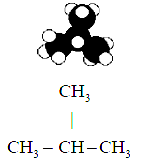
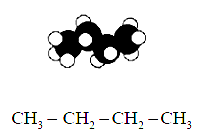
Chain isomerism arises due to the difference in the arrangement of C atoms in the chain. For
example, there are two isomers of butane, C4H10. In one of them, the carbon atoms lie in a
"straight-chain" whereas in the other the chain is branched.

Position isomerism
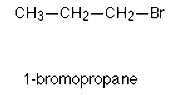
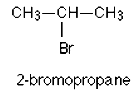
It is due to the difference in the position of functional groups.
For example, there are two structural isomers with the molecular formula C3H7Br. In one of them, the bromine atom is at the end of the chain, whereas in the other it is attached in the middle.

Need a full question paper?

Generate a complete, print-ready paper with questions like this in minutes — across 16+ boards, with answer keys.

Start Generating Free

Similar questions

How an ore is concentrated by froth floatation process?
An unknown gas shows a density of $3 g$ per litre at $273^{\circ} \mathrm{C}$ and $1140 mm$ Hg pressure. What is the gram molecular mass of this gas?
From the list given below, select the word (s) required complete the blanks (i) to (v) in the following passage :
Note : words chosen from the list are to be used only once. Write only the answers. Do not copy the passage
[reddish brown, ammonium, nitrogen dioxide, hydroxyl, dirty green, ammonia, acidic, alkaline]
Nitrogen and hydrogen combine in the presence of a catalyst to give (i) ________ gas. When the above mentioned gas is passed through water it forms a solution which will be (ii) ______ in nature and the solution contains (iii) ______ ions and (iv) _______ions. The above solution when added to iron (II) sulphate solution gives a (v) _________coloured precipitate of iron (II) hydroxide.
Give one use each of four different compounds of ammonia.
What is the difference between :
Strong electrolyte and weak electrolyte
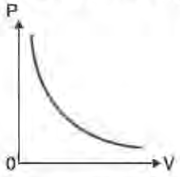
(i) Identify which law is applicable in the given below graph. State the law.
Image
(ii) One mole of hydrocarbon is subjected to combustion. The product obtained is condensed and the resulting gaseous product occupied a volume of 89.6 $l$ at STP. Oxygen required for this combustion is 145.6 $l$ at STP. What should be the molecular formula of X?
If the empirical formula of two compounds is CH and their Vapour densities are 13 to 39 respectively, find their molecular formula.
State your observation for the following electrolytic reaction
Aqueous copper sulphate is electrolysed between platinum electrodes.
A gas ‘A’ reacts with another gas ‘B’ in the presence of a catalyst to give a colourless gas ‘C’. The gas ‘C’ when comes in contact with air produces a brown gas ‘D’. The solution of ‘A’ in water turns red litmus blue. Explain the observations.
Explain hydronium ion. Write the ionization of sulphuric acid showing the formation of hydronium ion.