Question
Define the following terms:
  1. Limiting molar conductivity.
  2. Fuel cell.

Answer

  1. The molar conductivity when concentration approaches to zero is called limiting molar conductivity.
  2. A fuel cell is a device which converts energy produced during the combustion of fuels like hydrogen, methane, methyl alcohol etc. directly into electrical energy. One such successful fuel cell is hydrogen-oxygen fuel cell.

Need a full question paper?

Generate a complete, print-ready paper with questions like this in minutes — across 16+ boards, with answer keys.
Start Generating Free

Similar questions

Write one chemical reaction each to illustrate the following:
  1. Hofmann’s bromamide reaction.
  2. Gabriel phthalimide synthesis.
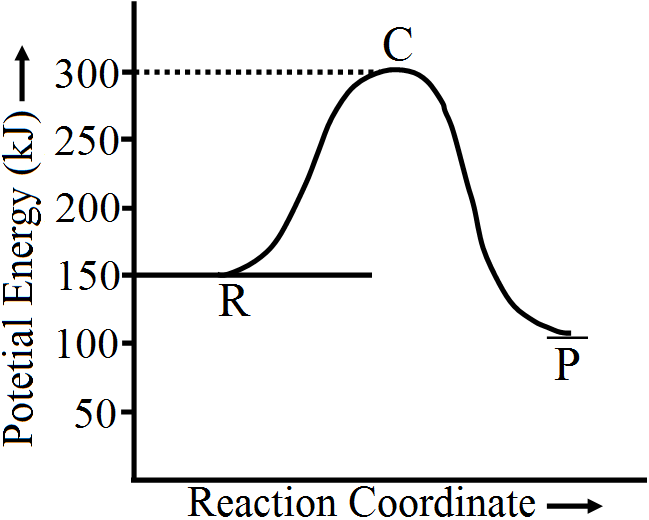
Answer the following questions on the basis of the given plot of potential energy vs reaction coordinate:

  1. What is the threshold energy for the reaction?
  2. What is the activation energy for forward reaction?
  3. What is the activation energy for backward reaction?
  4. What is enthalpy change for the forward reaction?

Explain construction and uses of conductivity cell.
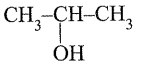
Write common name and IUPAC name of following alcohol compound.
Image
Compound ‘A’ was prepared by oxidation of compound ‘B’ with alkaline KMnO4. Compound ‘A’ on reduction with lithium aluminium hydride gets converted back to compound ‘B’. When compound ‘A’ is heated with compound B in the presence of H2SO4 it produces fruity smell of compound C to which family the compounds ‘A’, ‘B’ and ‘C’ belong to?
Out of 2-chloroethanol and ethanol which is more acidic and why?
What will be the order of reaction which takes 2 hours for $5 0 \%$ completion and 4 hours for $7 5 \%$ completion?
The rate of reaction, 2NO + Cl→ 2NOCl is doubled when concentration of Cl2 is doubled and it becomes eight times when concentration of both NO and Cl2 are doubled. Deduce the order of the reaction.
Write a note on Strecker reaction.
Note: In the following questions a statement of assertion followed by a statement of reason is given. Choose the correct answer out of the following choices.
  1. Both assertion and reason are true and the reason is the correct explanation of assertion.
  2. Both assertion and reason are true and the reason is not the correct explanation of assertion.
  3. Assertion is true but the reason is false.
  4. Both assertion and reason are false.
  5. Assertion is false but reason is true.
Assertion: Λm for weak electrolytes shows a sharp increase when the electrolytic solution is diluted.
Reason: For weak electrolytes degree of dissociation increases with dilution of solution.