Question
Describe the process of translation in protein synthesis.

Answer

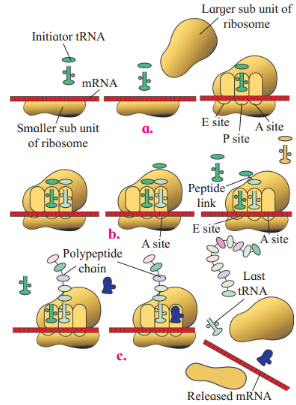
Image
Translation involves the following steps:
1. Activation of amino acids and formation of charged t-RNA (t-RNA – amino acid complex):
i. In the presence of an enzyme amino acyl t-RNA synthetase, the amino acid is activated and then attached to the specific t-RNA molecule at 3’ end to form charged t-RNA (t-RNA – amino acid complex).ii. ATP is essential for the reaction.
2. Initiation of Polypeptide chain:
  • Small subunit of ribosome binds to the m-RNA at 5’ end.
  • Start codon is positioned properly at P-site.
  • Initiator t-RNA, (carrying amino acid methionine in eukaryotes or formyl methionine in prokaryotes) binds with initiation codon (AUG) of m-RNA, by its anticodon (UAC) through hydrogen bonds.
  • The large subunit of ribosome joins with the smaller subunit in the presence of $Mg^{++}.$
  • Thus, initiator charged t-RNA occupies the P-site and A – site is vacant.
3. Elongations of polypeptide chain:
Addition of amino acid occurs in 3 Step cycle-
i. Codon recognition.
Anticodon of second (and subsequent) amino acyl t-RNA molecule recognizes and binds with codon at A-site by hydrogen bonds.
ii. Peptide bond formation.
  1. Ribozyme catalyzes the peptide bond formation between amino acids on the initiator t-RNA at P-site and t-RNA at A-site.
  2. It takes less than 0.1 second for formation of peptide bond.
  3. Initiator t-RNA at ‘P’ site is then released from E-site.
iii. Translocation.
  1. Translocation is the process in which sequence of codons on m-RNA is decoded and accordingly amino acids are added in specific sequence to form a polypeptide on ribosomes.
  2. Due to this A’-site becomes vacant to receive next charged t-RNA molecule.
  3. The events like arrival of t-RNA – amino acid complex, formation of peptide bond, ribosomal translocation and release of previous t-RNA, are repeated.
  4. As ribosome move over the m-RNA, all the codons on m-RNA are exposed oiie by one for translation.
4. Termination and release of polypeptide:
When stop codon (UAA, UAG, UGA) gets exposed at the A-site, the release factor binds to the stop codon, thereby terminating the translation process
The polypeptide gets released in the cytoplasm.
Two subunits of ribosome dissociate and last t-RNA and m-RNA are released in the cytoplasm.
m-RNA gets denatured by nucleases immediately.

Need a full question paper?

Generate a complete, print-ready paper with questions like this in minutes — across 16+ boards, with answer keys.

Start Generating Free

Similar questions

Thalassemia and haemophilia are both Mendelian disorders related to blood. Write the symptoms of the diseases. Explain with the help of crosses the difference in the inheritance pattern of the two diseases.
OR
Why are thalassemia and hemophilia categorised as Mendelian disorders? Write the symptoms of these diseases. Explain their pattern of inheritance in humans. Write the genotypes of the normal parents producing a haemophilic son.
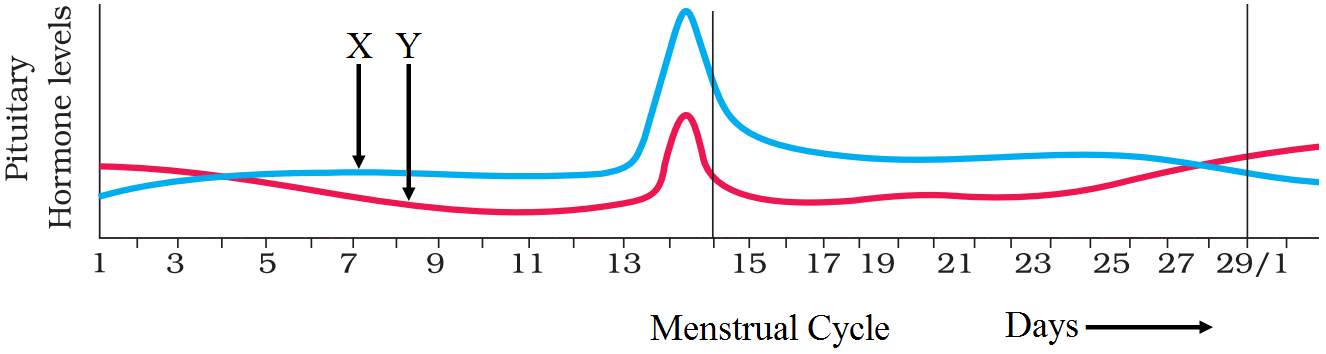
Study the graph given below and answer the questions that follow:
Explain the ovarian events (i), (ii) and (iii) under the influence of hormones ‘X’ and ‘Y’.
Erythrocytes.
  1. You are given tall pea plants with yellow seeds, whose genotypes are unknown. How would you find the genotype of these plants? Explain with the help of cross.
  2. Identify A, B and C in the table given below:
Pattern of Inheritance
Monohybrid $F_1$ Phenotypic Expression
Codominance
‘A’
‘B’
Progeny resembled only one of the parents.
Incomplete dominance.
‘C’
What are the different ways in which gene therapy is used?
Explain ABO blood group system in human being with a suitable chart.
Describe the morphology of thyroid gland.###With the help of a suitable diagram describe the structure of thyroid gland.
Read the following and answer any four questions from (i) to (v) given below:
Stem cells hold the potential for manifold applications in biotechnology based next generation therapeutics. Scientists are trying to formulate better and more personalised treatment modalities against some seemingly irremediable diseases, by harnessing body's own stem cells and stem cell niche. Stem cells of different origin and level of potency are being investigated for tissue regeneration, treatment of bone defect, drug testing, gene therapy and cell based therapy for muscle damage, spinal cord injury, cancer therapy, etc. 'Tile properties of embryonic and adult stem cells to either self-renew or differentiate into multiple cell lineages make them an attractive source for cell therapies, tissue engineering and as model system for drug screening.
  1. Stem cells are widely used in medical research. Which property of stem cells makes them particularly useful in this research?
  1. They can be fused together to form a zygote.
  2. They can divide and eventually give rise to a whole organism.
  3. They can divide and be made to differentiate into various types of cell.
  4. They will continue to divide indefinitely.
  1. Stem cells can be divided into four main types. Which of the four types of stem cell can differentiate into a limited range of tissues?
  1. Adult stem cells.
  2. Embryonic stem cells.
  3. Fetal stem cells.
  4. Zygotic stem cells.
  1. Which feature of stem cells obtained from blood in the umbilical cord enables their use in the treatment of a variety of blood cancers?
  1. They can differentiate into bone marrow cells.
  2. They can differentiate into any cellular component of blood.
  3. They can replace blood stem cells affected by cancer.
  4. They are totipotent.
  1. The search for pluripotent stem cells is intense. The spennatogonium is the diploid precursor of haploid sperm in the development pathway of mouse gametes as shown below.
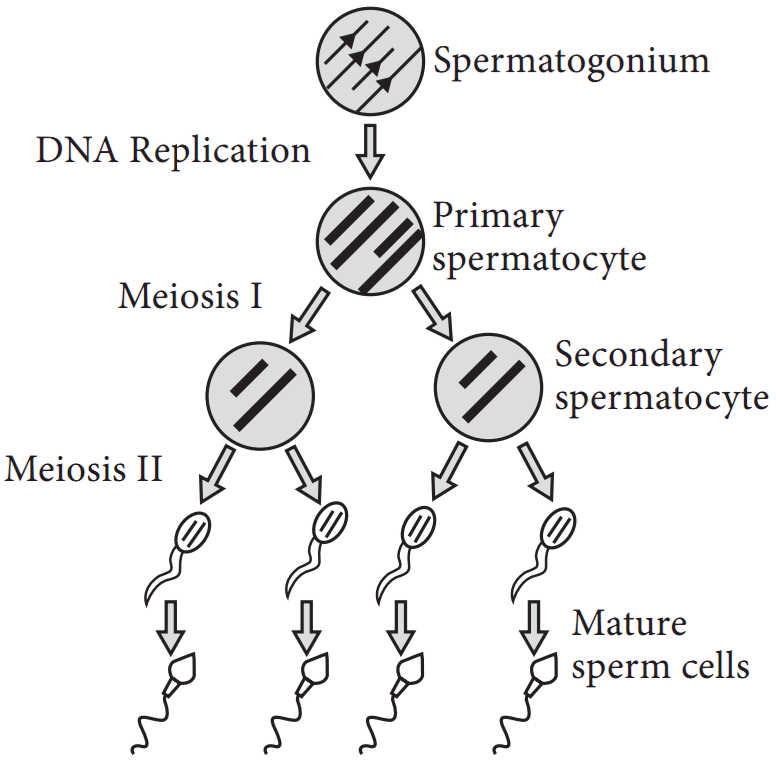

Scientists were interested to find out which stages of sperm development have stem cell capacity. Two experiments were carried out using sterile host males with testes that lacked germ cells. The results are shown in the table.
  Type of cells used Result
Experiment 1 Secondary spermatocytes were injected Fertility was not restored
Experiment 2 Spermatogonia were injected Fertility was restored for the rest of the mouse's life
What property of a stem cell is missing in the secondary spermatocytes?
  1. Specialisation.
  2. Self-renewal.
  3. Commitment.
  4. A proper stem-cell niche.
  1. Which feature of embryonic stem cells (ESCs) is illustrated below?
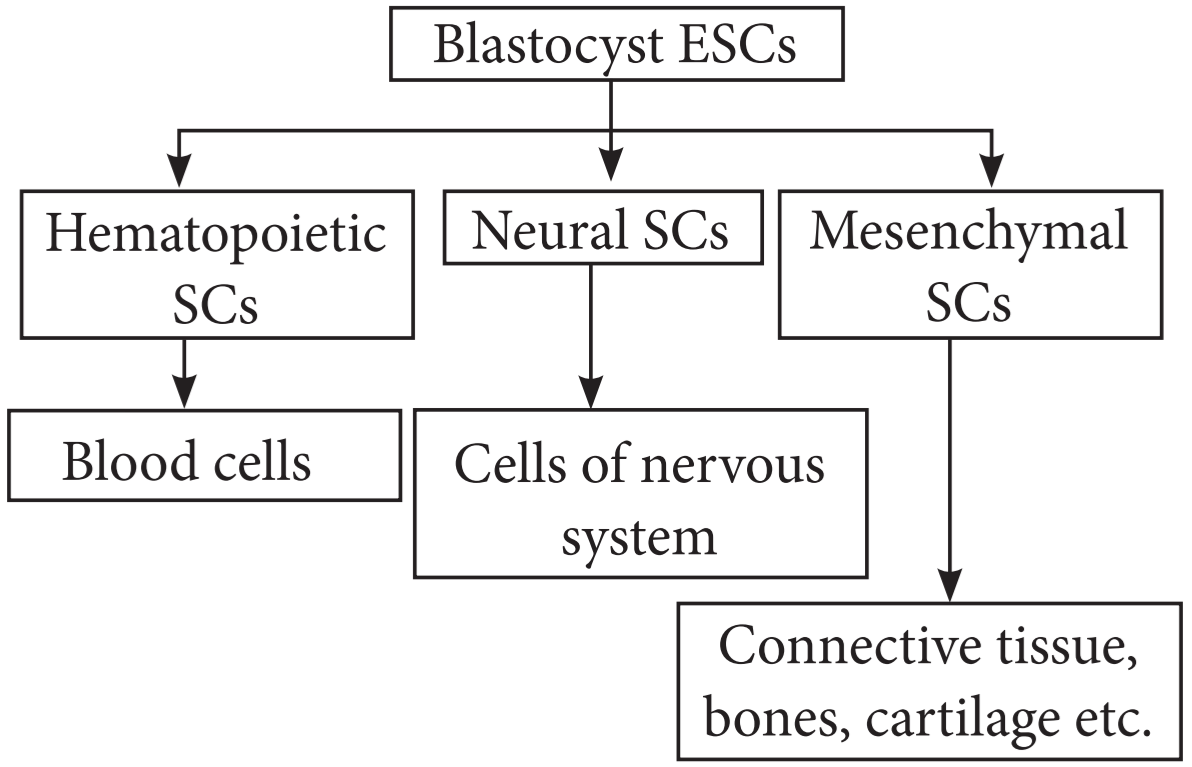
  1. ESCs are capable of dividing.
  2. ESCs are multipotent.
  3. ESCs are pluripotent.
  4. ES Cs show plasticity.
Describe the process of respiration in man. ### Describe the mechanism of respiration in human beings.
Give the graphical representation of pleiotropy to show inheritance of Sickle-cell anaemia.