MCQ
Diatomic molecule $($rigid rotator$)$ has:
  • A
    $3$ translational degrees of freedom.
  • B
    $2$ rotational degrees of freedom.
  • Both $(a)$ and $(b).$
  • D
    All of the above.

Answer

Correct option: C.
Both $(a)$ and $(b).$
The diatomic molecules $($without vibration mode$)$ like $O_2$ and $N_2$ has three translational degrees of freedom and two rotational degrees of freedom.

Need a full question paper?

Generate a complete, print-ready paper with questions like this in minutes — across 16+ boards, with answer keys.
Start Generating Free

Similar questions

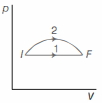
An ideal gas undergoes change in its state from the initial state $I$ to the final state $F$ via two possible paths as shown below. Then,
A body takes $10$ minutes to cool down from $62^o C$ to $50^o C$. If the temperature of surrounding is $26^o C$ then in the next $10$ minutes temperature of the body will be ......... $^oC$
Angular momentum and angular velocity for a rolling sphere of radius $R$ are related by the formula:
Two waves of same frequency and intensity superimpose with each other in opposite phases, then after superposition the
For a particle of a rotating rigid body, $\text{v}=\text{r}\omega,\text{So}$
The length of second's hand in watch is $1 \,cm.$ The change in velocity of its tip in $15$ seconds is
A solid floats in a liquid in a partially dipped position.
A body $A$ starts from rest with an acceleration $a_1$ . After $2\ seconds$ , another body $B$ starts from rest with an acceleration $a_2$ . If they travel equal distance in the $5th\ second$ , after the start of $A$ , then the ratio $a_1$ : $a_2$ is equal to
Two discs of same moment of inertia rotating about their regular axis passing through centre and perpendicular to the plane of disc with angular velocities $\omega_1$ and $\omega_2$ They are brought into contact face to face coinciding the axis of rotation. The expression for loss of energy during this process is 
A particle of mass $m$ is at rest at the origin at time $t = 0$. It is subjected to a force $F(t) = F_0e^{-bt}$ in the $x$ direction. Its speed $v (t)$ is depicted by which of the following curves?