Question
Differentiate between the following:

Repetitive DNA and Satellite DNA.

Answer

Repetitive DNA and Satellite DNA.
Repetitive DNA Satelite DNA
It is the non-coding DNA with multiple copies of identical sequences which may lie in tandem or interspersed. It refers to non-coding tandem repeat sequences.
These can be few base pairs to hundreds or thousands of base pairs. These are generally short sequence repeats (up to 60 base pair long).
It appears as light bands. It appears as small dark bands.

Need a full question paper?

Generate a complete, print-ready paper with questions like this in minutes — across 16+ boards, with answer keys.

Start Generating Free

Similar questions

Identify A, B, C and D in the table given below:
Micro-organism
Product
Biological activity
Medical ailment/ Procedure
A
Streptokinase
Clot buster
D
Trichoderma
B
C
Transplant
Polysporum
 
 
Surgery
Draw a longitudinal section of a post-pollinated pistil showing entry of pollen tube into a mature embryo sac. Label filiform apparatus, chalazal end, hilum, antipodals, male gametes and secondary nucleus.
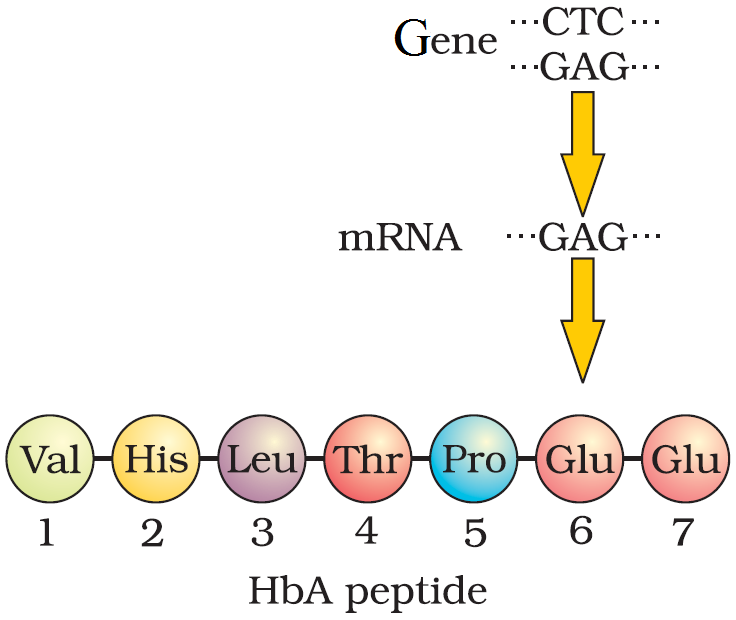
Given below is the representation of amino acid composition of the relevant translated portion of b-chain of haemoglobin, related to the shape of human red blood cells.

Who are likely to suffer more from the defect related to the gene represented the males, the females or both males and females equally? And why?

  1. Why is Amazon rain forest referred to as lungs of the planet earth?
  2. Name any four industrial products obtained from nature.
Name the main stages of translation.
Write any four differences between birth rate and death rate.
  1. Which stage of Entamoeba histolytica is pathogen to humans?
  2. Why E. histolytica does not have contractile vacuole?
  3. Which form of E. histolytica serves for transmission of the parasite?
Define the term addiction. Name some drugs which are normally used as medicines but are often abused.
Microbes are used for industrial production on a large scale. Explain with examples.
Different animals respond to changes in their surroundings in different ways. Taking one example each, explain "some animals undergo aestivation while some others hibernation". How do fungi respond to adverse climatic conditions?