Question
Discuss how a kaleidoscope works and its real-world applications.

Answer

→ A kaleidoscope works on the principles of reflection and symmetry. It typically consists of three mirrors placed inside a tube, forming a triangular prism. When welook through one end of the tube, we see multiple reflections of colored beads, glass, or other objects at the opposite end.
→ The mirrors are arranged in such a way that they create multiple reflections of the objects. → These reflections produce symmetrical patterns.
→ The symmetrical arrangement of the mirrors results in beautiful, repeating patterns that change as you rotate the kaleidoscope.
Real-World Applications:
→ Kaleidoscopes are often used by designers and artists to generate new and interesting patterns. The symmetrical and repeating designs can inspire various artistic creations.
→ Kaleidoscopes are used in educational settings to teach students about symmetry, reflection, and optical illusions.
→ The mesmerizing patterns of a kaleidoscope can have a calming effect, making it useful in therapy and relaxation techniques.
→ Kaleidoscopes are popular toys that provide entertainment by creating visually appealing patterns.
Need a full question paper?

Generate a complete, print-ready paper with questions like this in minutes — across 16+ boards, with answer keys.

Start Generating Free

Similar questions

Describe the process of photosynthesis. What is the role of chlorophyll, water, carbon dioxide, and sunlight in this process?
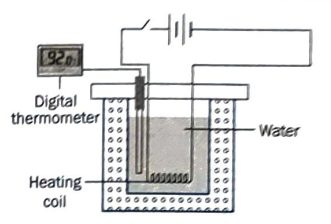
A student performs an experiment where he uses a heating coil to heat the water as shown in the figure. The initial temperature of the water is measured as $10^{\circ} C$. After switching it ON for 5 min, the student records the temperature of the water as $18^{\circ} C$.
Image

The water is allowed to return back to its initial temperature. The activity is then repeated with another heating coil having half the length of the original heating coil. He notices that after 5 min, the temperature of the water reads $14^{\circ} C$. Which statement can be concluded based on the activity?
(a) Reading on thermometer reduces with time.
(b) Temperature of water drops with every repetition.
(c) Length of the material affects the amount of heating.
(d) Temperature of the water increases after a certain period of time.
Tornado is different from a cyclone. Briefly explain Tornado. What destructions does it cause$?$
With the help of labelled diagram show the gradual decay of tooth.
Explain the complete process of photosynthesis with a diagram and equation.
Differentiate between physical and chemical reactions.
Distinguish between a parasite and a saprotroph.
Explain why forest is called "the dynamic living entity"?
Respiration in fish is different from humans. Explain in brief how fishes can breathe through gills?
State similarities and differences between the laboratory thermometer and the clinical thermometer.