Question
Discuss the continuity and differentiability of,$\text{f(x)}=\begin{cases}(\text{x}-\text{c})\cos\Big(\frac{1}{\text{x}-\text{c}}\Big), & \text{x}\neq 0\\0, & \text{x}= 0\end{cases}$

Answer

$\text{f(x)}=\begin{cases}(\text{x}-\text{c})\cos\Big(\frac{1}{\text{x}-\text{c}}\Big), & \text{x}\neq 0\\0, & \text{x}= 0\end{cases}$
(LHL at x = c) $=\lim_\limits{\text{x}\rightarrow\text{c}^{-}}\text{f(x)}$
$=\lim_\limits{\text{h}\rightarrow0}\text{f}(-\text{h})$
$=\lim_\limits{\text{h}\rightarrow0}(\text{c}-\text{h}-\text{c})\cos\Big(\frac{1}{\text{c}-\text{h}-\text{c}}\Big)$
$=\lim_\limits{\text{h}\rightarrow0}-\text{h}\cos\Big(-\frac{1}{\text{h}}\Big)$
$=\lim_\limits{\text{h}\rightarrow0}-\text{h}\cos\Big(\frac{1}{\text{h}}\Big)$
$=0$
(RHL at x = c) $=\lim_\limits{\text{x}\rightarrow\text{c}^{+}}\text{f(x)}$
$=\lim_\limits{\text{h}\rightarrow0}\text{f}(\text{c}+\text{h})$
$=\lim_\limits{\text{h}\rightarrow0}(\text{c}+\text{h}-\text{c})\cos\Big(\frac{1}{\text{c}+\text{h}-\text{c}}\Big)$
$=\lim_\limits{\text{h}\rightarrow0}-\text{h}\cos\Big(\frac{1}{\text{h}}\Big)$
$=0$
f(c) = 0
Since, LHL = f(x) = RHL at x = c
⇒ f(x) is continuous at x = c
(LHL at x = c) $=\lim_\limits{\text{h}\rightarrow0}\frac{\text{f}(\text{c}-\text{h})-\text{f(c)}}{-\text{h}}$
$=\lim_\limits{\text{h}\rightarrow0}\frac{(\text{c}-\text{h}-\text{c})\cos\Big(\frac{1}{\text{c}-\text{h}-\text{c}}\Big)-0}{-\text{h}}$
$=\lim_\limits{\text{h}\rightarrow0}\cos\Big(-\frac{1}{\text{h}}\Big)$
$=\lim_\limits{\text{h}\rightarrow0}\cos\Big(\frac{1}{\text{h}}\Big)$
(RHL at x = c) $=\lim_\limits{\text{h}\rightarrow0}\frac{\text{f}(\text{c}+\text{h})-\text{f(c)}}{\text{h}}$
$=\lim_\limits{\text{h}\rightarrow0}\frac{(\text{c}+\text{h}-\text{c})\cos\Big(\frac{1}{\text{c}+\text{h}-\text{c}}\Big)-0}{\text{h}}$
$=\lim_\limits{\text{h}\rightarrow0}\frac{\text{h}\cos\Big(\frac{1}{\text{h}}\Big)}{\text{h}}$
$=\lim_\limits{\text{h}\rightarrow0}\cos\Big(\frac{1}{\text{h}}\Big)$
(LHL at x = c) = (RHL at x = c)
So,
f(x) is differentiable and continuous at x = c.

Need a full question paper?

Generate a complete, print-ready paper with questions like this in minutes — across 16+ boards, with answer keys.
Start Generating Free

Similar questions

If sin y = x sin (a + y), prove that $\frac{\text{dy}}{\text{dx}}=\frac{\text{sin}^{2}\text{(a+y)}}{\text{sin a}}$.
Evaluate the following intregals:
$\int\frac{\text{x}+2}{\sqrt{\text{x}^2+2\text{x}-1}}\text{dx}$
Find the points of discontinuity, if any of the following function:
$\text{f(x)}=​​\begin{cases}-2,&\text{if }\text{ x}\leq-1\\2\text{x},&\text{if }-1<\text{x}\leq1\\2,&\text{if }\text{ x}>1\end{cases}$
Find the intervals in which the following functions are increasing or decreasing. $f(x) = x^{2 }+ 2x - 5$
A relation R is defined from {2, 3, 4, 5} to {3, 6, 7, 10} by : xRy ⇔ x is relatively prime to y. Then, domain of R is:
  1. {2, 3, 5}
  2. {3, 5}
  3. {2, 3, 4}
  4. {2, 3, 4, 5}
Find the area bounded by the parbola $y = 2 - x^2 $and the strainght line $y + x = 0.$
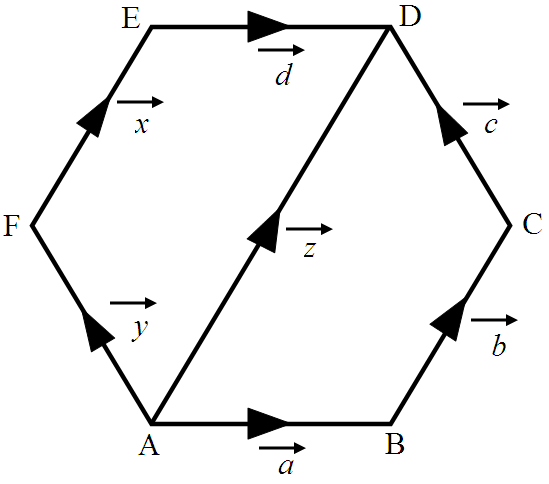
In Figure ABCD is a regular hexagon, which vectors are:
  1. Collinear.
  2. Equal.
  3. Co-initial.
  4. Collinear but not equal.
Solve the following differential equation
$\frac{\text{dy}}{\text{dx}}-\text{x}\sin^2\text{x}=\frac{1}{\text{x}\log\text{x}}$
Give examples of two surjective functions $f_1$ and $f_2$ from $Z$ to $Z$ such that $f_1 + f_2$ is not surjective.
A manufacturer makes two types $A$ and $B$ of tea$-$cups. Three machines are needed for the manufacture and the time in minutes required for each cup on the machines is given below:
  Machines
$I$ $II$ $III$
$A$ $12$ $18$ $6$
$B$ $6$ $0$ $9$
Each machine is available for a maximum of $6$ hours per day. If the profit on each cup $A$ is $75$ paise and that on each cup $B$ is $50$ paise, show that $15$ tea$-$cups of type $A$ and $30$ of type $B$ should be manufactured in a day to get the maximum profit.