MCQ
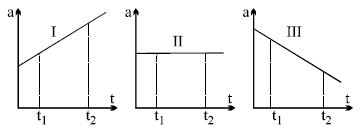
Each of the three graphs represents acceleration versus time for an object that already has a positive velocity at time $t_1$. Which graphs show an object whose speed is increasing for the entire time interval between $t_1$ and $t_2$ ?
  • A
    graph $I$, only
  • B
    graphs $I$ and $II$, only
  • C
    graphs $I$ and $III$, only
  • graphs $I, II$ and $III$

Answer

Correct option: D.
graphs $I, II$ and $III$
d
Acceleration is positive in all three cases

Need a full question paper?

Generate a complete, print-ready paper with questions like this in minutes — across 16+ boards, with answer keys.

Start Generating Free

Similar questions

A projectile is projected with speed $u$ of an angle of $60^o$ with horizontal from the foot of an inclined plane. If the projectile hits the inclined plane horizontally, the range on inclined plane will be :-
In the absence of external torque for a body revolving about any axis the quantity that remains constant is
What is common in the thermal equilibrium of two systems?
If two systems are in thermal equilibrium with each other, it means their:
One mole of an ideal monoatomic gas is heated at a constant pressure of one atmosphere from ${0^o}C$ to ${100^o}C$. Then the change in the internal energy is
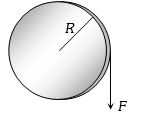
A uniform disc of radius $R$ and mass $M$ can rotate on a smooth axis passing through its centre and perpendicular to its plane. A force $F$ is applied on its rim. See fig. What is the tangential acceleration
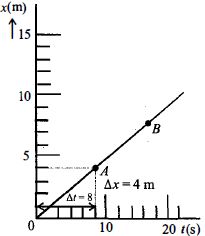
The graph of an object's motion (along the $x-$ axis) is shown in the figure. The instantaneous velocity of the object at points $A$ and $B$ are $v_A$ and $v_B$ respectively. Then
One end of a light spring of spring constant k is fixed to a wall and the other end is tied to a block placed on a smooth horizontal surface. In a displacement, the work done by the spring is $\frac{1}{2}\text{kx}^2.$ The possible cases are:
  1. At spring was initially compressed by a distance x and was finally in its natural length.
  2. It was initially stretched by a distance x and and finally was in its natural length.
  3. It was initially in its natural length and finally in a compressed position.
  4. It was initially in its natural length and finally in a stretched position.
Surface tension of a soap solution is $1.9 \times {10^{ - 2}}N/m$. Work done in blowing a bubble of $2.0\, cm$ diameter will be
Two blocks of masses $2 \,kg$ and $4 \,kg$ are hanging with the help of massless string passing over an ideal pulley inside an elevator. The elevator is moving upward with an acceleration $\frac{g}{2}$. The tension in the string connected between the blocks will be .......... $N$ (Take $g=10 \,m / s ^2$ ).