MCQ
Electric potential is equal to :
- A$ \frac{q}{w} $
- ✓$ \frac{w}{q} $
- C$ wq $
- D$ \sqrt{wq} $
Generate a complete, print-ready paper with questions like this in minutes — across 16+ boards, with answer keys.
The tangent galvanometer, when connected in series with a standard resistance can be used as
|
(a) An ammeter |
(b) A voltmeter |
|
(c) A wattmeter |
(d) Both an ammeter and a voltmeter |
Assertion : If an electron is not deflected while passing through a certain region of space, then only possibility is that there is no magnetic region.
Reason : Force is directly proportional to the magnetic field applied.
|
(a) If both assertion and reason are true and the reason is the correct explanation of the assertion. |
|
(b) If both assertion and reason are true but reason is not the correct explanation of the assertion. |
|
(c) If assertion is true but reason is false. |
|
(d) If assertion is false but reason is true. |
The binding energy of deuteron  is 1.112 MeV per nucleon and an α - particle
  has a binding energy of 7.047 MeV per nucleon. Then in the fusion reaction
 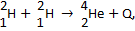 the energy Q released is
|
(a) 1 MeV |
(b) 11.9 MeV |
(c) 23.8 MeV |
(d) 931 MeV |
An ammeter whose resistance is 180 Ω gives full scale deflection when current is 2 mA. The shunt required to convert it into an ammeter reading 20 mA (in ohms) is
|
(a) 18 |
(b) 20 |
(c) 0.1 |
(d) 10 |
Four plates of the same area of cross-section are joined as shown in the figure. The distance between each plate is d. The equivalent capacity across A and B will be

|
(a) |
(b) |
(c) |
(d) |
A nucleus  emits one α and one β particles. The resulting nucleus is
|
(a) |
(b) |
(c) |
(d) |