MCQ
Electrolytic refining is used to purify which of the following metals?
  • $Cu$ and $Zn$
  • B
    $Ge$ and $Si$
  • C
    $Zr$ and $Ti$
  • D
    $Zn$ and $Hg$

Answer

Correct option: A.
$Cu$ and $Zn$
Copper and zinc are two metals which are generally purified by using electrolyte refining. In this process, imapure metal is used as anode and pure metal is used as a cathode. Impurities from the blister copper or impure zinc deposit as anode mud.

Need a full question paper?

Generate a complete, print-ready paper with questions like this in minutes — across 16+ boards, with answer keys.

Start Generating Free

Similar questions

For a certain reaction : $(A)(g)  \to  B(g)$ Half life for different initial pressures of $A$  is given below

 $\begin{array}{|l|l|l|} \hline {P_{{A_0}}}(atm) & 0.1 & 0.025 \\ \hline {t_{1/2}}(\sec\,\,) & 100 & 50 \\ \hline \end{array}$

The correct statement about order of reaction is
Which of the following is monoatomic
On heating, sodium and sulphur can be melted. Molten sodium and molten sulphur are used ?
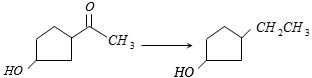
The appropriate reagent for the transformation
The compound($s$) which generate($s$) $\mathrm{N}_2$ gas upon thermal decomposition below $300^{\circ} \mathrm{C}$ is (are)

$(A)$ $\mathrm{NH}_4 \mathrm{NO}_3$   $(B)$ $\left(\mathrm{NH}_4\right)_2 \mathrm{Cr}_2 \mathrm{O}_7$   $(C)$ $\mathrm{Ba}\left(\mathrm{N}_3\right)_2$  $(D)$ $\mathrm{Mg}_3 \mathrm{~N}_2$

The number of stereoisomers possible for a compound of the molecular formula

$C{H_3} - CH = CH - CH\left( {OH} \right) - Me$ is

Two benzyne intermediates are likely to be formed equally. Reaction with amide  ion can occur in two different directions with each benzyne, giving three possible  products. They are formed in a $1 : 2 : 1$ ratio. Asterisk $(^*)$ refers to $^{14}C.$

product $(A)$ is

Dimethyl glyoxime gives a red precipitate with $N{i^{2 + }},$ which is used for its detection. To get this precipitate readily the best $pH$  range is
Which one of the following compounds gives blue colour
Which of the following carbohydrates develop blue colour on treatment with iodine solution?
