Question
Explain Parasitism and co-evolution with the help of one example of each.

Answer

Mode of interaction between two species in which one species (parasite) depends on the other species (host) for food and shelter/one organism is benefitted, the other is harmed.
e.g. Human liver fluke/Malarial parasite/Cuscuta.
Co-evolution is the relationship between two interacting organisms where both organisms failed to survive in the absence of the other.
e.g. Fig and fig wasp/ophrys and bumble bee.

Need a full question paper?

Generate a complete, print-ready paper with questions like this in minutes — across 16+ boards, with answer keys.
Start Generating Free

Similar questions

Expand 'ELISA'. Why is this method preferred over conventional methods of diagonsis of the disease?
Write a short note on
Adaptations of plants to water scarcity:
List 10 modern day animals and using the internet resources link it to a corresponding ancient fossil. Name both.
  1. Draw a diagram of a sectional view of a monocot seed (grain).
  2. Label and write the function of: Coleoptile, Coleorrhiza, Endosperm.
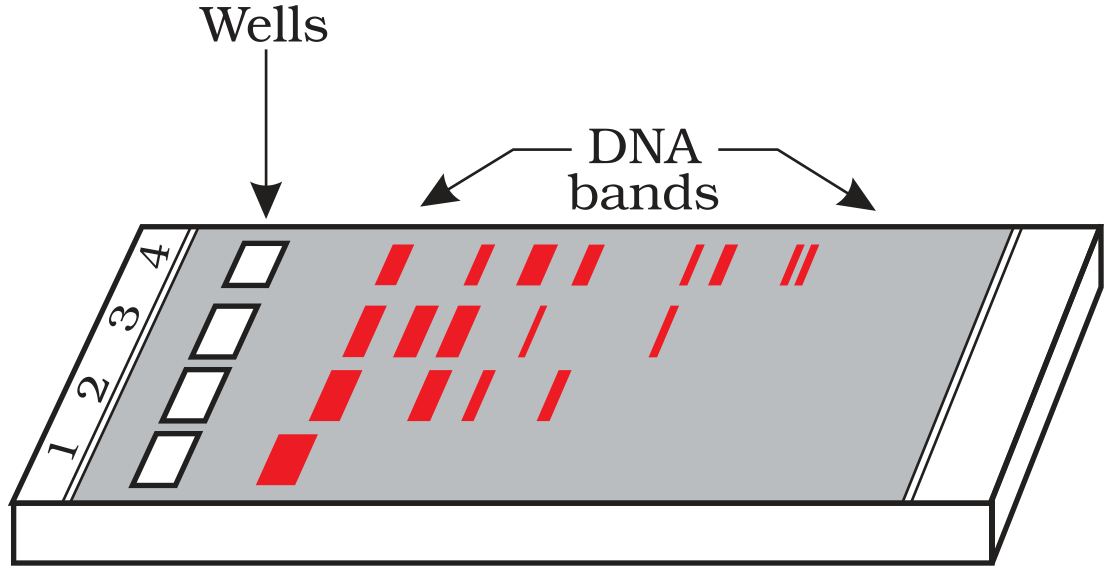
Rajesh was doing gel electrophoresis to purify DNA fragments. Given below is the sketch of the observations of the experiment performed by him.

  1. At which end he would have loaded the samples and where?
  2. Analyse the reason for different positions taken up by the DNA bands.
  3. Elaborate the step he would have followed to visualise DNA bands.
Answer the following questions:
Why is geitonogamy also referred to as genetical autogamy?
Describe the experiment that helped Louis Pasteur to dismiss the theory of spontaneous generation of life.
(a) Describe the role of selectable marker in r-DNA technology.
(b) Write the name of one such selectable marker considered useful for E. coli.
(c) Write one reason why it is considered an advantageous selectable marker
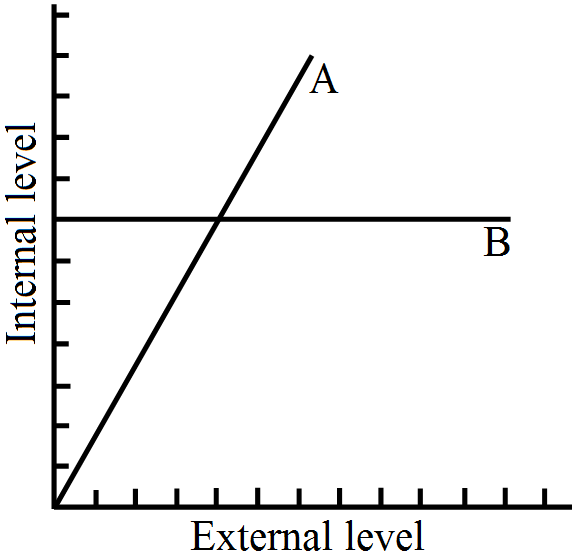
Given below is a graph depicting organismic response to changing external conditions. According to their response the organisms are grouped into two types. Name the type which will show (i) Pattern A (ii) Pattern B.

Name the type of cell division that takes place in the zygote of an organism exhibiting haplontic life cycle.