Question
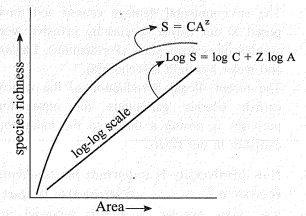
Explain Species-Area relationships graph.

Need a full question paper?

Generate a complete, print-ready paper with questions like this in minutes — across 16+ boards, with answer keys.
Start Generating Free

Similar questions

Read the following text carefully and answer the questions that follow:
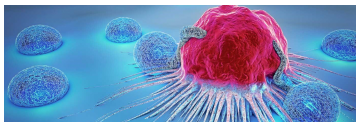
Cancer refers to any one of a large number of diseases characterized by the development of abnormal cells that divide uncontrollably and have the ability to infiltrate and destroy normal body tissue. Cancer often has the ability to spread throughout your body. Cancer is the second-leading cause of death in the world.
Image
i. How does a cancerous cell differ from a normal cell? (1)
ii. Benign tumor is less dangerous than malignant tumor. Why? (1)
iii. Describe causes of cancer. (2)
OR
Mention two methods of treatment of the disease. (2)
Read the following text carefully and answer the questions that follow:
Transgenic animals can serve as factories that in some cases, may produce large amounts of proteins more efficiently. Transgenic mice have been engineered to express human antibodies by introducing a large segment of human DNA encoding human immunoglobulin genes. In transgenic large animals such as cows or sheep proteins of pharmaceutical value can be produced in large quantities in milk which is later purified. Transgenes can be used to alter many phenotypic properties including growth rate, fat composition, milk production, hair texture, etc.
i. In transgenic animals, i.e. cow and sheep proteins of pharmaceutical value are produced in large quantities in which gland. (1)
ii. Why is mouse the most preferred animal for studies on gene transfer? (1)
iii. Why does the production of transgenic animals take place? (2)
OR
Assertion (A): Transgenic mice have been engineered to express human antibodies. (2)
Reason (R): Large segments of human DNA encoding human immunoglobulin have been transferred to mice.
a. Both A and R are true and R is the correct explanation of A.
b. Both A and R are true but R is not the correct explanation of A.
c. A is true but R is false.
d. A is false but R is true.
What is sewage? Describe secondary treatment (biological treatment) in Sewage Treatment plant.
Read the following and answer any four questions from (i) to (v) given below:

Rohan, a 13 year old school student, has been diagnosed with AIDS. He often complains of fever, nausea, headache and lethargy. Doctor advised some drugs to prolong his life.

  1. What could be the most likely mode of transmission of disease to Rohan?
  1. Artificial insemination.
  2. Sexual intercourse with infected partner.
  3. Sexual intercourse with infected partner.
  4. Use of contaminated blade.
  1. Name the drug prescribed for treatment of this disease.
  1. Zidovudine.
  2. Taxol.
  3. Vinblastine.
  4. Both (a) and (c).
  1. Assertion: AIDS is an incurable STD.

Reason: AIDS virus attacks helper T-lymphocytes.

  1. Both assertion and reason are true, and reason is the correct explanation of assertion.
  2. Both assertion and reason are true, but reason is not the correct explanation of assertion.
  3. Assertion is true, but reason is false.
  4. Both assertion and reason are false.
  1. AIDS cannot be diagnosed by:
  1. ELISA.
  2. PCR.
  3. Western blotting.
  4. VDRL.
  1. AIDS can be transmitted by:
  1. Sharing towels.
  2. Kissing.
  3. Sharing contaminated needles.
  4. All of these.
Read the following and answer any four questions from (i) to (v) given below:

Kangaroo rat seldom drinks water. It has thick coat to minimise evaporative desiccation. TI1e animal seldom comes out of its comparatively humid and cool burrow during the day time. 90% of its water requirement is met from metabolic water (water produced by respiratory breakdown of fats) while 10% is obtained from its food. Loss of water is minimised by producing nearly solid urine and faeces. As the animal faces acute water scarcity, it develops two types of adaptations : reducing water loss and ability to tolerate desert conditions.

  1. Kangaroo rat is a:
  1. Partial regulators
  2. Partial conformer
  3. Regulator
  4. Conformer
  1. Metabolic water refers to:
  1. Water required for metabolic activities.
  2. Water present in intercellular fluid.
  3. Water produced during oxidation of fat or carbohydrate.
  4. Water taken in, to promote metabolism.
  1. Desert animals minimise water loss by:
  1. Producing highly concentrated urine.
  2. Promoting maximum reabsorption of water in kidney tubules.
  3. Possessing one of the longest loop of Henle in kidney tubules.
  4. All of these.
  1. Assertion: Kangaroo rat can tolerate and thrive in wide temperature range and is known as stenothermal.

Reason: Kangaroo rats go into hibernation during winter to escape cold weather.

  1. Both assertion and reason are true and reason is the correct explanation of assertion.
  2. Both assertion and reason are true but reason is not the correct explanation of assertion.
  3. Assertion is true but reason is false.
  4. Both assertion and reason are false.
  1. The adaptations in an organism are meant for:
  1. Optimum primary production.
  2. Optimum life span.
  3. Optimum mobility.
  4. Optimum survival and reproduction.
Read the following and answer any four questions from (i) to (v) given below:

Alcohols are important industrial solvents. Ethanol, methanol, propanol and butanol are produced commercially by fermentation activity of some fungi, majorly yeasts. During fermentation, yeast cells convert cereal derived sugars into ethanol and CO2 At the same time hundreds of secondary metabolites that influence the aroma and taste of alcohol are produced. Sugar concentration affects the rate of fermentation reactions. Yeast cannot grow in very strong sugar solution. In case of complex carbohydrate containing nutrient media, 1% malt or Rhizopus is used along with yeasts. Hydrolysis of starch is carried out at high temperature for 30 ruins. 'Tile crushed food mixed with hot water for obtaining malt in called mash. 'Tile nutrient medium prior to fermentation in called wort. Wort is cooled down to appropriate temperature and inoculated with strain of yeast.

  1. Tile rate of alcohol production is measured on the basis of:
  1. Amount of sugar present in the medium.
  2. Amount of CO2 produced per unit time.
  3. Amount of yeast added in the medium.
  4. All of these.
  1. A number of chemicals are produced at the time of alcoholic fermentation with the change of nutrient media, pH and aeration. Select such by-product from the following.
  1. Phenylethanol.
  2. Amyl alcohol.
  3. Glycerol.
  4. All of these.
  1. During alcoholic fermentation of cereals and potato, the crushed food mixed with hot water for obtaining malt is called:
  1. Juice.
  2. Mash.
  3. Wort.
  4. None of these.
  1. Distilled alcohol with 95% ethanol content is called:
  1. Absolute alcohol.
  2. Rectified spirit.
  3. Gin.
  4. Brandy.
  1. Assertion: Rhizopus or 1% malt is used in the nutrient medium when it contains complex carbohydrates.

Reason: Yeast does not possess sufficient diastase or amylase. 

  1. Both assertion and reason are true and reason is the correct explanation of assertion.
  2. Both assertion and reason are true but reason is not the correct explanation of assertion.
  3. Assertion is true but reason is false.
  4. Both assertion and reason are false.
​​​​Read the following and answer any four questions from (i) to (v) given below:

Edward Wilson described diversity at all levels of biological organisation ranging from macromolecules inside the cells to biomes. It is of three inter-related hierarchial levels-genetic diversity, species diversity and conununity ecosystem diversity. Species diversity is the variety in the number and richness of the species of a region. For example, the Western ghats have a greater amphibian species diversity than the Eastern ghats.

  1. The number of species per unit area is called.
  1. Species evenness.
  2. Species richness.
  3. Species equitability.
  4. Both (a) and (c).
  1. The table below gives the population (in thousands) of ten species (A - J) in four areas (I - IV) consisting of the number of habitats given within brackets against each. Study the table and answer the question which follows:
Area and number of habitats
Species and their population (in thousands) in the area
A
B
C
D
E
F
G
H
I
J
I(11)
23
12
0.52
6.0
-
3.1
1.1
9.0
-
10.3
II(11)
10.2
-
0.62
-
1.5
3.0
-
8.2
1.1
11.2
III(13)
11.3
0.9
0.48
2.4
1.4
4.2
0.8
8.4
2.2
4.1
IV(12)
3.2
10.2
1.1
4.8
0.4
3.3
0.8
7.3
1.3
2.1
Which are out of I to IV shows maximum species diversity?

  1. II
  2. III
  3. IV
  4. I
  1. Study the given populations and choose the correct answer in relation to species diversity.
Population
Species
Species
Individuals
Population A
I
Mammals
3
II
Birds
2
III
Amphibians
2
Population B
I
Mammals
2
II
Mammals
2
III
Amphibians
1
Population C
I
Mammals
3
II
Mammals
2
III
Mammals
4


Maximum diversity
Minimum diversity
(a)
Population B
Population C
(b)
Population A
Population C
(c)
Population A
Population B
(d)
Population B
Population A
  1. The concept of species diversity has two components : evenness and richness. Evenness is based on the relative abundance of species. Richness is based on the total number of species present. Diversity indices combine a measure of richness and evenness. The Simpson index (D) is calculated from the following equations:

$\text{D}=\displaystyle\sum_{\text{i}=1}(\text{n}_\text{i}/\text{N})^2$

where, n = total number of organisms of particular species

N = total number of organisms of all species

Below are data collected in two terrestrial plant conununities that represent part of a successional chronosequence. ln this case the values were measured as percent cover.

Early Successional Community
Late Successional Community
Species
Percent Cover
Species
Percent Cover
A
83
F
24
B
5
G
20
C
9
H
18
D
2
I
23
E
1
J
15
The data indicate that, relative to the early successional community, the late successional community has which of the following characteristics?

 
Species Richness
Evenness
(a)
Higher
Higher
(b)
Higher
Lower
(c)
Same
Lower
(d)
Same
Higher
  1. Select the incorrect statement regarding species diversity.
  1. It results in polymorph formation and is useful in adaptation to changes in environmental conditions.
  2. Number of individuals of different species represent species evenness.
  3. It influences biotic interactions and stability of the community.
  4. It is a trait of the community.
Microbes are useful in household products. Explain this with suitable examples
What is chromosomal disorder? Explain any two aneuploidy with characters in humans.###Mention any two autosomal genetic disorders with their symptoms.
Read the following text carefully and answer the questions that follow:
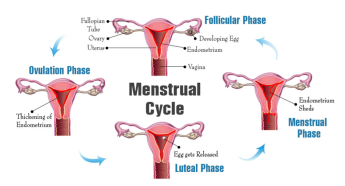
The image below shows the menstrual cycle of a human female. On the basis of this cycle:
Image
i. Explain the menstrual phase in a human female. State the level of ovarian and pituitary hormones during this phase. (1)
ii. Why is follicular phase in the menstrual cycle also referred as proliferative phase? Explain. (1)
iii. Explain the events that occur in a Graafian follicle at the time of ovulation and thereafter. (2)
OR
Draw a Graafian follicle and label antrum and secondary oocyte. (2)