Question
Explain the difference between reucing and non-reducing sugars with examples.

Answer

Reducing sugars have reducing properties, hence they reduce Fehling's solution and Tollens' reagent, like- all monosaccharides, maltose and lactose. Non-reducing sugars do not have reducing properties, hence they do not reduce Fehling's solution and Tollens' reagent. Example : Sucrose.

Need a full question paper?

Generate a complete, print-ready paper with questions like this in minutes — across 16+ boards, with answer keys.

Start Generating Free

Similar questions

What is meant by positive and negative deviations from Raoult's law and how is the sign of $\Delta_{\text {mix }} H$ related to positive and negative deviations from Raoult's law?
Explain trends in $M^{2+}/M$ standard electrode potentials.
How the following conversion can be carried out?
Aniline to chlorobenzene.
Explain the preparation of ketones from nitriles.
Half-life Period of first order reaction is 10 min. Calculate the rate constant of the reaction.
For the first order thermal decomposition reaction, following data were obtained$:$
$\ce{C_2H_5Cl(g)}$ $\xrightarrow{\text{ }\text{ }\text{ }\text{ }\text{ }\text{ }\text{ }\text{ }\text{ }}$ $\ce{C_2H_4(g) + HCl(g)}$
Time$/\sec$   Total pressure$/atm$
$0$   $0.30$
$300$   $0.50$
Calculate the rate constant. $($Given $: \ce{log  2 = 0.301, log  3 = 0.4771, log 4 = 0.6021)}$
Propose the mechanism for the following reaction:
$\text{CH}_3\text{CHO}\ \ +\ \ \text{HCN}\xrightarrow{\ \ \text{a}+ }\ \ \text{CH}_3-\text{CH}-\text{CN}\\ \ \ \ \ \ \ \ \ \ \ \ \ \ \ \ \ \ \ \ \ \ \ \ \ \ \ \ \ \ \ \ \ \ \ \ \ \ \ \ \ \ \ \ \ \ \ \ \ \ \ \ \ \ \ \ \ \ \ | \\ \ \ \ \ \ \ \ \ \ \ \ \ \ \ \ \ \ \ \ \ \ \ \ \ \ \ \ \ \ \ \ \ \ \ \ \ \ \ \ \ \ \ \ \ \ \ \ \ \ \ \ \ \ \ \ \ \ \ \text{OH}$
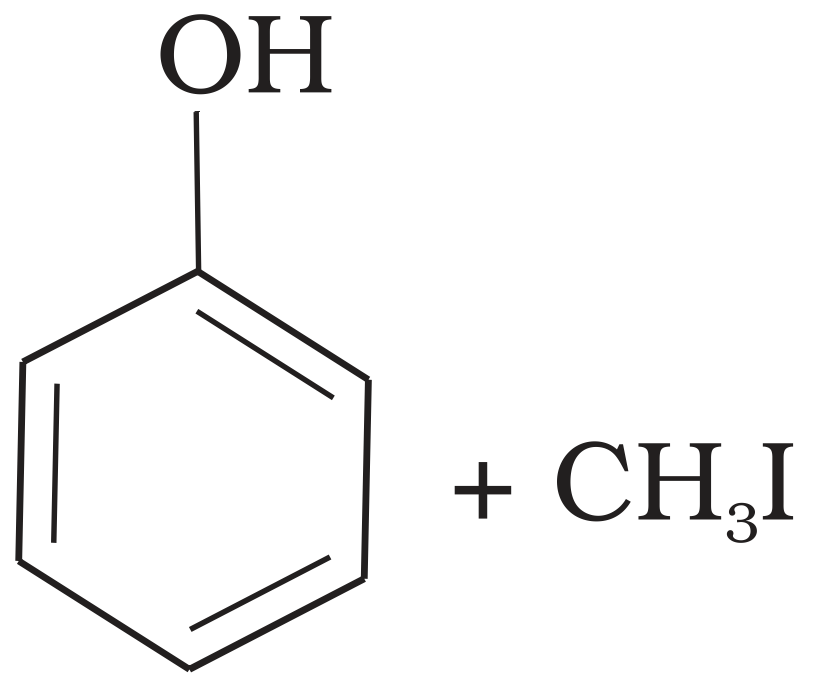
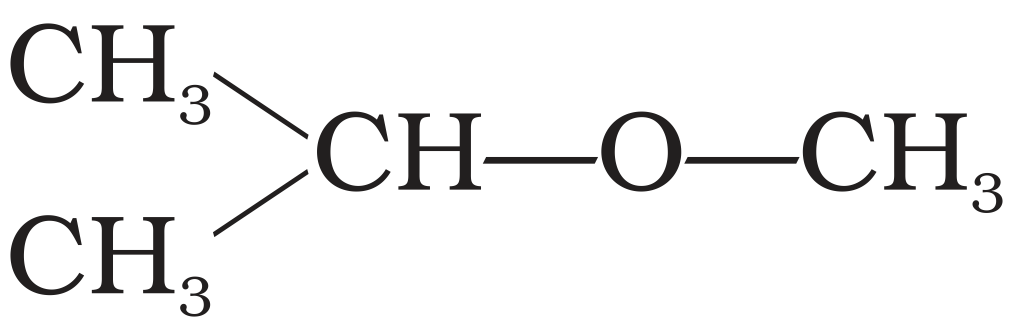
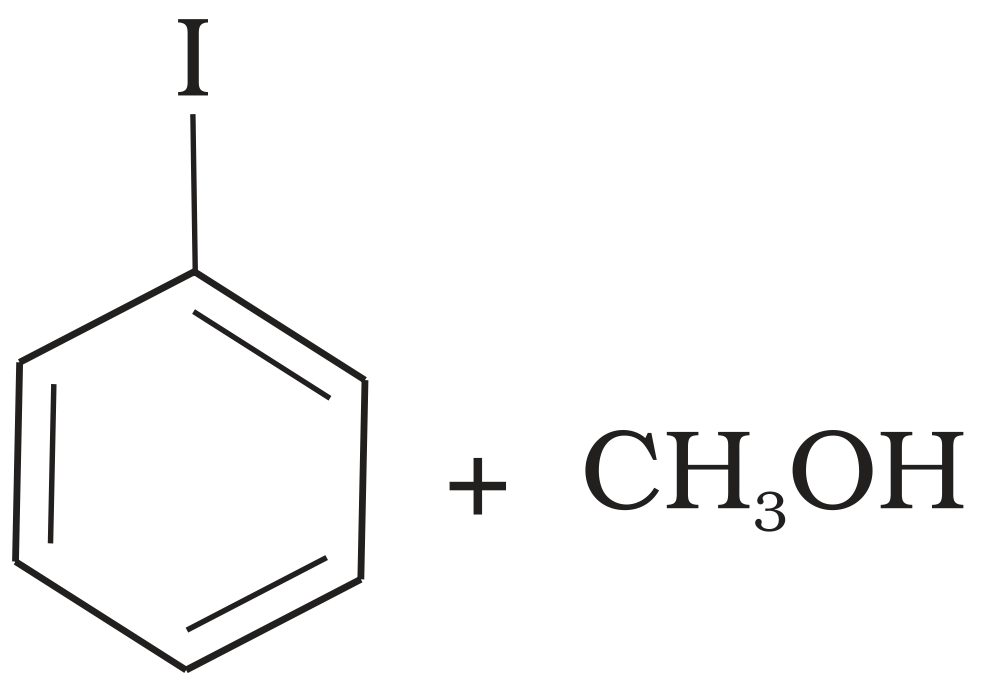
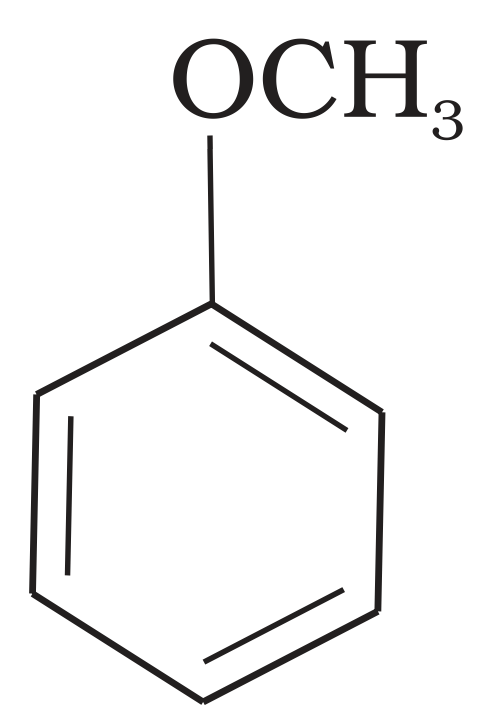
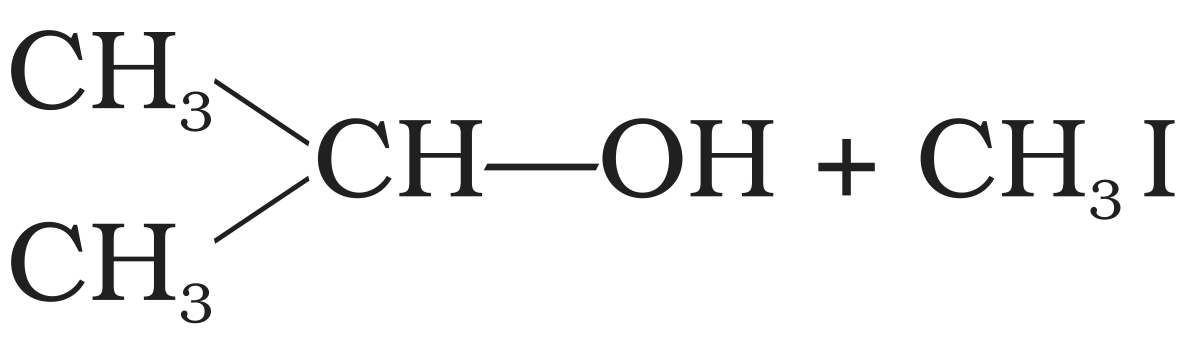
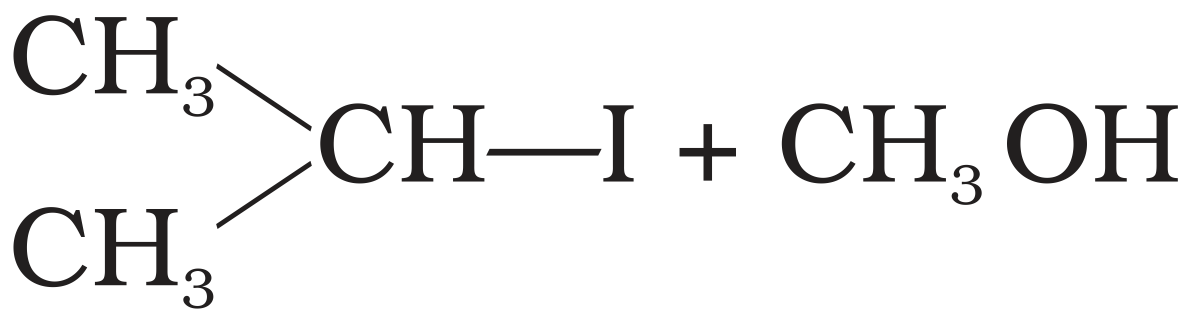
Match the starting materials given in Column $I$ with the products formed by these $($Column $II)$ in the reaction with $II.$
 
Column $I$
 
Column $II$
$(i)$ $CH_3-o-CH_3$ $(a)$
$(ii)$
$(b)$
$\ \ \ \ \ \ \ \ \ \ \ \ \ \text{CH}_3 \\ \ \ \ \ \ \ \ \ \ \ \ \ \ \ | \\ \text{CH}_3-\text{C}-\text{I}+\text{CH}_3\text{OH} \\ \ \ \ \ \ \ \ \ \ \ \ \ \ \ | \\ \ \ \ \ \ \ \ \ \ \ \ \ \ \text{CH}_3$
$(iii)$
$\ \ \ \ \ \ \ \ \ \ \ \ \ \text{CH}_3 \\ \ \ \ \ \ \ \ \ \ \ \ \ \ \ | \\ \text{H}_3\text{C}-\text{C}-\text{O}-\text{CH}_3 \\ \ \ \ \ \ \ \ \ \ \ \ \ \ \ | \\ \ \ \ \ \ \ \ \ \ \ \ \ \ \text{CH}_3$
$(c)$
$(iv)$
$(d)$ $CH_3-OH + CH_3-I$
 
 
$(e)$
 
 
$(f)$
 
 
$(g)$
$\ \ \ \ \ \ \ \ \ \ \ \ \ \text{CH}_3 \\ \ \ \ \ \ \ \ \ \ \ \ \ \ \ | \\ \text{CH}_3-\text{C}-\text{OH}+\text{CH}_3\text{I} \\ \ \ \ \ \ \ \ \ \ \ \ \ \ \ | \\ \ \ \ \ \ \ \ \ \ \ \ \ \ \text{CH}_3$
Calculate the mass percentage of aspirin (C9H8O4) in acetonitrile (CH3CN) when 6.5 g of C9H8O4 is dissolved in 450 g of CH3CN.
Predict the products of electrolysis in each of the following:
An aqueous solution of $CuCl_2$ with platinum electrodes.