Question
Explain the mathematical analysis of progressive wave.

Answer

SELF

Need a full question paper?

Generate a complete, print-ready paper with questions like this in minutes — across 16+ boards, with answer keys.
Start Generating Free

Similar questions

  1. It is known that density r of air decreases with height y as $\rho_0\text{e}^{-\frac{\text{y}}{\text{y}_0}}$ where $\rho=1.25\text{kg m}^{-3}$ is the density at sea level, and y0 is a constant. This density variation is called the law of atmospheres. Obtain this law assuming that the temperature of atmosphere remains a constant (isothermal conditions). Also assume that the value of g remains constant.
  2. A large He balloon of volume 1425m3 is used to lift a payload of 400kg. Assume that the balloon maintains constant radius as it rises. How high does it rise? [Take y0 = 8000m and rHe = 0.18 kgm–3].
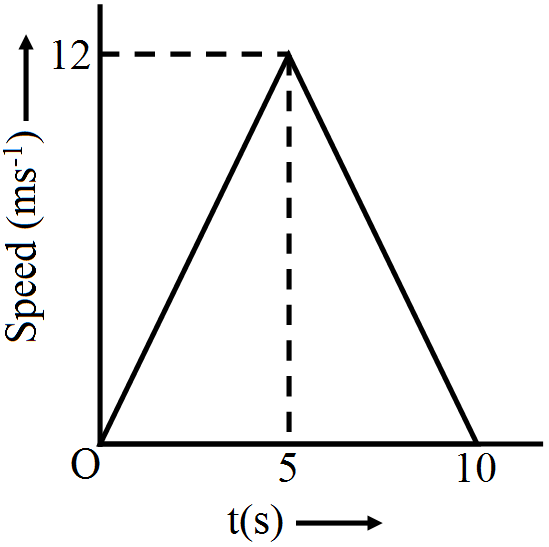
The speed time graph of a particle moving along a fixed direction is as shown below. Obtain the distance traversed by the particle between:
  1. t = 0s to 5s
  2. t = 2s to 6s
​​​​​​​
A light beam of wavelength 400 run is incident on a metal plate of work function 2.2eV.
  1. A particular electron absorbs a photon and makes two collisions before coming out of the metal. Assuming that 10% of the extra energy is lost to the metal in each collision, find the kinetic energy of this electron as it comes out of the metal.
  2. Under the same assumptions, find the maximum number of collisions the electron can suffer before it becomes unable to come out of the metal.
Toricelli’s barometer used mercury. Pascal duplicated it using French wine of density 984kg m–3. Determine the height of the wine column for normal atmospheric pressure.
Doubly-ionised helium ions are projected with a speed of 10km/s-1 in a direction perpendicular to a uniform magnetic field of magnitude 1.0T. Find
  1. The force acting on an ion.
  2. The radius of the circle in which it circulates.
  3. The time taken by an ion to complete the circle.
Explain elastic and inelastic collision. For head on elastic collision, obtained expressions for the velocities of the colliding particles after the collision. Also mention the special conditions of collision.
Assuming the earth to be a sphere of uniform mass density, how much would a body weigh half way down to the centre of the earth if it weighed 250N on the surface?
A particle of mass 0.8kg is executing simple harmonic motion with amplitude of 1.0 metre and periodic time $\frac{11}{7}\text{sec}$. Calculate the velocity and the kinetic energy of the particle at the moment when its displacement is 0.6 metre.
A load resistor of $2\text{k}\Omega$ is connected in the collector branch of an amplifier circuit using a transistor in common-emitter mode. The current gain $\beta=50.$ The input resistance of the transistor is $0.50\text{k}\Omega.$ If the input current is changed by $50\mu\text{A}.$
  1. By what amount does the output voltage change?
  2. By what amount does the input voltage change?
  3. What is the power gain?
Two mercury droplets of radii 0.1cm. and 0.2cm. collapse into one single drop. What amount of energy is released? The surface tension of mercury T = 435.5 × 10-3N m-1