Question
Explain the method of charging by friction briefly.

Answer

►Historically, the credit of discovery of frictional electricity goes to Thales of Miletus, Greece around 600 BC .
►The name electricity is coined from the Greek word 'elektron' meaning amber.
►Many such pairs of materials were known which, on rubbing could attract light objects like straw, pith balls and bits of papers.
We can explain it with an activity also : Cut out long thin strips of white paper and lightly iron them.
►Take them near a TV screen or computer monitor. You will see that the strips get attracted to the screen. In fact they remain stuck to the screen for a while.
Need a full question paper?

Generate a complete, print-ready paper with questions like this in minutes — across 16+ boards, with answer keys.

Start Generating Free

Similar questions

A soap film of thickness 0.0011mm appears dark when seen by the reflected light of wavelength 580nm. What is the index of refraction of the soap solution, if it is known to be between 1.2 and 1.5?
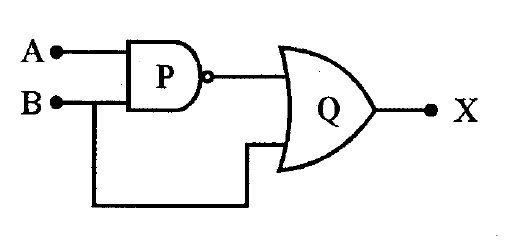
Identify the logic gates marked 'P' and 'Q' in the given circuit. Write the truth table for the combination.
The capacitance of a parallel plate air capacitor is $8 \mu F$. The distance between its plates is halved and the space between the plates is filled with a medium having dielectric constant 5 . Find the capacitance of the capacitor in the second case.
When a capacitor is charged by a battery; is the energy stored in the capacitor same as energy supplied by the battery?
  1. Why are infra-red waves often called heat waves? Explain.
  2. What do you understand by the statement, ‘‘Electromagnetic waves transport momentum’’?
Answer the following:
A man fixes outside his house one evening a two metre high insulating slab carrying on its top a large aluminium sheet of area $1m^2.$ Will he get an electric shock if he touches the metal sheet next morning?
Using the formula for the radius of $n ^{\text {th }}$ orbit $r_n=\frac{n^2 h^2 \varepsilon_0}{\pi m e^2}$ derive an expression for the total energy of electron in $n^{\text {th }}$ Bohr's orbit.
Explain diamagnetism and diamagnetic material.
A single lens is mounted in a tube. A parallel beam enters the tube and emerges out of the tube as a divergent beam. Can you say with certainty that there is a diverging lens in the tube?
Suppose the energy liberated in the recombination of a hole-electron pair is converted into electromagnetic radiation. If the maximum wavelength emitted is 820nm, what is the band gap?