Question
Explain the unit of transcription and gene.

Answer

A gene is the functional unit of inheritance which are located on the DNA. The DNA sequence coding for t-RNA or r-RNA molecule also define a gene. A cistron is a segment of DNA coding for a polypeptide, the structural gene in a transcription unit could be said as monocistronic (mostly in eukaryotes) or polycistronic (mostly in bacteria or prokaryotes). In eukaryotes, the monocistronic structural genes have interrupted coding sequences—the genes in eukaryotes are split. The coding sequences or expressed sequences are defined as exons. Exons are said to be those sequence that appear in mature or processed RNA. The exons are interrupted by introns. Introns or intervening sequences do not appear in mature or processed RNA.
Before processing, the primary transcript of RNA contains both exons and introns and are known as heterogenous nuclear RNA/hn-RNA. The split-gene arrangement further complicates the definition of a gene in terms of a DNA segment. Inheritance of a character is also affected by promoter and regulatory sequences of a structural gene. Hence, sometime the regulatory sequences are loosely defined as regulatory genes, even though these sequences do not code for any RNA or protein.

Need a full question paper?

Generate a complete, print-ready paper with questions like this in minutes — across 16+ boards, with answer keys.
Start Generating Free

Similar questions

How does $\beta$-galactosidase coding sequence act as a selectable marker? Explain. Why is it a preferred selectable marker to antibiotic resistance genes?
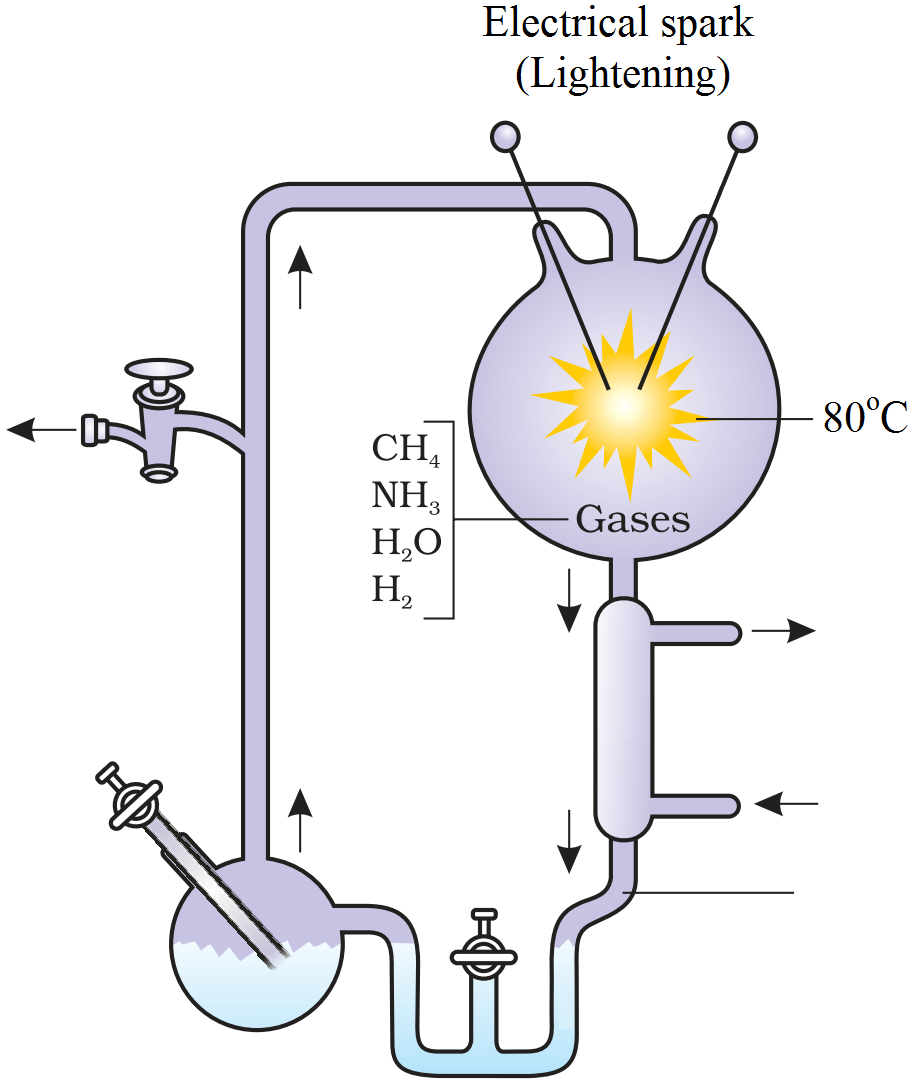
A student was simulating Urey and Millers experiment to prove the origin of life. The set up used by the student is given.

  1. Find out the reasons why he could not get desired results.
  2. What conclusion was drawn by Urey and Miller through this experiment?
  3. Compare the conclusion drawn with the theory of spontaneous generation.
Match Column I with Column II.
S. No.
Column I
S. No.
Column II
A.
Cleavage
1.
Outer layer of the blastocyst that attaches to the endometrium during implantation.
B.
Implantation
2.
Mitotic divisions of the zygote in quick succession.
C.
Inner cell mass
3.
Embedding of the blastocyst in the endometrium of uterus.
D.
Trophoblast
4.
Release of secondary oocyte from the ovary.
E.
 
5.
Group of cells attached to one end of trophoblast that differentiate into embryo proper.
What is adaptive radiation? When can adaptive radiation be referred to as convergent evolution? Give an example.
Explain the internal structure of testis (Figure is not essential).
How has RNAi technique helped to prevent the infestation of roots in tobacco plants by a nematode Meloidogyne incognita?
  1. Why was a bacterium used in the first instance of the construction of an artificial recombinant DNA molecule?
  2. Name the scientists who accomplished this and how?
Scutellum is the single cotyledon found in the monocot embryo only. Explain.
Describe the different classes of consumers.
Draw the named diagram of sparged stirred tank bioreacter.