Question
Fertilisation is essential for production of seed, but in some angiosperms, seeds develop without fertilisation.
  1. Give an example of an angiosperm that produces seeds without fertilisation Name the process.
  2. Explain the two ways by which seeds develop without fertilisation.
Answer

A. Members of Asteraceae/grasses/citrus/mango, apomixis.

B. Two ways -

  1. In some species, the diploid egg cell is formed without reduction division and develops into embryo without fertilisation.
  2. More often, as in many citrus and mango varieties some of the nucellar cells surrounding the embryo sac start dividing, protrude into the embryo sac and develop into the embryos.

Need a full question paper?

Generate a complete, print-ready paper with questions like this in minutes — across 16+ boards, with answer keys.

Start Generating Free

Similar questions

Explain innate immunity
An organic farmer relies on natural predation for controlling plant pests and diseases. Justify giving reasons why this is considered to be a holistic approach.
  1. Name the organic material exine of the pollen grain is made up of. How is this material advantageous to pollen grain?
  2. Still it is observed that it does not form a continuous layer around the pollen grain. Give reason.
  3. How are 'pollen banks' useful?
How is a primary spermatocyte different from a secondary spermatocyte?
In a Mendelian monohybrid cross, the F2 generation shows identical genotypic and phenotypic ratios. What does it tell us about the nature of alleles involved? Justify your answer.
Three water samples namely river water, untreated sewage water and secondary effluent discharged from a sewage treatment plant were subjected to BOD test. The samples were labelled A, B and C but the laboratory attendant did not note which was which. The BOD values of the three samples A, B and C were recorded as 20 mg/L, 8 mg/L and 400 mg/L respectively. Which sample of the water is most polluted? Can you assign the correct label to each assuming the river water is relatively clean?

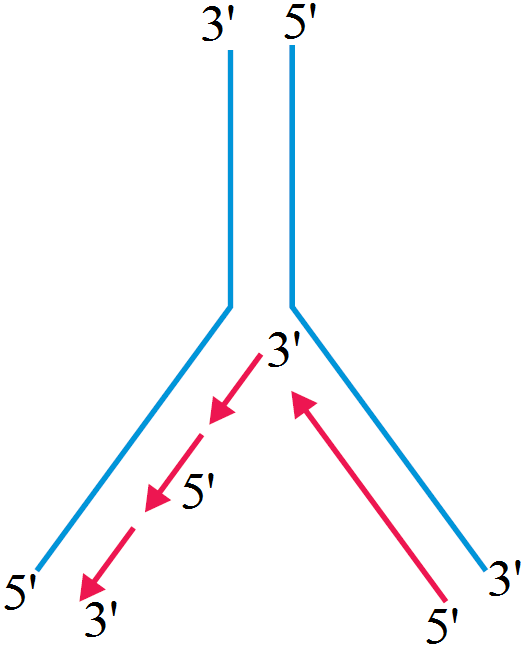
Why do you see two different types of replicating strands in the given DNA replication fork? Explain. Name these strands.
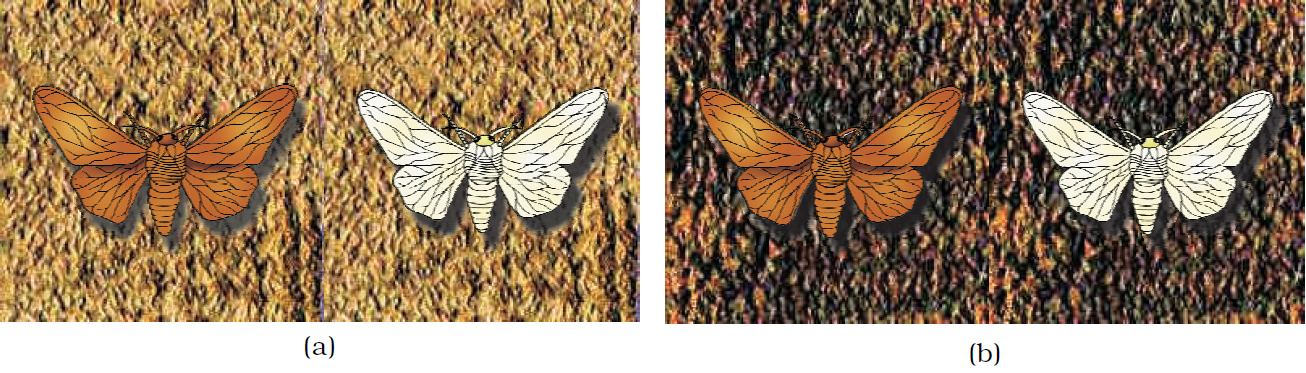
Taking the example of white-winged moths and dark-winged moths of England in pre and postindustrialised era, explain evolution by natural selection.

OR

How can evolution by natural selection be explained by melanised moths before and after industrialisation in England?

OR

How did industrialisation play a role in Natural Selection of light and dark-coloured moth in England?

OR

What do these pictures (a) and (b) illustrate with reference to evolution? Explain.

How do homologous organs represent divergent evolution? Explain with the help of a suitable example.
Draw a schematic sketch of pBR322 plasmid and label the following in it:
  1. Any two restriction sites.
  2. ori and rop genes.
  3. An antibiotic resistant gene.