Question
Fill in the blanks using the word(s) from the list appended with statement:
Surface tension of liquids generally . . . with temperatures. (increases/ decreases)
Answer

Surface tension of liquids generally decreases with temperatures.
The surface tension of a liquid is inversely proportional to temperature.

Need a full question paper?

Generate a complete, print-ready paper with questions like this in minutes — across 16+ boards, with answer keys.

Start Generating Free

Similar questions

Read each statement below carefully and state, with reasons and examples, if it is true or false:
A scalar quantity is one that
Can never take negative values.
For the above problem, the direction of the gravitational intensity at an arbitrary point P is indicated by the arrow (i) d, (ii) e, (iii) f, (iv) g.
The efficiency of Carnot engine is highest as compared to other heat engines. Is the above statement true or false?
A ball is fired at a vertical hill at a distance $x$ from a cannon aimed at an angle $\theta$ above the horizontal on plane with a nozzle speed $v$. At what height $y$ of the hill from the bottom will the sphere hit?
The following example represent periodic motion :
A freely suspended bar magnet displaced from its N-S direction and released.
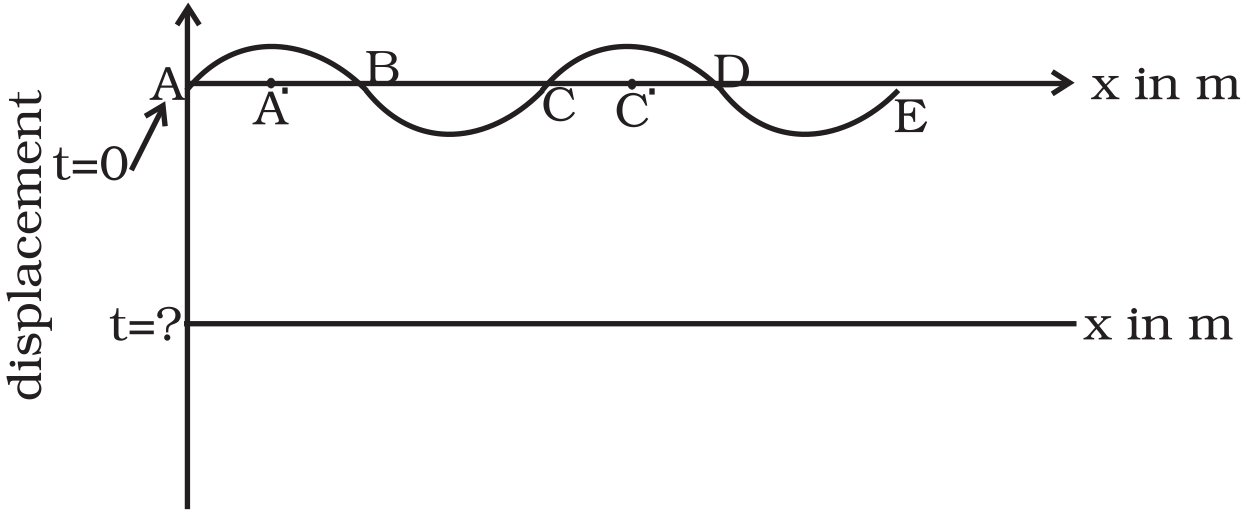
The pattern of standing waves formed on a stretched string at two instants of time are shown in The velocity of two waves superimposing to form stationary waves is 360ms–1 and their frequencies are 256Hz
  1. Calculate the time at which the second curve is plotted.
  2. Mark nodes and antinodes on the curve.
  3. Calculate the distance between A′ and C′.

Do rain drops fall with uniform velocity or with uniform acceleration?
When we pull a wire, why do we have to do work? What happens to the energy given to the wire in this work?
Is it possible that a body have a constant velocity but varying speed?
A steel wire $0.72 m$ long has a mass of $5.0 \times 10^{-3} kg$. If the wire is under a tension of $60 N$, what is the speed of transverse waves on the wire?