Question
Find a matrix X such that 2A + B + X = 0, where.
$\text{A}=\begin{bmatrix}-1&2\\3&4\end{bmatrix},\text{B}=\begin{bmatrix}3&-2\\1&5\end{bmatrix}$

Answer

Given: $\text{A}=\begin{bmatrix}-1&2\\3&4\end{bmatrix},\text{B}=\begin{bmatrix}3&-2\\1&5\end{bmatrix}$
and
$2\text{A}+\text{B}+\text{x}=0$
$\Rightarrow\text{x}=-2\text{A}-\text{B}$
$\Rightarrow\text{x}=-2\begin{bmatrix}-1&2\\3&4\end{bmatrix}-\begin{bmatrix}3&-2\\1&5\end{bmatrix}$
$\Rightarrow\text{x}=\begin{bmatrix}2&-4\\-6&-8\end{bmatrix}-\begin{bmatrix}3&-2\\1&5\end{bmatrix}$
$\Rightarrow\text{x}=\begin{bmatrix}2-3&-4+2\\-6-1&-8-5\end{bmatrix}$
$\Rightarrow\text{x}=\begin{bmatrix}-1&-2\\-7&-13\end{bmatrix}$
Hence,
$\text{x}=\begin{bmatrix}-1&-2\\-7&-13\end{bmatrix}$

Need a full question paper?

Generate a complete, print-ready paper with questions like this in minutes — across 16+ boards, with answer keys.
Start Generating Free

Similar questions

Let $'o\ ' $ be a binary operation on the set $Q_0$ of all non $-$ zero rational numbers defined by $\text{a}\ ^*\ \text{b}=\frac{\text{ab}}{2} $ for all $\text{a},\text{b}\in\text{Q}_0.$
Find the identity element in $Q_0$.
A is a skew-symmetric of order 3, write the value of |A|.
If f, g : R → R be two functions defined as f(x) = |x| + x and g(x) = |x| – x, $\forall\ \text{x}\in\text{R}.$ Then find fog and gof. Hence find fog(-3), fog(5) and gof(-2).
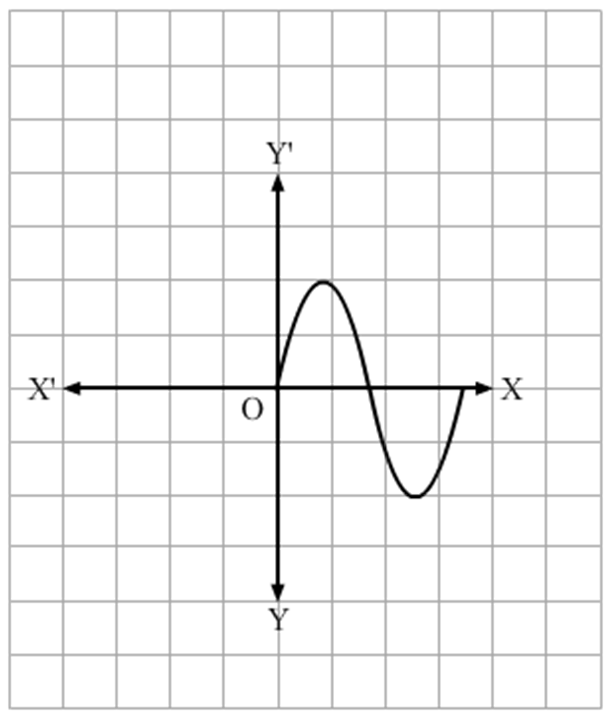
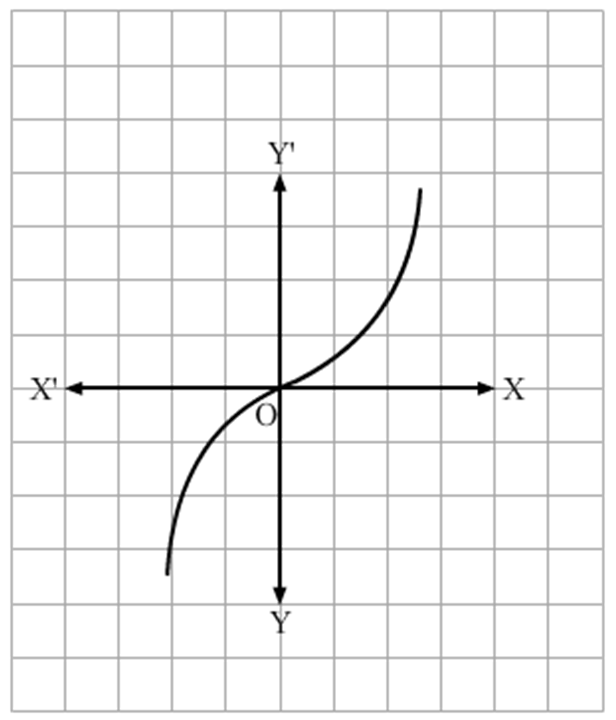
Which of the following graphs represents a one-one function?
  1.  
  1.  
Let * be a binary operation on Z defined by a * b = a + b - 4 for all a, b ∈ Z.
Find the invertible elements in Z.
If y = x|x|, find $\frac{\text{dy}}{\text{dx}}\text{ for x 0}<0.$
A company produces two types of goods A and B, that require gold and silver. Each unit of type A requires 3 g of silver and 1 g of gold while that of type B requires 1 g of silver and 2 g of gold. The company can procure a maximum of 9 g of silver and 8 g of gold. If each unit of type A brings a profit of ₹ 40 and that of type B ₹ 50, formulate LPP to maximize profit.
A particle moves along the curve $6 y=x^3+2$. Find the points on the curve at which $y-$ coordinates is changing $2$ times as fast as $x -$ coordinates.
If f(x) = x + 1 then write the value of $\frac{\text{d}}{\text{dx}}\text{ fof }\text{(x)}.$
If $\vec{\text{a}}\text{ and }\vec{\text{b}}$ represent two adjacent sides of a parallelogram, then write vectors representing its diagonals.