MCQ
Following process is known as: $\text{hv}\xrightarrow{ \ \ \ \ \ \ \ \ \ \ \ }\text{e}^{+}+\text{e}^{-}$
  • A
    Nuclear fission.
  • Pair production.
  • C
    Annihilation.
  • D
    Photoelectric effect.

Answer

Correct option: B.
Pair production.

Need a full question paper?

Generate a complete, print-ready paper with questions like this in minutes — across 16+ boards, with answer keys.
Start Generating Free

Similar questions

A girl sitting on a swing and swinging. If a girl stands on the swing what will be the effect on the period of oscillation of the swing?
A very tall vertical cylinder is filled with a gas of molar mass $M$ under isothermal conditions at temperature $T.$ The density and pressure of the gas at the base of the container is $\rho_0$ and $p_0$, respectively Choose the correct statement $(s)$ if gravity is assumed to be constant throughout the container
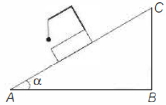
A simple pendulum is attached to a block which slides without friction down an inclined plane $A B C$ having an angle of inclination $\alpha$ as shown below. While the block is sliding down the pendulum oscillates in such a way that at its mean position the direction of the string is
Compressibility per unit atm. pressure of water is $'\sigma '$ and if due to pressure $P$ there is decrement in volume $V$, find change is volume
Latent heat of $1\,gm $ of steam is $536 \,cal/gm,$ then its value in $joule/kg$ is
If two liquids of same volume but different densities ${\rho _1}$ and ${\rho _2}$ are mixed, then density of mixture is given by
Two rods of same material have same length and area. The heat $\Delta Q$ flows through them for $12\,minutes$ when they are jointed in series. If now both the rods are joined in parallel, then the same amount of heat $\Delta Q$ will flow in ........ $\min$
A man is standing at the centre of frictionless pond of ice. How can he get himself to the shore
A ring whose diameter is $1\ meter$, oscillates simple harmonically in a vertical plane about a nail fixed at its circumference. The time period will be ....... $\sec$.
A disc is rotating with an angular velocity $\omega _0. $  A constant retrarding torque is applied on it to stop the disc. The angular velocity becomes $(\omega _0/2)$  after $n$ rotations. How many more rotations will it make before coming to rest ?