- AAtoms are ionized at high temperature.
- BMolecules break up at high temperatures.
- CNuclei break up at high temperature.
- DKinetic energy is high enough to overcome repulsion between nuclei.
Explanation:
Fusion reaction takes place at temperature about 107K.
It requires this high temperature so that nucleus are moving rapidly, so that they have high kinetic energy and can come together by overcoming repulsion between them.
Generate a complete, print-ready paper with questions like this in minutes — across 16+ boards, with answer keys.
Assertion : Microwave propagation is better than the sky wave propagation.
Reason : Microwaves have frequencies 100 to 300 GHz, which have very good directional properties.
|
(a) If both assertion and reason are true and the reason is the correct explanation of the assertion. |
|
(b) If both assertion and reason are true but reason is not the correct explanation of the assertion. |
|
(c) If assertion is true but reason is false. |
|
(d) If the assertion and reason both are false. |
A proton of energy 8 eV is moving in a circular path in a uniform magnetic field. The energy of an alpha particle moving in the same magnetic field and along the same path will be
|
(a) 4 eV |
(b) 2 eV |
(c) 8 eV |
(d) 6 eV |
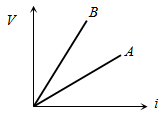
V-i graphs for parallel and series combination of two identical resistors are as shown in figure. Which graph represents parallel combination

|
(a) A |
(b) B |
(c) A and B both |
(d) Neither A nor B |
If convex lens of focal length 80cm and a concave lens of focal length 50 cm are combined together, what will be their resulting power
|
(a) + 6.5 D |
(b) – 6.5 D |
(c) + 7.5 D |
(d) – 0.75 D |
In Young's experiment, light of wavelength 4000 Å is used to produce bright fringes of width 0.6 mm, at a distance of 2 meters. If the whole apparatus is dipped in a liquid of refractive index 1.5, then fringe width will be
|
(a) 0.2 mm |
(b) 0.3 mm |
(c) 0.4 mm |
(d) 1.2 mm |
A capacitor of capacity
is charged upto V volt and then connected to an uncharged capacitor of capacity
. Then final potential difference across each will be
|
(a) |
(b) |
(c) |
(d) |
Atomic mass number of an element thorium is 232 and its atomic number is 90. The end product of this radioactive element is an isotope of lead (atomic mass 208 and atomic number 82). The number of alpha and beta particles emitted is
|
(a) α = 3, β = 3 |
(b) α = 6, β = 4 |
(c) α = 6, β = 0 |
(d) α = 4, β = 6 |