Question
Give four differences between organic and inorganic cornpounds.

Answer

S.No.Organic CompoundsInorganic Compounds
1.Occurs in living matter i.e. animals and plants. Found from Non-living matter i.e. Minerals.
2.They have low melting and boiling points.They have high melting and boiling points.
3.Insoluble in waterSoluble in water
4.They are generally nonvolatile
and inflammable.
They are generally non-volatile and non-combustible.

Need a full question paper?

Generate a complete, print-ready paper with questions like this in minutes — across 16+ boards, with answer keys.
Start Generating Free

Similar questions

Draw the structures of isomer of : pentane. Write the IUPAC and common names of these isomer
How will you distinguish between conc. HCl and conc. $H_2SO_4?$
Potassium (Atomic No. $19$) and chlorine (Atomic No. $17$) react to form a compound. On the basis of electronic concept, explain
(i) oxidation
(ii) reduction
(iii)oxidising agent
(iv)reducing agent
Give the names of any three alkyl groups. How are they formed?
Draw the structure of ammonia and give the reason for alkaline nature of aqueous ammonia.
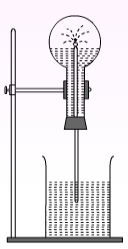
The diagram shows a simple arrangement of the fountain experiment:
Image
(i) Name the two gases you have studied which can be used in this experiment(ii) What is the common properly demonstrated by this experiment
A compound contains $87.5\%$ by mass of nitrogen and $12.5\%$ by mass of hydrogen. Determine the empirical formula of this compound.
State differences between the properties of ionic compounds and covalent compounds.
$(i)$ A compound has the following percentage composition by mass $: C$ is $14\%, H$ is $1.2\%$ and $Cl$ is $84.5\%$
Determine the empirical formula of this compound.
$(ii)$ The relative molecular mass of this compound is $168,$ so what is its molecular formula?
$(iii)$ By what type of reaction could this compound be obtained from ethylene?
Give the preparation of the salt given in the left column by matching with the methods given in the right column. Write balanced equations for each preparation.
Salt Method of Preparation
Zinc sulphate Precipitation
Ferrous sulphide Displacement
Barium sulphate Neutralization
Sodium sulphate Synthesis