Question
Give scientific Reason :
Atomic radius goes on increasing down a group.

Answer

(i) Atomic radius is the distance between the centre of the atom and its outermost shell.
(ii) New shells are added to the atoms of the elements as we go down from top to bottom in a group.
(iii) The outermost electrons go further and further away from the nucleus, extending the radius and ultimately increasing the size of the atom. Hence, atomic radius goes on increasing down a group.

Need a full question paper?

Generate a complete, print-ready paper with questions like this in minutes — across 16+ boards, with answer keys.

Start Generating Free

Similar questions

Choose the correct option from the bracket and complete the stanza.
(colour blind, actual, conical, light-sensitive, rodlike, colours)
The retina in our eyes is made up of many _______ cells. These cells are shaped like a rod and like a cone. The _______ cells respond to the intensity of light and give information about the brightness or dimness of the object to the brain. The _______ cells respond to the colour and give information about the colour of the object to the brain. Brain processes all the information received and we see the _______ image of the object. Rod like cells respond to the faint light also but ______ cells do not. Some people lack conical cells responding to certain colours. These persons cannot recognize those colours or cannot distinguish between different ______. These persons are said to be ______.
I. The atomic number of nitrogen is 7. How many electrons are present in the valence shell of nitrogen?
ii. Molecular formula of nitrogen is $N _2$. Draw the electron-dot structure and line structure of a nitrogen molecule.
If the height of a satellite completing one revolution around the earth in $T$ seconds is $h_1$ meters, then what would be the height of a satellite taking $22–\sqrt T$ seconds for one revolution?
What do you mean by a precipitation reaction? Explain giving an example.
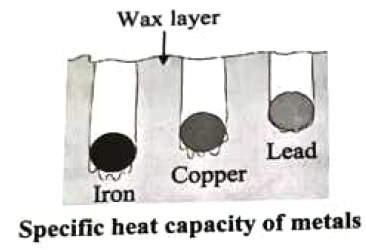
Observe the following figure and answer the questions:
Image

i. Which element has maximum specific heat capacity? Justify.
ii. Which element has minimum specific heat capacity? Justify.
iii. Define specific heat of object.
Light travels with a velocity $1.5 \times 10^8 m / s$ in a medium. On entering second medium its velocity becomes $0.75 \times 10^8 m / s$. What is the refractive index of the second medium with respect to the first medium? (Practice Activity Sheet -3 )
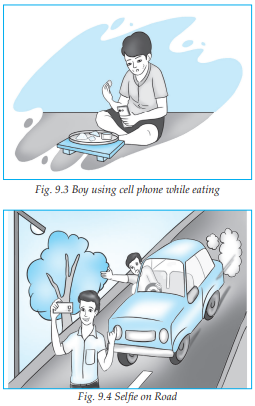
Observe the above images. Is it rational? Why?
Image
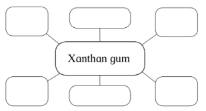
Complete the following conceptual picture with respect to its uses. (Board’s Model Activity Sheet)
Image
Describe the process of respiration in the following parts of a plant:
  1. Root.
  2. Stem.
  3. Leaves.
Describe the New Cartesian Sign Convention used in optics. Draw a labelled diagram to illustrate this sign convention.