Question
Give the main differences between physical changes and chemical changes.

Answer

  PHYSICAL CHANGE   CHEMICAL CHANGE
i No, new substance is formed in a physical change.  i New substance is formed in a chemical change.
ii It is a temporart change. ii A chemical change is a permanent change.
iii It is easily reversible. iii This process is usually irreversible.
iv Very little heat or light energy is usually absorbed or given out in this process. iv A lot of heat or light energy is absorbed or given out in this process.
v Mass of substance does not alter. v Mass of substance does alter in this process.

Need a full question paper?

Generate a complete, print-ready paper with questions like this in minutes — across 16+ boards, with answer keys.

Start Generating Free

Similar questions


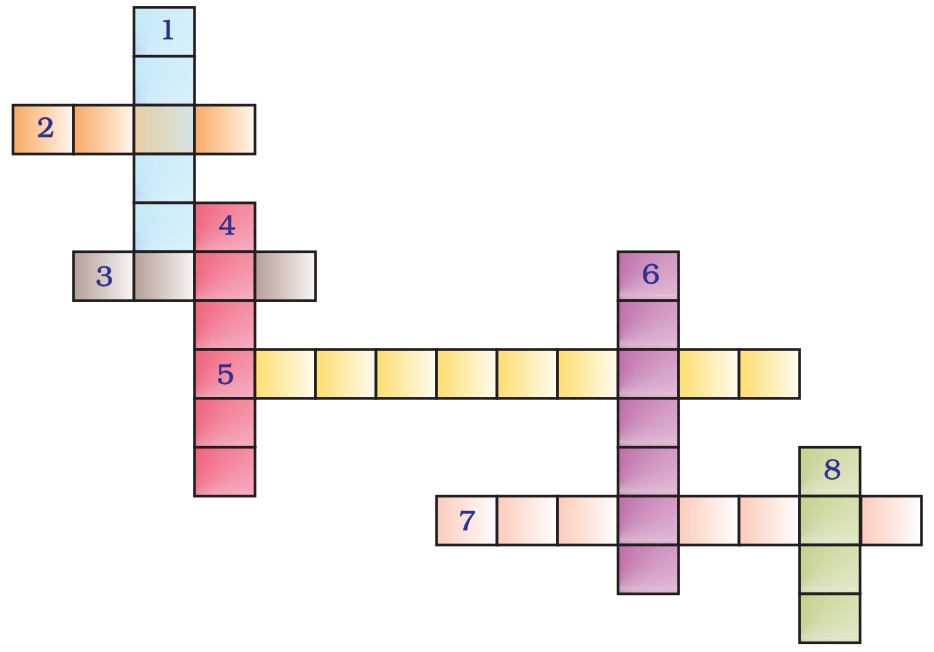
Complete the following crossword puzzle (Figure) by using the name of the chemical elements. Use the data given in the table following.
Across
Down
2.
The element used by Rutherford during his $\alpha$–scattering experiment.
1.
A white lustrous metal used for making ornaments and which tends to get tarnished black in the presence of moist air.
3.
An element which forms rust on exposure to moist air.
4.
Both brass and bronze are alloys of the element.
5.
A very reactive non–metal stored under water.
6.
The metal which exists in the liquid state at room temperature.
7.
Zinc metal when treated with dilute hydrochloric acid produces a gas of this element which when tested with burning splinter produces a pop sound.
8.
An element with symbol Pb.
State and explain the law of conservation of energy with an example.
  1.  
  1.  
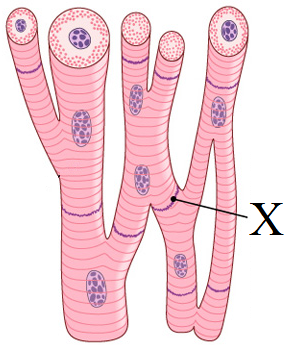
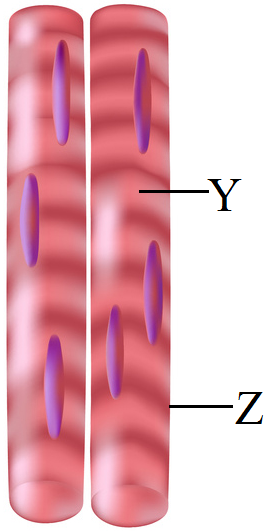
  1. Identify figures A and B.
  2. Label X, Y and Z.
  3. Which one act as impulse booster?
  4. Which one is under control our will?
When extremely small particles X derived from the another of a flower were suspended in a liquid Y and observed through a microscope, it was found that the particles X were moving throughout the liquid Y in a very zig zag way. It was also observed that warmer the liquid Y, faster the particles X moved in its surface.
  1. What could particles X be?
  2. What do you think liquid Y is?
  3. What is the zig-zag movement of particles X?
  4. What is causing the zig-zag movement of particles X?
  5. Name the scientist who discovered this phenomenon.
  6. What does this experiment tell us about the nature of liquid Y?
Describe the composition and functions of blood
List five characteristics by which compounds can be distinguished from mixtures.
How is the power related to the speed at which a body can be lifted$?$ How many kilograms will a man working at the power of $100W,$ be able to lift at constant speed of $1ms^{-1}$ vertically$?\ (g = 10ms^{-2})$
How is water purified on a large scale at water works? Explain with the help of a labelled diagram. Name the substance which is added to kill germs in the drinking water supply?
List five characteristics by which compounds can be distinguished from mixtures.
Give two examples each of longitudinal waves and transverse waves.