Question
List five characteristics by which compounds can be distinguished from mixtures.

Answer

 
MIXTURES
 
COMPOUNDS
i
A mixture can be separated into constituents by the physical processes.
i
A compound cannot be separatwd into its constituents by the physical processes.
ii
A mixture shows the properties its contituents.
ii
The properties of a compound are entirely different from those of its constituents. 
iii
Energy is usually neither given out nor absorbed in the preparation of a mixture.
iii
Energy is usually given or absorbed during the preparation of a compound.
iv
The composition of a mixture is variable.
iv
The composition of a compound is fixed.
v
A mixture does not have a fixed melting point, boiling point, etc. 
v
A compound has a fixed melting boiling point etc.

Need a full question paper?

Generate a complete, print-ready paper with questions like this in minutes — across 16+ boards, with answer keys.
Start Generating Free

Similar questions

Mention any two desirable agronomic characters for crop improvement. Explain how farmers get desired characters incorporated into the new varieties produced. List two conditions necessary for the new varieties to be accepted.
Draw a well-labelled diagram of an eukaryotic nucleus. How is it different from nucleoid?
What is the role of SER in liver cells of vertebrates?
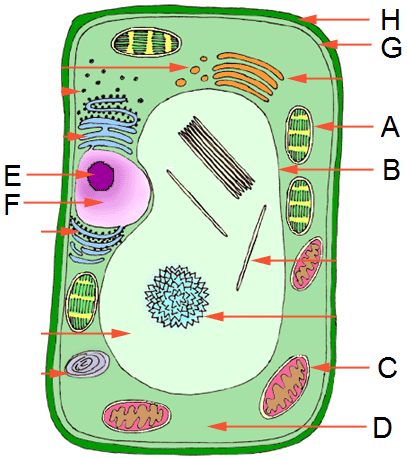
Given along side is a diagrammatic sketch of a certain generalised cell.
  1. Name the parts labeled as A-H.
  2. Is it a plant cell or an animal cell? Give two reasons in support of your answer.
  3. List the functions of parts marked as A, F and H.
An element is sonorous and highly ductile. Under which category would you classify this element? What other characteristics do you expect the element to possess?
Describe the mechanism of crop variety improvement.
What is fractional distillation? What is the use of fractionating column in fractional distillation?
State the various postulates of Dalton’s atomic theory of matter.
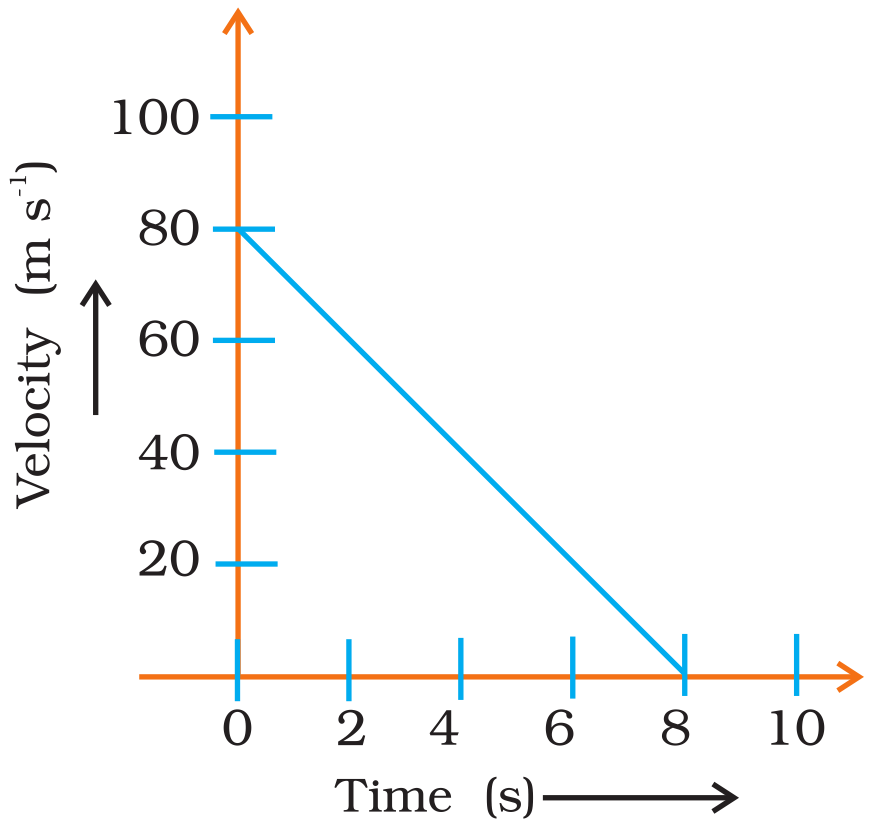
Velocity versus time graph of a ball of mass $50g$ rolling on a concrete floor is shown in Fig. Calculate the acceleration and frictional force of the floor on the ball.
When extremely small particles X derived from the another of a flower were suspended in a liquid Y and observed through a microscope, it was found that the particles X were moving throughout the liquid Y in a very zig zag way. It was also observed that warmer the liquid Y, faster the particles X moved in its surface.
  1. What could particles X be?
  2. What do you think liquid Y is?
  3. What is the zig-zag movement of particles X?
  4. What is causing the zig-zag movement of particles X?
  5. Name the scientist who discovered this phenomenon.
  6. What does this experiment tell us about the nature of liquid Y?