Question
Give the main differences between physical changes and chemical changes.

Answer

PHYSICAL CHANGE CHEMICAL CHANGE
iNo, new substance is formed in a physical change. iNew substance is formed in a chemical change.
iiIt is a temporart change.iiA chemical change is a permanent change.
iiiIt is easily reversible.iiiThis process is usually irreversible.
ivVery little heat or light energy is usually absorbed or given out in this process.ivA lot of heat or light energy is absorbed or given out in this process.
vMass of substance does not alter.vMass of substance does alter in this process.

Need a full question paper?

Generate a complete, print-ready paper with questions like this in minutes — across 16+ boards, with answer keys.

Start Generating Free

Similar questions

Describe the composition and functions of blood
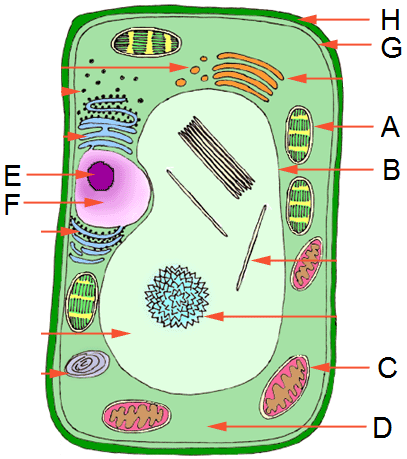
Given along side is a diagrammatic sketch of a certain generalised cell.
  1. Name the parts labeled as A-H.
  2. Is it a plant cell or an animal cell? Give two reasons in support of your answer.
  3. List the functions of parts marked as A, F and H.

What is artificial insemination? Give its uses.

Which contains more molecules, 10g of sulphur dioxide (SO2) or 10g of oxygen (O2)?
(Atomic masses: S = 32u; O = 16u)
A body starting from rest travels with uniform acceleration. If it travels 100m in 5s, what is the value of acceleration?
Which has more atoms, 50g of aluminium or 50g of iron? Illustrate your answer with the help of calculations.
(Atomic masses: Al = 27u; Fe = 56u)
Iron powder and sulphur powder were mixed together and divided into two parts A and B. When part A was heated strongly over a burner, then a substance C was formed. The part B was, however, not heated at all. When dilute hydrochloric acid was added to substance C, then gas D was evolved and when dilute hydrochloric acid was added to part B then gas E was evolved.
  1. What type of substance is B?
  2. What type of substance is C?
  3. Name the gas (i) D, and (ii) E?
  4. Write one characteristic property of gas D.
Describe structure and functions of plasma membrane.
Explain the terms 'compression' and 'rarefactions' of a wave. What type of waves consist of compressions and rarefactions?
Describe the structure and function of different types of epithelial tissues. Draw diagram of each type of epithelial tissue.